
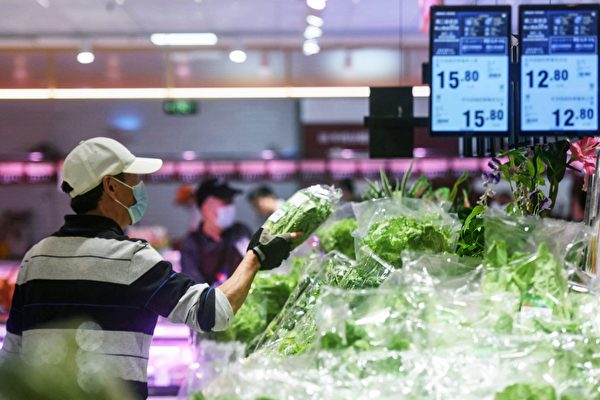
On December 4th, mainland China’s long-standing retail giant, Zhongbai Group, announced that they have closed 13 warehouse superstores this year, with an expected loss of 180 million yuan.
The announcement revealed that the closed stores are mainly located in cities such as Wuhan, Suizhou, Xianning, Yichang, and Huangshi in Hubei Province, with opening dates ranging from 2005 to 2022. Among them, 23 stores were shut down due to long-term losses, while 7 closed because their contracts expired. Some stores had been operating for over 20 years, while others closed after just three years.
The announcement stated that some stores had been in long-term losses with no sign of improvement, and continuing operations would result in greater financial pressure. The company had previously mentioned in the 2025 interim report that despite the short-term increase in losses, continuously closing unprofitable stores would help alleviate fixed costs such as labor and depreciation.
According to Zhongbai Group’s initial estimation, the closure of these 30 stores is expected to result in a loss of approximately 180 million yuan, covering contract termination expenses, staff compensation, long-term deferred decoration costs, amortization losses, and non-transferable fixed asset impairment.
As a leading local retailer in Hubei, Zhongbai Group can trace its roots back to Jianghan Road Center Department Store founded in 1937 and went public on the Shenzhen Stock Exchange in 1997. The group currently operates in Hubei, Chongqing, Hunan, and other regions, with over 1,600 locations by the end of 2024, around 20,000 employees, and total assets exceeding 10 billion yuan. However, the company reported losses of 528 million yuan in 2024 and 580 million yuan in the first three quarters of 2025.
Why have there been numerous closures of large-scale stores in recent years?
According to the financial new media “Shenke New Consumer,” there are three main reasons. Firstly, the economic downturn in recent years, layoffs in internet giants, salary reductions in the financial industry, and the exodus of foreign companies have led to decreased purchasing power for many people, resulting in downgraded consumption. Superstores are often the first to be abandoned.
Secondly, the rise of new e-commerce and new retail has squeezed the survival space for traditional shopping malls. In the e-commerce era, prices are more transparent, weakening the dominance of traditional shopping malls in pricing. Consumers can easily find alternatives online, and new retail concepts like flash sales on Taobao or speedy deliveries on JD.com attract a large number of consumers.
Lastly, the emergence of new shopping centers, along with an oversupply of shopping malls, has also contributed to the situation.