
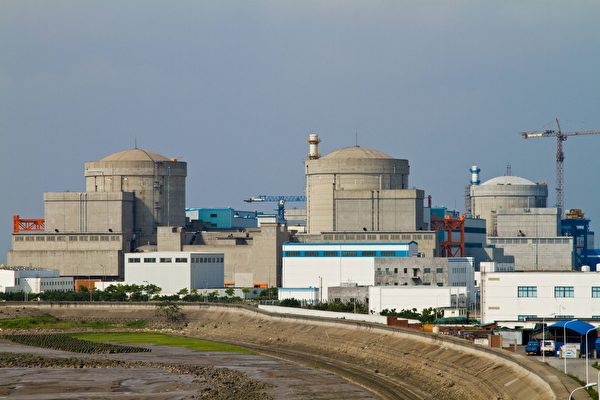
In December 2025, it was reported that the construction of Units 1 and 2 of the nuclear power plant in Lufeng, Guangdong has entered the construction stage, marking a significant step forward for the planned six units in Lufeng. The coastal areas of Guangdong have already formed the most densely distributed layout of nuclear power plants globally, raising concerns from the public regarding the transparency of nuclear safety information and regional risks.
According to an announcement from the “China General Nuclear Power Group” official account, the construction of the “conventional islands” for Units 1 and 2 at the Lufeng nuclear power plant has commenced. The Lufeng site is planned to house a total of 6 units, with 4 units already approved. The project is located in Jieshi Town, Lufeng, Shanwei, and is progressing in a phased manner.
A report by the IT Home on November 30 stated that the construction of the two units primarily involves the main plant building, electrical systems, and auxiliary systems, which are being undertaken by the China General Nuclear Power Corporation.
Mr. Chen, who was involved in the construction of the Daya Bay Nuclear Power Plant, recalled that there was significant opposition from local residents and people from Hong Kong when the construction of the Daya Bay plant began. He mentioned that concerns about the risk of nuclear leakage led to protests and petitions to halt the project. Despite the opposition, the plant was eventually built. A decade ago, a malfunction occurred at the Daya Bay plant, which was initially concealed by authorities and later disclosed by a foreign expert.
Mr. Chen expressed concern about the proximity of the Guangdong nuclear power plants to residential areas and the limited access residents have to information about plant operations and safety measures. He emphasized the need for transparency in reporting plant operations and any faults to ensure public safety.
Resident Mr. Zhou in Lufeng also shared his worries with the reporter, stating that the consequences of a nuclear accident at the plant would be unimaginable. He questioned the need for so many nuclear power plants along the Guangdong coast and expressed concerns about the risks associated with potential nuclear leaks, earthquakes, tsunamis, and potential military conflicts affecting the safety of the plants.
Currently, Guangdong operates four nuclear power bases including Daya Bay, Ling’ao, Yangjiang, and Taishan, making it one of the most concentrated regions of nuclear power plants globally.
Industry expert Ma Yushan highlighted the benefits of having multiple nuclear power units in Guangdong for energy supply but pointed out the increased pressure on safety management. He stressed the importance of efficient emergency coordination in the event of extreme weather, grid failures, or natural disasters.
Ma Yushan further explained that while nuclear power plants are generally reliable, Guangdong’s unique situation with plants located close to residential areas requires high transparency in reporting any faults, shutdowns, or tests to meet public demands and regulatory standards.
Currently, mainland China’s coastal nuclear expansion projects are mainly concentrated in Guangdong, Zhejiang, Fujian, and Shandong provinces. Data indicates that the primary coastal nuclear bases are distributed in Red River in Liaoning, Haiyang and Rongcheng in Shandong, Ningde and Zhangzhou in Fujian, Daya Bay, Yangjiang, Taishan, Huizhou, Lufeng in Guangdong, and Changjiang in Hainan. The country has over fifty operating and under-construction units, with numerous new projects undergoing approval processes.