
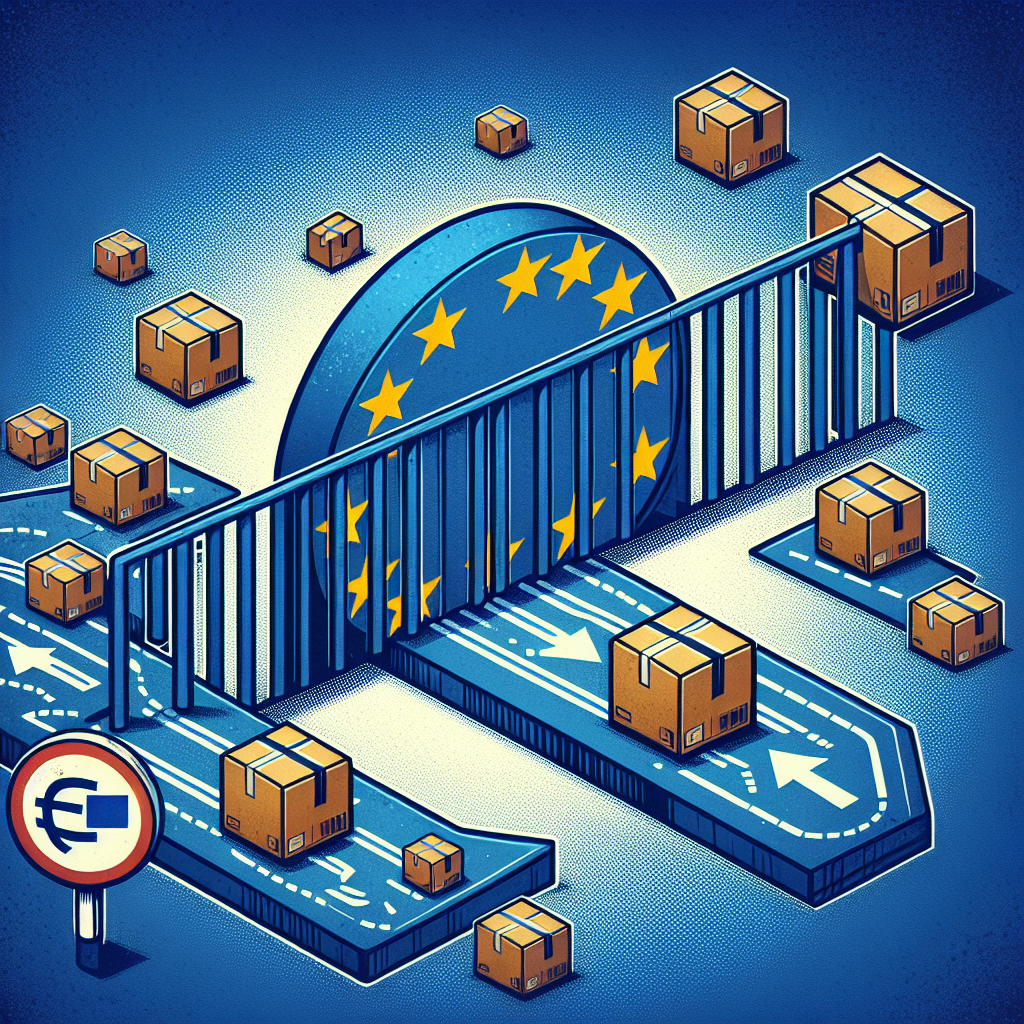
The European Union’s Trade Commissioner Maros Sefcovic stated that the EU hopes to accelerate the imposition of tariffs on small packages entering the EU to combat the influx of cheap Chinese e-commerce imported goods. This move is expected to directly impact online platforms such as Shein and Temu.
The European Commission had previously proposed abolishing the “small consignment exemption” policy for goods valued at less than 150 euros (approximately $175) back in 2023. However, the implementation of this change was scheduled to wait until 2028, coinciding with a broader reform of the EU customs system.
According to Reuters, Sefcovic wrote to EU finance ministers meeting in Brussels, suggesting bringing forward the abolition of the small consignment tax exemption policy to the first quarter of 2026, two years earlier than originally planned.
Sefcovic expressed that the original plan to eliminate the tax exemption policy for small packages by 2028 was not in line with the urgency of the situation. He stated, “With the necessary political determination and pragmatic spirit, we can find a feasible solution in the first quarter of 2026.”
The accelerated implementation of this measure is expected to directly impact major Chinese e-commerce platforms like Shein and Temu, which have been exploiting the tax-free status of small packages to sell products at low costs.
These e-commerce platforms have been taking advantage of the “small consignment exemption” loophole by mailing small packages directly to consumers. Last year, the number of low-value packages arriving in the EU doubled to 46 million, with over 90% originating from China.
Sefcovic wrote that this action will demonstrate the EU’s serious commitment to safeguarding domestic business competitiveness.
Shein declined to comment on the matter when reached out by Reuters, and Temu did not immediately respond to the media’s request for comments.
As reported, Shein had previously faced legal proceedings in France for selling prohibited products on its platform, such as childlike sex dolls.
Following an executive order signed by former U.S. President Trump, on May 2nd, the U.S. government eliminated the “small package tax exemption” policy for goods originating from China and Hong Kong, with a value below $800.
In early June, data collected by consulting firm Bain & Company showed that since President Trump announced comprehensive tariff measures, the sales and customer growth rates of Temu and Shein had significantly declined, with Temu showing a more pronounced downward trend than Shein.
The EU’s move comes in response to multiple pressures aiming to protect domestic retailers from unfair competition and address product safety loopholes.
The concern in the EU extends beyond taxation. Reports indicate that the loophole in the tax-exempt policy for small packages has allowed billions of packages to bypass customs inspections, leading to toxic toys, beauty products containing carcinogens, and products not meeting safety standards to enter the EU market.
Before the EU’s decision to accelerate, several member states had prepared for individual actions.
Countries like Romania and Italy had already prepared to levy national handling fees independently.
China’s Global Times criticized the EU’s plan to restrict Chinese small package imports as “unilateral action,” labeling it as trade protectionism.
The EU finance ministers are expected to reach a consensus on a joint position by Thursday, paving the way for negotiations with the European Parliament. Dutch Finance Minister Eelco Heinen stated that it’s time to “control” the influx of cheap Chinese packages into the European market.