
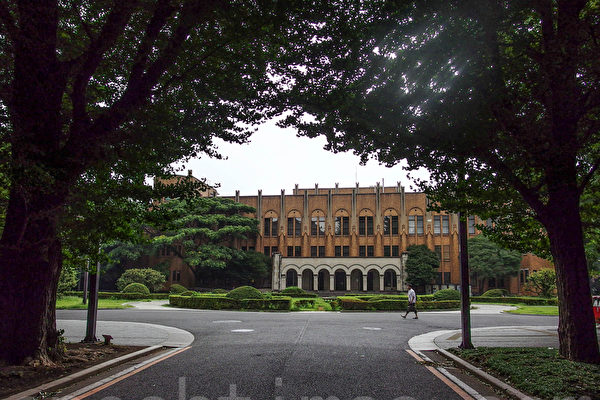
In recent years, there has been a growing trend among the Chinese people to move to other countries, with a significant increase in the number of middle-class and affluent individuals immigrating to Japan. Additionally, more Chinese students are choosing to study in Japan. At the prestigious University of Tokyo, over 12% of the students are Chinese, and this number continues to rise steadily.
According to statistics from the Japan Immigration Services Agency, as of the end of December 2023, the number of Chinese people holding residency status in Japan had increased by 60,000 from the previous year, reaching 820,000 people, surpassing the pre-pandemic levels of 2019 and reaching a historic high.
It is reported by Nikkei Asian Review that it is expected by 2026, the Chinese resident population in Japan will exceed one million.
The University of Tokyo is a key destination for Chinese students studying abroad. In recent years, the number of Chinese students admitted to undergraduate and graduate programs at the University of Tokyo has continued to grow.
As of May 2024, there were approximately 27,500 students at the University of Tokyo, including 3,396 Chinese students, accounting for over 12%. This number might be even higher considering Chinese individuals who graduated from Japanese high schools and are not officially classified as international students.
Comparing data released by the University of Tokyo over the past decade reveals a significant surge in the number of Chinese students. In May 2014, there were 1,136 Chinese students, which increased to 3,396 students after ten years, marking a threefold growth.
A 27-year-old Chinese graduate student at the University of Tokyo told Nikkei, “In China, the location of birth can also affect university placement in addition to grades, but University of Tokyo does not discriminate against foreign applicants in this manner.”
Another Chinese graduate student at the University of Tokyo, who had previous study experience in the UK, mentioned to Nikkei, “The cost of living and tuition in the UK are high, while in Japan, it is much cheaper and the quality of life is better, making it easier to adapt.”
Among all international students, the proportion of Chinese students increased from 39.5% in May 2014 to 66.5% in May 2024.
According to Central News Agency, Waseda University, well-known in China, has a similar number of Chinese students to the University of Tokyo, totaling around 3,300 students. About 7% of the total student population at Waseda University’s undergraduate and graduate programs are Chinese students.
Nikkei reported that there has been a recent influx of young Chinese students enrolling at the University of Tokyo. Professor Hideyoshi Kiyama, who specializes in modern China at Hokkaido University, analyzed that many individuals now come to Japan first to study at language schools, even without prior knowledge of Japanese, before pursuing university education. Japanese companies are also seeking talents from Japanese universities, with graduates from the University of Tokyo being highly sought after.
Professor Kiyama noted a trend emerging in recent years where Chinese children living in Japan aim to attend prestigious middle and high schools and ultimately aspire to enter the University of Tokyo.
Currently, the key educational area in Tokyo, Bunkyo Ward, has attracted many Chinese families. In order to enroll their children in the renowned local primary schools known as “3S+1K”, many parents are willing to sell their properties and relocate their households to Bunkyo Ward.
The so-called “3S+1K” refers to four prestigious public elementary schools in Bunkyo Ward: Sendagi Elementary School, Showa Elementary School, Makoto Elementary School, and Kanda Elementary School. The number of Chinese students in Bunkyo Ward’s primary schools rose to 467 in 2024, a 2.4-fold increase compared to 2019.
Takuya Takahashi, the head of school guidance at the Bunkyo Ward Board of Education, mentioned that the significance of these four schools has been exaggerated due to frequent mentions on social media. He clarified that these schools are public institutions with similar resources as other schools, questioning why they attract such attention despite offering the same educational conditions.
Regarding the enthusiasm of Chinese students to study in Japan, Professor Kiyama analyzed three internal factors in China. Firstly, even top graduates in China struggle to find employment. Secondly, under Xi Jinping’s regime, there is limited freedom to pursue research interests due to strict control over expression. Thirdly, China’s “Zero-COVID” policy during the pandemic played a decisive role. The strict restrictions imposed on people’s movements in China led to protests known as the “Blank Paper Movement,” which were harshly suppressed by the government. Consequently, many young people who had previously enjoyed a certain level of freedom in China are expressing negative sentiments towards the government.
Analysts within China attribute the unpopularity of the current education system to two main reasons: excessive pressure from a score-oriented evaluation system and the influence of the party culture under the Communist regime, emphasizing loyalty, obedience, and authority, resulting in indoctrination of students into a distorted set of values.
Mr. Chen, a Chinese studying in Japan, shared, “In China, the first rule in middle schools is to love the Communist Party. Xi Jinping’s authority has intensified internet surveillance, particularly since 2019. Although I occasionally visit my hometown, living without freedom in China is simply not an option for me.”