
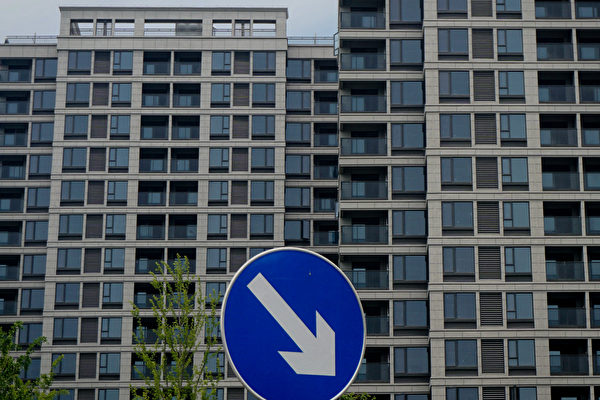
In recent times, the rental prices in first-tier and some second-tier cities in China have been continuously decreasing, even returning to levels seen ten years ago, yet they are still facing a shortage of tenants. Analysts believe that this phenomenon reflects the intensified pressure on youth employment, rising urban living costs, and may even further impact confidence in the real estate market, making the road to economic recovery in China more challenging.
According to data from Wind, a Chinese financial data service company, the rental prices in Beijing, Shanghai, and Shenzhen have fallen back to the levels of 2015 to 2017, Guangzhou to 2014, Chengdu to 2018, and Tianjin even dropped to the level of 2010.
A report from the China Index Research Institute stated that the average residential rental prices in China’s top 50 cities cumulatively dropped by 3.25% in 2024, an increase of 2.95 percentage points compared to 2023.
It is worth noting that the downward trend in rental prices has not stopped in early 2025. According to data from the National Bureau of Statistics of China, rental prices in January fell by 0.2% year-on-year.
A survey by the China Index Research Institute revealed that 60% of the surveyed tenants plan to change rentals, and many are opting for “downgrade” rentals, choosing cheaper housing options.
The introduction of the Chinese government’s “subsidized rental housing” (rental housing) into the market in large numbers has further diverted rental demand.
An analysis from the mainland financial media “China Trend Trends” pointed out that the massive influx of “subsidized rental housing” promoted by the Chinese authorities last year not only led to demand diversion but also contributed to the decline in rental demand due to weak income expectations among residents. In fifteen provinces and cities that reported net income figures last year, including Beijing and Jiangsu, five provinces experienced negative growth.
A recent report from “Sanlian Life Weekly” highlighted that the pressure of youth employment is one of the main factors leading to reduced rental demand. In August 2023, the unemployment rate among Chinese youths aged 16 to 24 once approached 19%, prompting many young people to choose to live with their parents to save expenses. Meanwhile, working young people tend to share housing to reduce the burden of renting.
The phenomenon of rental “downgrading” is not limited to young people but also extends to middle-aged individuals. Due to economic slowdown and unstable income, many middle-aged tenants are cutting back on housing expenses by choosing more affordable rental options.
With property prices continuously declining and houses becoming increasingly difficult to sell, many landlords who originally intended to sell their properties have opted to convert them into rentals, adding to the housing supply in the rental market. Additionally, there still exists a large number of vacant properties that are not being filled.
According to a report by Voice of America, economist Li Hengqing stated that the “rental-to-sale ratio” of China’s real estate market has long been higher than that of other countries. In many major cities, the “annual rental-to-sale ratio” even exceeds 50, meaning landlords would need to collect rent for over 50 years to break even. Such market conditions have led to low investment returns, putting many landlords in difficult situations.
Li Hengqing remarked, “Without economic capability or employment opportunities, people will not stay in cities for long. They may choose other ways to resolve short-term accommodation needs without signing long-term lease contracts, reflecting typical data of the current poor economy.”
Xiao Duyuan, Secretary-General of the Association for Cross-Strait Policy in Taipei, also acknowledged that with China’s weak economy and the reduction in job opportunities and income for urban residents, many people are indeed less inclined to spend a lot of money on renting in cities.
Xiao Duyuan further commented that when landlords begin to withdraw from the first-tier city market and transfer funds to other areas, it will further impact local economic growth and even affect the financial operations of local governments.
Moreover, due to the continuous drop in property prices and the increasing difficulty in selling houses, many landlords who originally planned to sell their properties are reluctant to sell at low prices. Therefore, they are converting their properties to rentals, adding to the housing supply in the rental market, which is also one of the reasons leading to the decline in rental prices.