
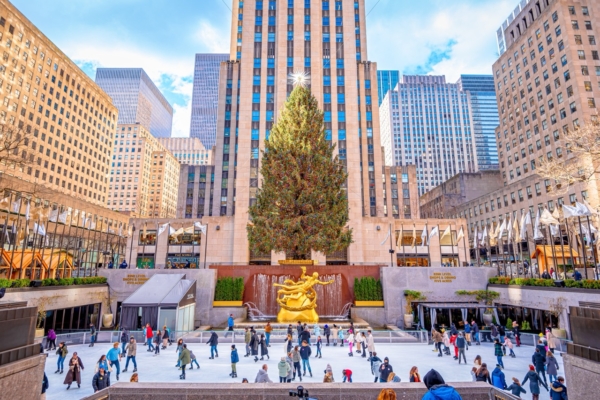
In the American real estate prediction series for 2025, it’s finally New York City’s turn this week! As the largest city in the United States, New York City’s real estate market is indeed different from other cities, with unique administrative districts, a variety of property types, and being a melting pot of cultures from around the world, it’s also one of the most common cities for Chinese friends to visit and live in. What will the real estate market in this unique city face in 2025? Let’s find out together!
Although we are only discussing New York City today, it’s impossible to thoroughly explore its real estate trends in such a vast city. Therefore, today I can only simplify it and provide an overview of the real estate market in New York from a larger perspective.
Firstly, by 2025, the real estate market in New York City has experienced nearly three years of decline, and there may be five potential scenarios ahead: Firstly, an increase in buyers. The past fall season has been the most active since 2021, contrary to the trend of the past two and a half years which saw a downturn due to rising mortgage rates starting from early 2022.
According to Forbes’ forecast report, the success rate of listings has been climbing since May and is slowly increasing throughout the year. Equally important, the signing speed over a continuous 30-day period in November increased by 36% compared to last year and 33% compared to 2022. This indicates that the return of buyers to the market is not just a temporary phenomenon. With the end of the increasing demand in the second half of 2024, it is expected that buyers will continue to recover in the spring of 2025.
The second forecast is more pessimistic, as although spring is typically a peak season for the housing market, the supply in New York City was lukewarm in the second half of 2024, and year-end mortgage rates were high, indicating that potential new sellers will be cautious. Once demand exceeds supply, leverage may firmly shift towards sellers. This dynamic will create a fiercely competitive environment for buyers, making renovated or reasonably priced homes in high demand and negotiations challenging for buyers.
The third prediction suggests that with inflation slowing down and the stability of construction costs and construction time, it will be a more favorable environment for buyers looking to renovate. Buyers seeking cheaper prices, if willing to spend a little more time and effort, may get good deals by purchasing a property in need of renovation or “less appealing.”
Renovated properties listed during the peak of the post-pandemic housing market had a premium of 30%, but this has now decreased to 14% of the historical average by December 2024. This provides better opportunities for investors who enjoy renovating properties or buyers looking for affordable prices.
The fourth prediction mentions the recent passage of the “Fair Apartment Rental Expenses (FARE) Act” by the New York City Council, which stipulates that one party hiring a leasing agent is responsible for paying the agent’s fees. This has sparked hopes of cooling off the rental market through reduced transaction frictions. However, the reality is more nuanced. While the new rule may change the payment method for fees, the act does not address the fundamental issue—the long-term lack of significant new rental supply is the biggest challenge.
Without an influx of new inventory, demand will continue to drive up rents, especially in competitive markets like Manhattan and Brooklyn. Therefore, renters should prepare for summer 2025 rents, as this is a peak rental season, and there will be intense competition for ideal rental units. The recommendation for renters in 2025 is to start searching early, allowing themselves more opportunities for comparison and to act quickly once they find a suitable option.
The fifth prediction states that in a sluggish sales housing market, prices are still rising, but the increase is unlikely to be significant. However, unlike the fluctuations of the previous years, the pricing trend in 2025 is more likely to show measurable and predictable returns, reflecting a healthier market. This stability offers sellers the opportunity to realize returns on the sale of their property within a reasonable timeframe, as buyers will also eventually enter the market when the direction is clear.
These are the predictions for the New York real estate market from Forbes, suggesting that 2025 will be a year of revival for the Manhattan and Brooklyn markets. Despite the challenges of higher mortgage rates and limited supply, the growing buyer confidence and adaptability are driving the recovery.
If 2024 marked the beginning of the recovery, then 2025 is expected to transition to a growth mode. After nearly three years of sales setbacks, sellers are preparing to find buyers, and buyers are finding comfort in the increasing market activity and gradually rising prices. While high rents may be concerning, they highlight robust demand, further supporting expectations of intensified activity in the coming spring.
Of course, reading a report alone is not enough, so let’s look at StreetEasy’s report, a website under Zillow specifically developed for the New York market. They also have five major predictions for the New York market:
Firstly, they believe that cooperative apartments, or co-op apartments, will make a comeback. Compared to regular apartments, co-op apartments have many purchasing restrictions that deter many buyers, but with the prices of various housing types skewing high, co-op apartment prices are becoming competitive, providing opportunities for both sellers and buyers. As the spring home buying season approaches, co-op apartment sellers should start considering strategic pricing and marketing of their homes to attract buyers looking to buy on dips.
Secondly, by 2025, buyers who have been considering leaving the city in recent years may rediscover New York City as more attractive, as suburban inventory limitations intensify competition among buyers. According to the Zillow Market Heat Index, the New York metropolitan area is a strong seller’s market, but most activity is concentrated in suburb markets within commuting distance of New York City, where reasonably priced homes quickly sell out.
Compared to the nearby suburbs, the five boroughs of New York have seen robust growth in new listings, providing buyers with more choices and stronger negotiation positions. As of October 2024, the five boroughs had a total of 29,948 homes listed, representing a 16.8% increase from the previous year.
In contrast, the number of new listings in neighboring counties of New York City—Fairfield County, Connecticut; Bergen County, New Jersey; Hudson County, New Jersey; Nassau County, New York; Rockland County, New York; and Westchester County, New York—only increased by 1.4% compared to the same period the previous year.
However, many homes for sale in New York City have longer listing times compared to homes in the six neighboring counties, giving buyers more time to make decisions. According to Zillow data, the median listing time for homes in these counties is 2 to 5 weeks. In comparison, homes across the five boroughs of New York City spent an average of 9 and a half weeks on the market before signing a contract, increasing by a day from the previous year.
Thirdly, the luxury housing market in New York City has been tepid for the past two years, but in 2025, this situation may heat up. Although sales have been sluggish, the demand for leasing luxury homes has surged. Therefore, the demand for these high-end homes is only suppressed by high property prices and interest rates.
In fact, the median price of luxury homes in New York reached a new high of $4.95 million in December 2023, but by December 2024, it had dropped by 6.1%. This could encourage some buyers to make a move, and with room for negotiation, prices could potentially decrease.
Luxury home buyers typically use cash or other liquid assets to purchase properties, but the high-interest rates in the overall economy may prompt affluent homebuyers to take a more cautious approach when investing in real estate this year. However, with predicted easing of interest rates in 2025, luxury home buyers and sellers may be more willing to re-enter the market.
Fourthly, more renters may expand their horizons to the east and west of New York City. While the combined boroughs of Brooklyn and Queens may surpass Manhattan to become the largest rental market in New York City, neighboring Jersey City and Hoboken seem poised to overtake Brooklyn to become the most expensive rental market outside Manhattan.
For the past few years, the rental vacancy rates in New York City have been very low, reaching a historic low of 1.4% in 2023. Thus, new rental developments in the New York market stand out, with many new projects located in Brooklyn and Queens, quickly catching up with Manhattan in 2024.
This trend is expected to continue next year, especially as renters increasingly prefer modern buildings and facilities. The increase in inventory in Brooklyn and Queens will help stabilize the rental market in New York City and slow down rental price growth in these boroughs.
As for Jersey City and Hoboken west of the Hudson River, long seen as alternatives to New York City, their median rental prices might surpass Brooklyn and become the most expensive rental markets outside Manhattan.
In 2024, the median rental price in Jersey City and Hoboken was $3,160, while Brooklyn’s was $3,424. Despite rents gradually catching up to Brooklyn, those looking for new construction and convenient facilities still prefer to choose across the river into New Jersey.
Fifthly, New Yorkers are increasingly less inclined to go out! In 2024, renters and buyers are more interested in finding apartments with convenient amenities without leaving the apartment building. Although being pet-friendly is a non-negotiable amenity nationwide, in New York City, searches for apartments with outdoor spaces increased by 116.6%, while searches for swimming pools and fitness centers increased by 61.8% and 11.2%, respectively.
Laundry rooms and central air conditioning are no longer enough to meet the needs of most New Yorkers, as the number of people hoping for additional amenities continues to increase. Some New Yorkers seem willing to spend more money on popular amenities to make their home life more comfortable and convenient. Moreover, in recent years, with hybrid work becoming the norm and poor air quality reasons for New Yorkers to stay at home.
Whether you want to live in Harlem or Flushing, in this city with the highest population density in America, you should be able to find what you love, but the support you always hope for is about whether your wallet is deep enough. Looking ahead, the New York market in 2025 will bring new vitality and opportunities for all participants. ◇