
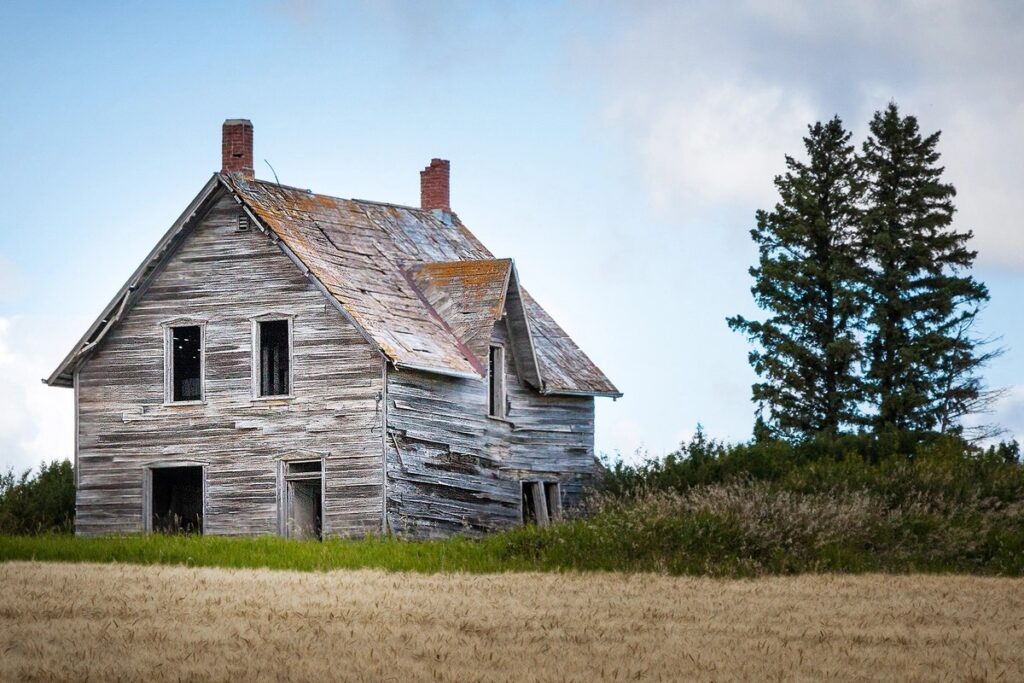
In a quiet corner of Manitoba, Mike Parsons retrieved a freshly printed card from his pocket and slipped it into an aged, weather-beaten mailbox. This lonely mailbox stood sentinel by a dusty, rarely traversed rural road, serving as a symbol of his dedication to a personal mission: to document the abandoned farmhouses scattered across the landscape, along with the stories of the people who once called them home.
Originally hailing from Brandon, Parsons is a semi-retired heavy machinery technician. For the past three decades, he toiled in the vast nickel mining fields of Northern Manitoba. Now, however, he is in search of a new purpose, trading the oppressive, cavernous depths of underground mines for the expansive beauty of the Manitoba prairie.
Once, this land was dotted with old barns, granaries, and farmhouses, relics of a pastoral life that has since faded. But as populations migrated and families dispersed, many of these homes fell into disrepair, gradually being reclaimed by the elements and the passage of time.
Driven by a curiosity about the simpler lifestyles of the past, Parsons takes to his camera to capture the gradual disappearance of these poignant remnants of history.
In 2025, Parsons relocated from the Arctic tundra in Northern Manitoba to Brandon, where his parents had settled decades prior. Upon arrival, he began to discover the historical footprints left behind on this land and quickly became captivated by them.
“The marks of unfamiliar eras and memories of lives once lived drew me in immediately,” he explained, particularly enamored with the vibrant history of former farms that speak volumes about the lives that were once intertwined with them.
Parsons now drives along the remote rural roads of Southern Manitoba, racking up thousands of kilometers. Sometimes he seeks suitable locations for his photography, while other times he embarks purely to create art or to merge both pursuits.
In the far North, the terrain is rugged with rocks and desolation, leaving scant evidence of human habitation. Prairie areas, however, tell a different story.
“The people of the prairie proudly showcase the diminishing historical marks left by the pioneering era,” said Parsons. “These places have witnessed families’ laughter and tears, love and loss, prosperity and decline.”
While many of the owners of these homesteads have long been forgotten, some family stories have endured. On one occasion, Parsons stumbled upon an old photograph depicting a stone house located in Virden, just 80 kilometers from his home in Brandon. This house was once the residence of James Scallion and his siblings, a family known for their fierce independence and unique approach to farming.
Living near the mainline of the Canadian Pacific Railway allowed the Scallion family to directly load grain onto passing freight trains, avoiding local granaries and reaping higher profits. At a time when a few companies monopolized the grain market, leaving farmers with meager offers, the Scallion family successfully circumvented the middlemen.
By the late 1880s, while many pioneers were still living in humble one-room sod houses, the Scallions were enjoying a lifestyle akin to royalty, complete with a stone house and granary powered by generators. Their 960-acre farm was proudly named “The Grange.”
Parsons is determined to capture images of these enduring structures that still stand on the prairie. In his earlier days, he occasionally ignored “Do Not Enter” signs to photograph these sites. However, as his understanding of the history and family backgrounds deepened, he began to cultivate a profound respect—verging on reverence—for these buildings. Now, he seeks permission from the property owners before entering to shoot, hoping to honor the past residents and their stories.
He actively searches for the addresses, phone numbers, and email contacts of related families, knowing that relatives may still be living nearby.
In the fall of 2025, he finally unearthed a lead on the Scallion family. “I could hardly wait to see that house for myself, eager to photograph its unique features before the winds of time wore it away,” Parsons recounted. “Eventually, I found a phone number.”
Sadly, later that week, he received news that part of the old house had collapsed. Nevertheless, after securing permission, Parsons ventured onto the property to assess the condition of the house, capturing images of what he could. To his relief, he discovered that at least one stone wall still stood strong against the ravages of time.
Documenting the crumbling residence of the Scallion family ignited a passionate flame within Parsons, reinforcing his resolve to continue exploring and recording these historical sites. Soon after, he began printing cards to share his intention with others: to document these structures and the memories they hold before they vanish.
“It is heartbreaking to see them disappear at such an alarming pace,” he stated.
His efforts have garnered recognition and support from a number of people.
Through social media, Parsons connected with the “Abandoned Communities” and has driven thousands of kilometers in pursuit of stories. Occasionally, local historians provide him with leads, while living relatives share fascinating tales. He notes that while these narratives may be rare and delightful, the details are not always completely accurate.
“There are certain chapters of history that seem reluctant to be fully known,” he added.
Recalling his journey into photography, Parsons noted that he picked up his first DSLR camera at age 18, admitting that he initially struggled to find his footing in the craft. It wasn’t until around 2013, when a “chance” opportunity led him to capture his first photograph of the Northern Lights, that he began to delve deeply into photography with purpose.
“I could hardly believe the vivid colors before my eyes,” he reflected. “In that moment, I felt as if I had suddenly grasped the enchantment of photography.”
In the ensuing years, the Northern Lights became his primary photographic focus, and his work was featured in local newspapers and magazines in Thompson. Now retired, he has left behind the breathtaking Northern Lights and the suffocating tunnels of the mines, focusing on the old prairie buildings that captivate him with their rich stories. He has photographed hundreds of farmhouses, occasionally crossing provincial and national borders in search of those structures that blend seamlessly with the vast earth.
“Photography was my first love,” he shared. “If I can preserve these houses with my lens in a beautiful way, it feels as though I am giving back to them for all they have provided me.”
This dedication reflects Parsons’ unwavering commitment to honoring the past while shedding light on the enduring stories hidden within Manitoba’s abandoned prairies.