
On October 31, 2026, Liu Ji, the 57-year-old Secretary of the Huizhou Municipal Committee in Guangdong province, was officially dismissed from his position. Shortly thereafter, on November 16, he appeared in public as the Executive Deputy Director of the Propaganda Department of the Guangdong Provincial Committee. Liu’s dismissal marked a significant shift in Huizhou’s political landscape, as it was accompanied by the purging of various officials within the local government, including his former deputy, Yu Jinfu.
Having served as the top official in Huizhou for five years, Liu was reassigned to a similar rank within the Guangdong Provincial Committee’s Propaganda Department, which many perceive as a demotion. This move is significant given that the current Secretary of the Guangdong Provincial Committee, Huang Kunming, is regarded as a close ally of Xi Jinping, the General Secretary of the Communist Party of China. Huang has held various prominent positions, including Minister of the Central Propaganda Department and has been pivotal in shaping Guangdong’s propaganda strategies. Following the 18th National Congress of the Communist Party, five consecutive Directors of the Guangdong Propaganda Department have ascended to key positions in Beijing.
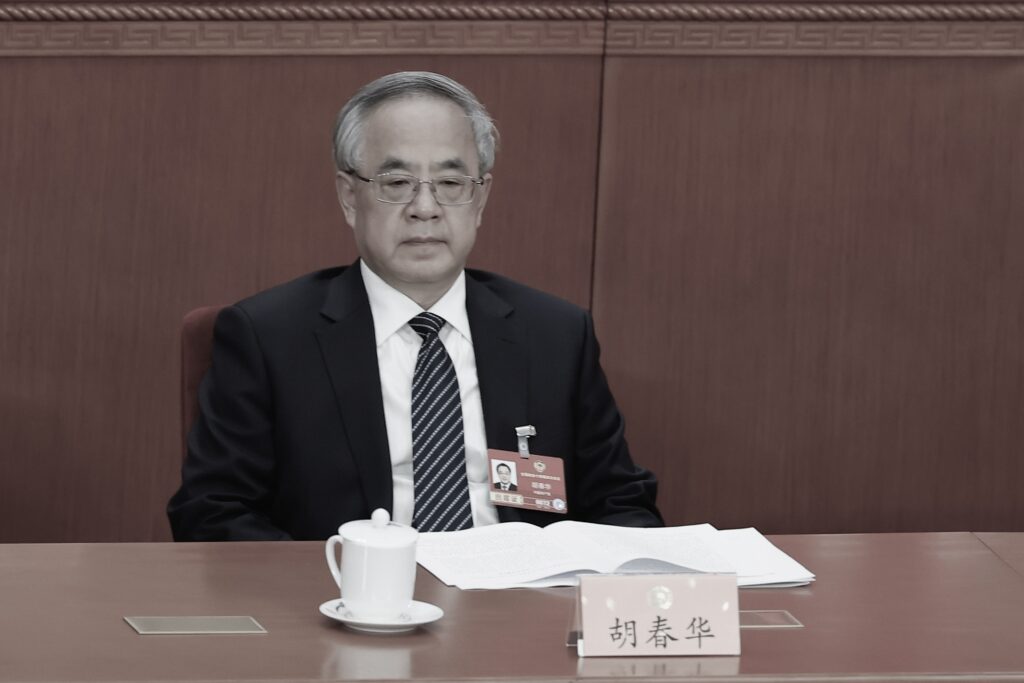
It is also noteworthy that Liu Ji is a former secretary to Hu Chunhua, a prominent member of the Communist Youth League faction, and both individuals hail from Hubei province. The unusual nature of Liu’s transfer raises questions regarding the internal power dynamics at play within the upper echelons of the Communist Party.
On November 16, state media reported that Liu Ji, in his new capacity as the Executive Deputy Director of the Propaganda Department, participated in the inauguration of the special exhibition “China in Intangible Cultural Heritage,” further marking his return to the political scene only half a month after his dismissal as Huizhou’s Secretary.
According to official reports from Guangdong province, the decision to remove Liu from his position was made alongside the promotion of Chen Yuhang, the former mayor of Huizhou, to Secretary of the Municipal Committee. Liu was stripped of his roles as Secretary, Standing Committee member, and committee member, with the announcement stating he would be “transferred to another position.” On November 4, just days after Liu’s departure, the Huizhou Municipal People’s Congress accepted Liu’s request to resign from his role as the Director of the Standing Committee.
Both the positions Liu held—the Secretary of the Huizhou Municipal Committee and the Executive Deputy Director of the Propaganda Department—are classified as at the bureau level. However, the distinction lies in the nature of the roles; being the Secretary of a prefectural-level city represents the top position, whereas the Executive Deputy Director is a second-in-command role within a department. Essentially, Liu’s reassignment implies a lateral move but suggests a decline in his actual power and influence.
Liu, born in May 1969 in the city of Macheng, Hubei province, holds a bachelor’s degree in Hydroelectric Engineering from Wuhan University of Hydropower and Electric Engineering and a master’s degree in Management Economics from Nanyang Technological University in Singapore. He began his career in December 1993 and has been associated with the Guangdong Provincial Development and Reform Commission for a considerable time.
During Hu Chunhua’s tenure as the Secretary of the Guangdong Provincial Committee from December 2012 to October 2017, Liu climbed the ranks, eventually becoming the Deputy Director of the Guangdong Development and Reform Commission in September 2013. His upward trajectory continued with roles in the provincial office and reform committee, indicating his close ties to Hu Chunhua, who is recognized for his leadership and reform initiatives in Guangdong.
Liu Ji notably spent nearly eight and a half years managing Huizhou, first appointed as Deputy Secretary and later becoming the Mayor before being promoted to Secretary in October 2021. However, in the wake of his reassignment, political turmoil followed, as evidenced by the dismissal of various officials from Huizhou, including his former deputy Yu Jinfu just ten days after Liu departed from his position.
Liu’s time in Huizhou was marred by simultaneous purges of officials he had promoted during his administration. Notable cases include the Huizhou Director of the Housing and Urban-Rural Development Bureau, the Deputy Director of the Zhangkui High-Tech Zone Management Committee, and others, all of whom were linked to Liu’s tenure and have faced scrutiny since his removal.
Prior to his reassignment to the Guangdong Provincial Propaganda Department, Liu Ji had no experience within propaganda systems—marking a notable shift from his previous roles. His predecessor in the position, Cui Zhaoyang, had transitioned to a prominent role within the Zhijing Cultural Group.
The Zhijing Cultural Group, established in December 2020, operates under the Central Committee’s cultural enterprise framework, dealing with various sectors including media, publishing, and financial investment. As for the individuals Liu Ji worked under, many have moved to high-ranking positions in Beijing, indicating a trend where officials from Guangdong’s Propaganda Department ascend to greater responsibilities at the national level.
Current Propaganda Minister Hu Jinjuan represents the Shanghai faction within the Communist Party, highlighting the existing political fractures as factions vie for influence in upcoming leadership transitions. With new leadership poised, speculations arise regarding Liu’s future role. Given the upcoming Guangdong Provincial Committee restructuring and the nearing retirement age for some officials, it remains to be seen whether Liu will succeed in securing a prominent position or languish in a diminished role until retirement.
In summary, Liu Ji’s recent political movements illustrate not only a personal trajectory but also reflect the broader dynamics of power struggles within the Communist Party of China, particularly as various factions jockey for influence and control over future appointments. His continued relevance, as well as the fates of other officials involved, may serve as an indicator of shifting allegiances and changing circumstances within the upper echelons of power.