
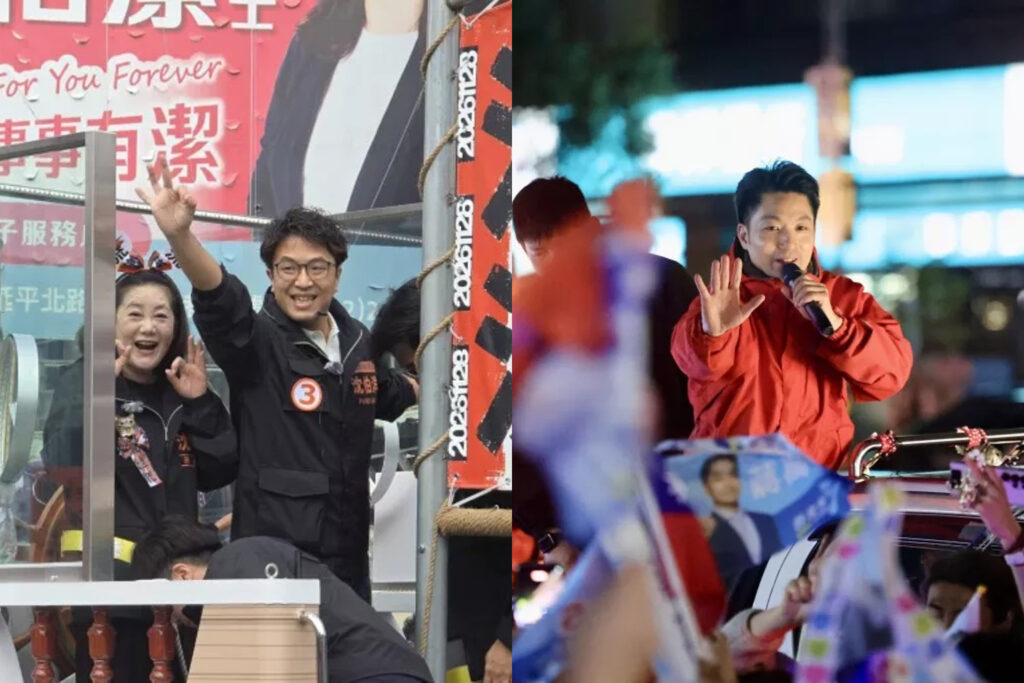
In a significant political turning point for Taiwan, the ruling Democratic Progressive Party (DPP) achieved notable victories in the local elections held on Saturday, November 28. Despite this success, the opposition Kuomintang (KMT) successfully retained the Taipei mayoral position after a fiercely contested race.
The local elections, which involved all 22 counties and cities across Taiwan, mainly focused on important public issues such as transportation, childcare, and environmental concerns. The results illustrated a competitive landscape, where both the ruling DPP and the opposition KMT secured three mayoral seats in Taiwan’s six direct-controlled municipalities. Noteworthy was the DPP’s triumph in reclaiming Taichung, the second-largest city in Taiwan, with candidate Ho Hsin-chun leading the charge.
Overall, the Democratic Progressive Party emerged victorious in at least nine counties and cities across the island, a significant increase from the five they secured in the previous election four years ago. This win reflects a growing support for the DPP in various regions, indicating a shift in local political dynamics.
In the high-profile race for the mayor of Taipei, incumbent KMT mayor Chiang Wan-an successfully defended his position against DPP candidate Shen Bo-yang. Shen, who transitioned from being an academic to a legislator, has been recognized for his research on Chinese influence operations and information warfare. Prior to his candidacy, he faced challenges from the Chinese authorities, incurring sanctions for reportedly ‘splitting the nation.’
Following the election results, Shen expressed his sentiments, emphasizing that although he had been a long-time researcher of misinformation, the outcome of this election reflected a genuine democratic process. He stated, “As I mentioned in my previous interviews with foreign media, I made it very clear that regardless of who won in the end, this will be a victory for Taipei and a victory for democracy.”
In his victory speech, Chiang Wan-an acknowledged Shen and his supporters for their passionate involvement and commitment to the race, stating that their engagement added significant tension and discussion to the electoral process. He remarked, “Together, we have completed a celebration of democracy.”
Historically, Taipei has been a stronghold for the KMT, with the DPP managing to win the Taipei mayoral election only once in 1994.
Addressing the election results, Taiwan’s President Lai Ching-te, who also chairs the DPP, highlighted the importance of democratic participation. He noted, “While elections always have their winners and losers, democracy is always the ultimate winner!” Lai stressed that the electoral outcome reflects the true sentiments of the people. He promised that the central government would collaborate across party lines with local governments going forward.
Lai also extended respect to candidates who were not successful in their bids, emphasizing that the conclusion of an election does not signify the end of public service. He urged all involved to maintain their passion for their communities and continue striving for Taiwan’s future.
While the focus of the elections was domestically centered, the movements of the Chinese Communist Party (CCP) remained a pressing concern. The Taiwan Ministry of Defense reported that on the eve of the election, Friday, November 27, there were 33 sorties of Chinese military aircraft and eight naval vessels operating around the Taiwan Strait.
The KMT has traditionally advocated for closer ties with Beijing. The current KMT chair, Cheng Li-wun, led a delegation to Beijing in April, marking the first meeting between the KMT and CCP leadership in a decade, where she met with Chinese leader Xi Jinping.
As the local elections draw to a close, political preparations among various parties in Taiwan for the upcoming presidential and legislative elections scheduled for early 2028 are set to officially commence. This period of political maneuvering promises to further shape the future landscape of Taiwan’s political arena.