
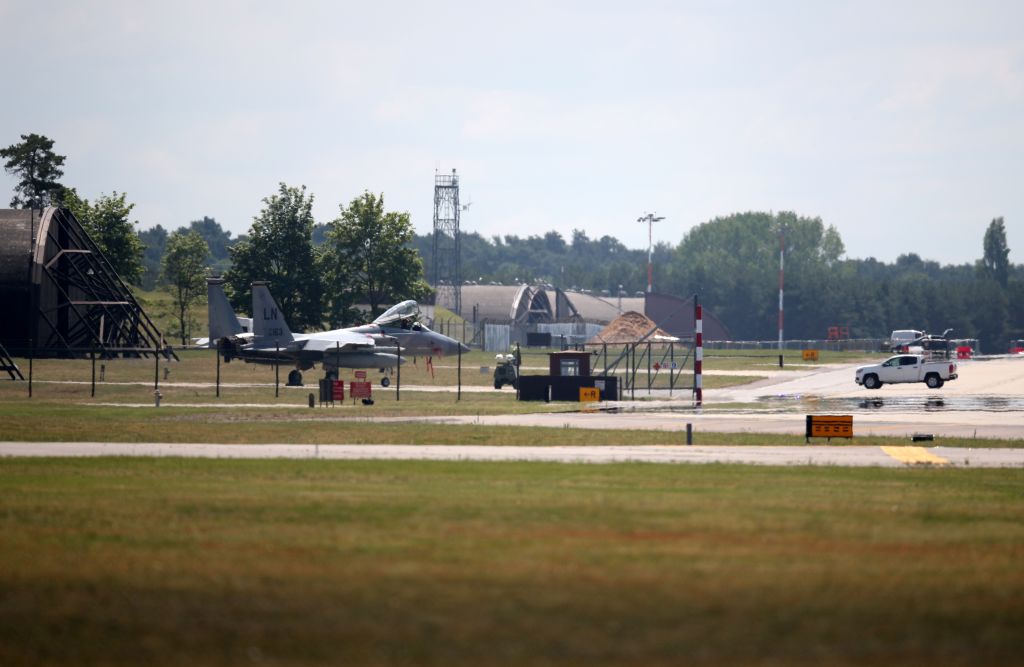
In early November, the Royal Air Force Lakenheath base in England, which houses U.S. military personnel, successfully intercepted multiple drones operating around its airspace, prompting temporary “shelter in place” alerts. As further details of this incident emerge, concerns about the security threats facing U.S. military bases in the UK are once again being brought to the forefront.
According to reports from informed sources cited by the Financial Times, on November 13, the U.S. military employed its drone defense systems at RAF Lakenheath, located in Suffolk, to repel approximately six drones that had intruded into the airspace surrounding the base.
However, the U.S. forces have not been able to recover these drones, making it challenging to verify whether they were equipped with weapons or reconnaissance equipment. As a result, the potential for these drones to be used for attack or intelligence-gathering purposes cannot be entirely ruled out.
Sources have suggested a possible link to Iran regarding this drone incident, a claim that has been firmly denied by Tehran.
RAF Lakenheath is home to the 48th Fighter Wing of the U.S. Air Force, which comprises about 7,000 military personnel, marking it as one of the most critical fighter operation bases for the U.S. in Europe. In September, the base was elevated to a significant “Charlie Alert” status by the U.S. Department of Defense, reflecting an increased level of security threat that the base faced at that time.
On November 13, the U.S. Air Force confirmed that it had taken responsive measures due to the “suspected unauthorized drone activity” occurring at the base, while asserting that the incident did not impact personnel, aircraft, or base facilities.
This drone incident is one of a series of security challenges faced by U.S. military air bases in the UK this year. For instance, in the early hours of September 27, the Fairford Royal Air Force base in Gloucestershire experienced a thwarted terrorist attack plot that was allegedly linked to the Iranian Revolutionary Guard. U.S. authorities subsequently filed related criminal charges, though Iran denied any involvement.
In light of the recent drone activity at RAF Lakenheath, U.S. forces stationed in Europe, on November 27, declined to disclose specific deployment details or operational mechanics of the drone defense system, citing operational security concerns. Nonetheless, a spokesperson urged the public to remain vigilant, advising that any suspicious activities should be reported immediately to local law enforcement.
The UK’s Ministry of Defence has stated that protecting military bases is a “top priority” for the government, emphasizing its ongoing commitment to reviewing and enhancing security measures. The Ministry also indicated that collaboration with local police and U.S. Air Force security teams is critical to ensuring that relevant threats are addressed promptly.
Additionally, the UK government is investing £470 million to bolster the overall defensive capabilities of military facilities, focusing on areas such as physical protection, surveillance systems, and anti-drone technology.
Reports indicate that the Royal Air Force is adjusting aircraft parking and security measures at several bases, including moving certain aircraft into hangars at night and erecting anti-drone nets around planes parked outdoors to mitigate the risks posed by potential drone strikes.
As the security threats to U.S. military bases in the UK continue to garner attention, concerns have been raised regarding another U.S. base, RAF Mildenhall. Nick Timothy, the Member of Parliament for West Suffolk and a Conservative Party shadow cabinet member, expressed unease about security risks surrounding this base.
His concerns arise from the fact that a large solar energy and battery storage facility, known as Sunnica, is being constructed just 2.5 kilometers away from RAF Mildenhall.
Timothy questioned whether the UK Ministry of Defence had adequately assessed the possible security implications for nearby military bases during the planning review process of this project, particularly considering the risk of hostile nations exploiting these facilities for sabotage, arson, or other attacks.
In response to these concerns, a government spokesperson stated that all relevant projects are subjected to stringent planning review processes, and security factors have been incorporated into the assessment criteria.