
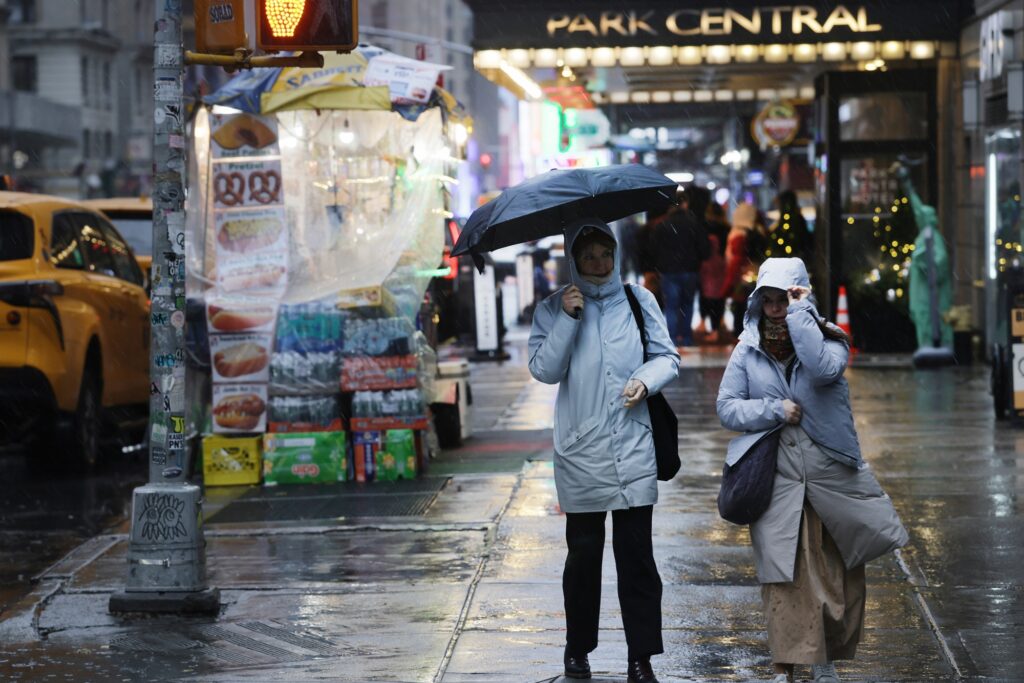
On Friday, November 27th, the aftermath of the recent storms that unleashed flooding along the East Coast of the United States was evident, as heavy rains began to taper off following the Thanksgiving holiday. While power restoration efforts were underway, hundreds of thousands of residents remained without electricity.
During the Thanksgiving period, a significant storm impacted parts of the East Coast, knocking down trees and power lines, which in turn severely disrupted transportation and caused extensive power outages. The storms triggered multiple water rescues across wide areas from New York to Virginia, as emergency services struggled to respond to the urgent needs of those affected.
Meanwhile, other regions of the country, including parts of the Pacific Northwest, the Midwest, the Ohio Valley, and areas downstream of the Great Lakes were still facing rain or snow on Friday, underscoring the extensive reach of the storm system.
According to the National Weather Service (NWS), improvements in weather conditions were forecasted for the entire eastern United States on Friday. However, the formidable storm system would require time to fully dissipate. The NWS warned of sustained winds between 25 to 35 miles per hour (40 to 56 kilometers per hour), with gusts expected to be stronger. Flood warnings that had been issued for coastal areas stretching from New Jersey to Virginia were set to remain in effect through Friday.
Data from PowerOutage.us, which tracks power outages nationwide, indicated that over 600,000 homes and businesses were still without power on Friday morning, a decrease from the peak of over 900,000 users affected the previous day. Most of these outages were concentrated in the eastern part of the country.
In Maryland, nearly 2 million water utility users in Montgomery County and Prince George’s County received notification that they could resume normal water usage after authorities had previously advised residents to conserve water due to the storm’s impact.
Flooding also hit Baltimore, Norfolk in Virginia, and Virginia Beach, with reports of some buildings collapsing as a result. The Baltimore police were forced to close several streets due to flooding concerns.
As the tides rose, inundation was seen from North Carolina to New Jersey, prompting authorities to close roads and emergency responders to rescue individuals trapped in vehicles stranded in the floodwaters.
In Tennessee, winter storm warnings were issued for parts of the state, forecasting snowfall totals of up to 1 inch (approximately 25 millimeters). The region experienced rain on Thanksgiving Day which later transitioned to light snow. Some local news outlets reported this snowfall as the most significant recorded during the Thanksgiving holiday in 75 years.
In the Midwest, weather conditions on Friday were relatively calmer compared to Thanksgiving, with the NWS noting that some areas in eastern Missouri received up to 15 inches (38 centimeters) of snow the day prior.
At the same time, the Pacific Coast experienced flooding due to high tide, impacting railway traffic between San Diego and Los Angeles, leading to the cancellation or shortening of over a dozen train services. This disruption continued to affect rail operations on Friday.
Record-setting tides along the California coast also prompted evacuations in some areas, emphasizing the ongoing impact of extreme weather across the nation.
Additionally, forecasts indicated that parts of Montana and Wyoming could be in for significant snowfall in the upcoming days.
This unfolding situation reflects the severe and widespread impacts of the weather patterns currently affecting the United States, leaving many communities bracing for the challenges ahead.