
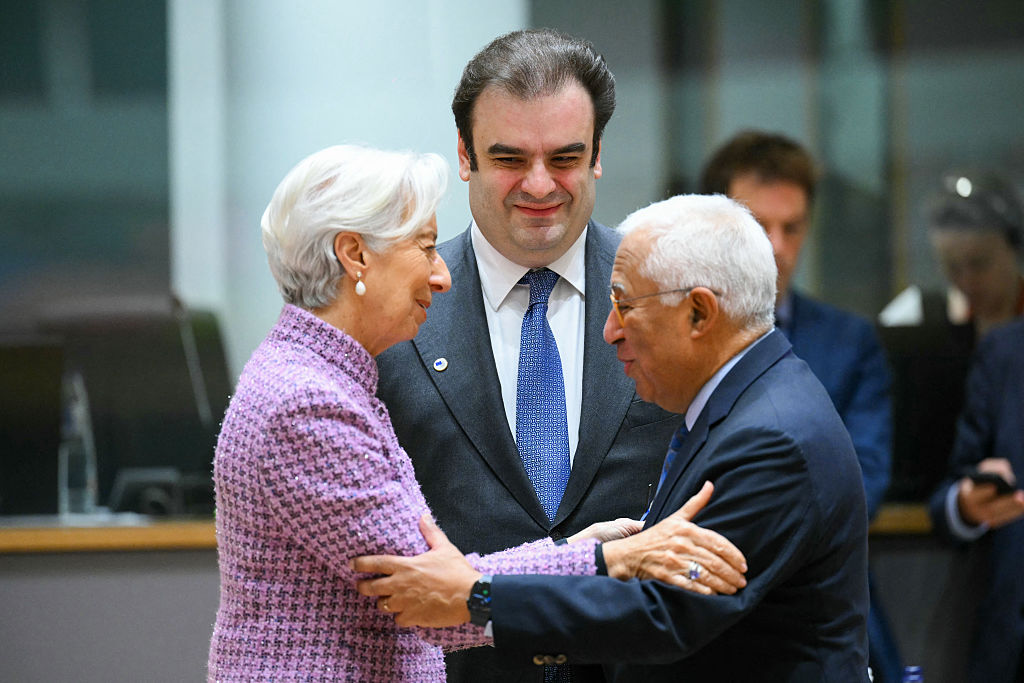
On November 26, EU leaders gathered in Brussels, Belgium, for a two-day summit to discuss a staggering $1.7 trillion budget plan extending over the next seven years, including funding for Ukraine. The officials aimed to reach an agreement by December; however, multiple countries expressed their opposition to the current budget proposal, highlighting ongoing divisions regarding agricultural subsidies, fiscal spending, and the distribution of funds allocated for Ukraine.
For the EU’s seven-year budget to be approved, it requires the unanimous consent of all 27 member states. The EU leaders hope to finalize the budget during the next summit scheduled for December 17-18. However, Hungarian Prime Minister Peter Magyar remains skeptical about the prospects for negotiation. On November 26, he expressed his doubts on social media platform X, stating, “After hearing the completely opposite positions of the participating countries, I believe that the chances of reaching an agreement today are almost zero, and the likelihood of achieving a consensus around Christmas is also low.”
On November 21, António Costa, the President of the European Council, proposed a revised budget plan for the EU covering the years 2028 to 2034, amounting to €1.58 trillion (approximately $1.74 trillion). This plan allocates about €740 billion ($813 billion) for various critical sectors, including agricultural subsidies, regional development, fisheries, immigration, border management, and internal security.
“We need a long-term budget that meets the funding needs of key areas while keeping the contributions of each member state at a reasonable level,” Costa noted on November 26 via X. He also introduced five new revenue sources for the EU, which include income from digital services and member state contributions calculated based on tobacco consumption taxes and unrecycled electronic waste.
Slovakian Prime Minister Robert Fico discussed the positions of Poland, the Czech Republic, Hungary, Slovakia, and Austria regarding the budget proposal on November 23. He highlighted that these four members of the Visegrad Group would take a united negotiating stance, particularly focused on securing agricultural subsidies and funding for underdeveloped regions.
Polish Prime Minister Donald Tusk affirmed that he would not accept any budget proposal that would lead to increased energy prices, impose further social burdens, or weaken the defense capabilities of Poland and other Eastern European countries. Czech Prime Minister Andrej Babis echoed his concerns on the same day, labeling the current proposal as “completely unacceptable.”
The Netherlands shares similar reservations regarding the existing proposal. Dutch Prime Minister Rob Jetten stated before the summit on November 26, “If we are to reach an agreement, the budget structure must be reformed to reduce its scale. Now, we wait to see if Costa can present a better proposal.”
Under the seven-year budget plan, the EU intends to establish a special reserve fund for Ukraine amounting to up to €88.9 billion ($98 billion), aimed at supporting Ukraine’s accession to the EU and its long-term rebuilding efforts.
Additionally, the European Commission proposed an extra loan of €45 billion ($49.4 billion) to Ukraine for 2027. If Russia pays war reparations, Ukraine will be responsible for repaying this loan. Previously, the EU had already set up a loan package totaling €90 billion ($98.9 billion) for Ukraine for the years 2026 to 2027.
Germany is advocating for a collaborative approach among all 27 member states to share the cost of aiding Ukraine. German Chancellor Friedrich Merz arrived at the summit on November 26 and emphasized the necessity of ensuring “sufficient support” for Ukraine in the coming years. He remarked, “If this war cannot be concluded, I think no one in Europe wishes to see another influx of Ukrainian refugees.”
Hungary, however, is resistant to tying aid for Ukraine to the EU’s seven-year budget. On November 23, Magyar reiterated in Bratislava that Hungary would not accept funding aid to Ukraine as a mandatory obligation for member countries.
Meanwhile, the National Rally party, led by prominent figure Marine Le Pen, has circulated the possibility of halting financial assistance to Ukraine should she be elected President of France. On October 15, Le Pen noted on X that she personally does not harbor any grudges against Ukrainian President Volodymyr Zelenskyy and is open to meeting with him in Ukraine, but emphasized the limits of France’s capacity to continue providing this kind of aid, stating, “Up to now, this assistance has cost us €6 billion annually.”