
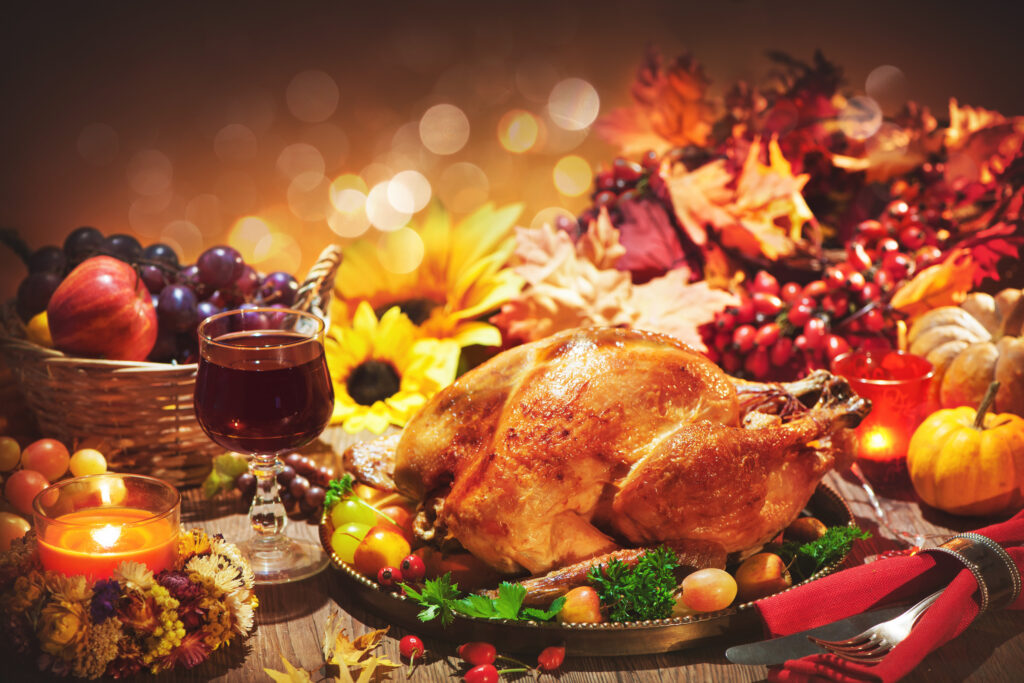
Thanksgiving is a time for family and friends to come together and enjoy a festive meal, but many age-old kitchen habits and dietary beliefs surrounding the holiday are not grounded in science.
The preparation, roasting, and serving of turkey, as well as the safe handling of leftovers, have been clarified through insights from the United States Department of Agriculture (USDA), the Centers for Disease Control and Prevention (CDC), and various nutrition experts who have debunked ten common misconceptions about the Thanksgiving feast.
One key misconception is the belief that washing raw turkey enhances food safety. In reality, washing a turkey can inadvertently spread bacteria onto nearby countertops, utensils, and other foods. The CDC strongly recommends that individuals place the turkey directly in a roasting pan without washing it, and they should wash their hands thoroughly afterward, along with cleaning all surfaces that have come into contact with the raw turkey juices.
Another common error is relying solely on the small plastic pop-up timer that often comes with a turkey. The USDA emphasizes that a meat thermometer is crucial in ensuring safe consumption of turkey. It is only safe to eat when the internal temperature reaches 165°F (approximately 74°C) in the thickest part of the turkey breast, as well as in the innermost part of the thigh and wings. When measuring these areas, it’s essential to avoid touching any bones.
Even when properly roasted, turkey meat may still exhibit a pink hue, particularly near the bone. Color alone is not a reliable indicator of whether the meat is safe to eat. According to the USDA, chemical changes during cooking can cause poultry to retain pinkness, even after reaching the necessary safe temperature. Therefore, it is advisable to use a meat thermometer rather than relying on the color or appearance of the juices.
Basting turkey by pouring pan juices over the meat may enhance surface flavor, but it does not infuse moisture deeply into the meat. Excessive basting can actually soften the skin and requires repeatedly opening the oven, which leads to heat loss. To achieve a juicy turkey, the key lies in proper seasoning and avoiding overcooking. Applying salt to the turkey’s surface beforehand, a method known as “dry brining,” can help retain moisture effectively.
Stuffing placed inside the turkey cavity does absorb meat juices but also introduces food safety risks. The turkey meat often cooks through before the stuffing reaches the recommended temperature of 165°F (approximately 74°C). Continuing to roast the turkey solely to ensure the stuffing is cooked properly could result in dry breast meat. It is advised to cook stuffing separately to better control temperatures and achieve a crispy texture. If one prefers traditional methods, it is best to stuff the turkey just before it goes into the oven and to ensure the stuffing’s center also reaches 165°F.
Another misconception is cooking the turkey at low temperatures, such as 200°F (approximately 93°C) or 250°F (approximately 121°C) overnight. The USDA recommends setting the oven temperature to at least 325°F (approximately 163°C) so that the turkey can pass through the danger zone where bacteria thrive.
Pumpkin pie may seem like a typical baked dessert, but its filling contains eggs and milk. The FDA’s holiday food safety guidelines emphasize that homemade pumpkin pie must be refrigerated within two hours after cooling from baking. Leaving it out on the kitchen counter from morning until evening is not safe.
There is a common belief that the tryptophan in turkey induces drowsiness, often referred to as the “turkey coma.” Kimberly Dong, an associate professor of public health at Tufts University School of Medicine, explains that although tryptophan can stimulate the production of serotonin and melatonin, turkey contains insufficient amounts to cause sleepiness. Other foods, including chicken and beef, contain comparable levels, while cheddar cheese even has higher levels of tryptophan.
The true reason for post-meal fatigue often stems from the consumption of a large volume of carbohydrate-rich foods during the holiday, leading to a rapid spike and then drop in blood sugar levels. Additionally, Susan Roberts, a professor at the Geisel School of Medicine at Dartmouth, points out that overeating redirects blood flow to the gastrointestinal tract for digestion, leaving muscles feeling fatigued.
Both experts agree that it is possible to avoid excessive eating during the holiday. Kimberley Dong notes that deliberately skipping breakfast before the Thanksgiving dinner can lead to hasty food choices due to hunger when mealtime arrives. She advises an easy breakfast on the day itself along with staying hydrated.
Susan Roberts suggests increasing fiber intake in the days leading up to Thanksgiving to help control appetite and being proactive about handling leftovers before feeling overstuffed, rather than relying on willpower to avoid leftovers.
Anne Suelzer, a registered dietitian from Health Loft, warns that properly stored leftovers are safe for three to four days, but one should not rely on smell or appearance to judge safety. “The bacteria that can make you sick typically do not alter the food’s appearance or smell,” she cautions.
She emphasizes that leftovers must be refrigerated within two hours of coming out of the oven, with timing starting as soon as the food is out and not when dinner is finished. It is advisable to begin packing food while guests are still chatting around the table.
Many people believe today’s traditional Thanksgiving menu is a direct continuation of the 1621 feast shared by the Pilgrims and the Wampanoag people. However, Malka Benjamin, director of the Plimoth Patuxet Museums in Massachusetts, notes that historical letters suggest that, while the table might have included turkey, venison, seafood, pumpkins, and corn porridge, it certainly did not feature potatoes or sweetened cranberry sauce.