
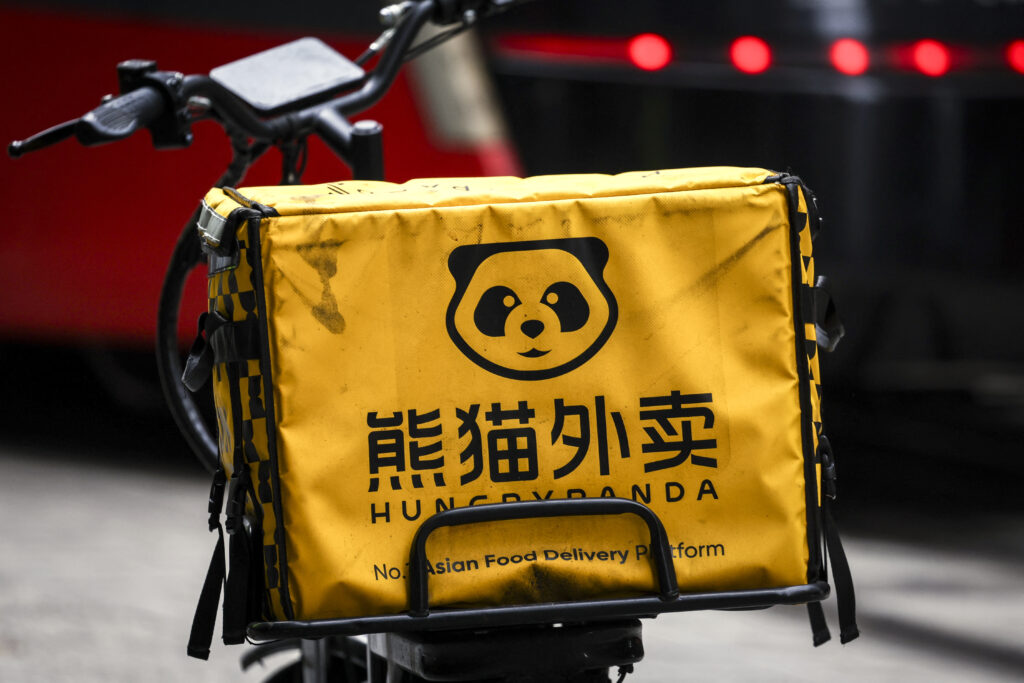
In Melbourne, Australia, a discussion group on WeChat dedicated to mourning a fallen food delivery rider from HungryPanda has sparked serious concerns among members. At least three individuals within the group have reported that they or their parents in China received phone calls from the Chinese Communist Party (CCP) police, inquiring whether they participated in any memorial activities for the deceased rider.
According to a report from The Guardian, dated November 24, group chat records reveal that as of November 11, several members expressed their fears after receiving calls from local police in China. The police questioned them about their involvement in a memorial event held for the slain rider.
As the news of the police’s inquiry spread, alarm began to rise among the group’s 400-plus members. Many voiced concerns about the potential repercussions for themselves and their families in China. Consequently, the group decided to disband on November 12.
Members reached out by The Guardian chose to remain anonymous due to safety fears for themselves and their families.
This incident is not the first time that Australian delivery riders have faced scrutiny from the CCP for discussing collective actions in WeChat groups. Earlier in February, Sydney-based HungryPanda riders had initiated a conversation about staging a strike during Chinese New Year’s Eve to protest wage issues. Following those discussions, multiple participants received warnings from the CCP police, urging them not to engage in the strike.
At that time, the group had 155 members, and more than half withdrew after receiving police calls, ultimately leading to the cancellation of the planned strike. The Australian Broadcasting Corporation had previously reported on this alarming sequence of events.
One former rider, known as Zhuoying Wang (also referred to as Joy), who participated in the February group discussions, recounted how she received four separate calls from police in her hometown in Henan, China. Initially, the authorities seemed unaware that the protest was taking place in Sydney. However, upon her explanation, they warned her about the possibility of retaliation should she return to China.
Another individual, Jack, who has since left HungryPanda and is currently running a business in eastern China, stated that he initially joined the group to support former colleagues. Yet, he received three calls from hometown police pressuring him not to take part in the strike. He subsequently exited the group, expressing, “I’m currently in China and have some things to consider.”
This most recent WeChat group emerged following the tragic death of Feng Jianming, a 49-year-old HungryPanda rider, who was murdered on the night of November 6 near Victoria Market. Reports indicate that he was trying to intervene and protect another rider from someone who allegedly vandalized their electric bicycles, and was subsequently stabbed by the assailant.
After the incident, the newly formed WeChat group members rallied to organize a memorial on November 7 at the State Library of Victoria. That evening, hundreds of people gathered to lay flowers and light candles in tribute to the fallen rider.
Reports from The Guardian reveal that Wang speculated that the police calls to group members in Australia could have been triggered by specific keywords such as “strike” appearing in their WeChat discussions.
Jeffrey Knockel, a senior researcher at the University of Toronto’s Citizen Lab, concurred with this assessment. He has previously studied a wage protest in Jiangsu Province in 2016, discovering that phrases like “city-wide strike” used in group chats activated internal mechanisms within WeChat that alerted authorities.
He suggested that the instances occurring in Australia may have followed a similar pattern. Knockel pointed out that WeChat might have flagged the relevant group conversations and reported them to the CCP. Following this, local police could have tracked the riders’ personal information through China’s household registration system, resulting in directives to intervene.
WeChat had previously claimed that data from overseas users is stored in Singapore and is not under CCP jurisdiction. However, Knockel indicated that if even one member of a group chat registered with a Chinese phone number participates, the entire conversation may be susceptible to scrutiny by the CCP.
WeChat did not respond to requests for comments from The Guardian.
Kevin Slaten, director of the China Dissent Monitor project at the U.S. think tank Freedom House, asserted that the police calls from February were likely instigated by WeChat. With a rise in wage-related labor disputes anticipated in China during late 2025 and early 2026, the possibility of such monitoring is significant.
Slaten speculated, “The CCP may have assumed that these workers were linked to the domestic wave of wage protests… Initially, they might not have realized that these individuals were actually located outside China.”
He further noted that given that security departments had received directives to focus on wage protest activities, even when informed that these riders were overseas, the police may have persisted in contacting them to impose warnings against such collective actions.
Li Qiang, executive director of China Labor Watch, has recorded multiple cases where Chinese workers discussing labor movements on WeChat abroad were harassed by the CCP. However, these workers were typically employed on overseas projects by Chinese state-owned enterprises.
Li stated that the actions taken by the CCP police in response to the HungryPanda situation represent an “overreaction,” and while such occurrences in Australia are concerning, they underscore a broader issue.
“We are now witnessing these delivery riders receiving calls from the CCP police,” he remarked. “This foresight brings to light that anyone using WeChat, including Australian law enforcement officials and their families, or persons related to China, may be subjected to similar monitoring by the CCP.”
The Australian Department of Home Affairs declined to comment on the matter but indicated through a spokesperson that “any foreign government targeting our citizens to impede their fundamental rights and freedoms in Australia is unacceptable.”
Jonathan Duniam, spokesperson for the opposition’s Home Affairs, emphasized the need for greater governmental action in addressing WeChat’s potential role in surveillance. He stated, “The Coalition has expressed serious concerns regarding the connections between WeChat and the CCP, its censorship mechanisms, and its potential use for monitoring; yet, the Albanese government has not adequately acted to mitigate these risks and ensure the necessary transparency and accountability of the platform.”
In 2023, an Australian Senate inquiry into foreign interference suggested prohibiting the use of WeChat on government devices and establishing a national security technology office to monitor “high-risk” social media platforms, a proposal the government only acknowledged without further commitments. The Chinese embassy in Canberra declined to comment on the allegations surrounding HungryPanda.