
On November 23, 2026, Liu Min, the former director of the Department of Major Special Projects at China’s Ministry of Science and Technology, was placed under investigation for serious violations of discipline and law. Liu was notably promoted by Wan Gang, the former Minister of Science and Technology, who is often hailed as the “founder” of China’s new energy vehicle industry and has been referred to as the “father of electric vehicles” in the country.
Wan Gang, a native of Shanghai, previously held the position of president at Tongji University. His rise in the political landscape was supported by numerous senior officials from the Shanghai faction, including former Minister of Science and Technology, Zhu Lilan, and Xu Guanhua. Wan served as Vice Chairman of the National Committee of the Chinese People’s Political Consultative Conference for three consecutive terms from March 2008 to March 2023, achieving a vice-ministerial level ranking. The recent purging of the Ministry of Science and Technology, alongside Liu Min’s investigation, has sparked speculation about the underlying power struggles within the higher echelons of the Communist Party.
The Central Commission for Discipline Inspection reported this investigation via the website of the Ministry, informing that Liu had become a target amidst ongoing efforts to clamp down on corruption. Her public career spanned various key roles within the Ministry, including Deputy Director of the Development Planning Department as early as January 2010 and Deputy Director of the Innovation and Development Department in 2014. By October 2020, she had risen to the role of Director of the Department of Major Special Projects.
This department is responsible for key national research initiatives, from planning to execution, in critical areas such as core electronic devices, advanced general-purpose chips, and the manufacturing of integrated circuits. It also involves high-end CNC machine tools, the development of significant new drugs, and major infectious disease prevention.
Liu Min was still active in her role as recently as April 26, 2023, when she chaired a meeting as the party branch secretary of the Department of Major Special Projects. By August 2023, she was still listed as the director on the Ministry’s official website, and in December 2025, she appeared in public events in her capacity as the former director, although an official announcement regarding her departure from this role has not been made.
In recent years, several officials within the Ministry of Science and Technology have faced similar fates. For instance, Wang Chunyang, Director of the New Technology Center, was investigated in July 2025, and Li Yong, Deputy Director of the Science Talent and Science Popularization Department, was subject to investigation in August 2023. The latter was sentenced to 11.5 years for accepting bribes amounting to over 11.69 million yuan in August 2024.
Liu Min’s extensive experience also included significant leadership positions across various departments focusing on national technology innovation initiatives. Between 2015 and 2020, she served as the Director of the High-tech Research and Development Center, responsible for the specialized management of key national science projects, including significant initiatives within the new energy vehicle sector. She frequently attended important meetings that assessed the progress of these projects.
The new energy vehicle industry in China has been marked by rampant irregularities, including early fraudulent claims for subsidies, losses from local state-owned investments, and issues surrounding certification and testing. Recent years have seen a decline in cash subsidies and tax incentives from the government, leading companies that heavily relied on these policies to face bankruptcy and significant waste of investment, estimated in the hundreds of billions.
Liu Min’s close association with Wan Gang, who was the Minister of Science and Technology from April 2007 to March 2018, has added to the scrutiny surrounding her investigation. During Wan’s tenure, Liu was promoted through multiple positions within the ministry, reflecting a deep-rooted relationship marked by loyalty and mutual reliance.
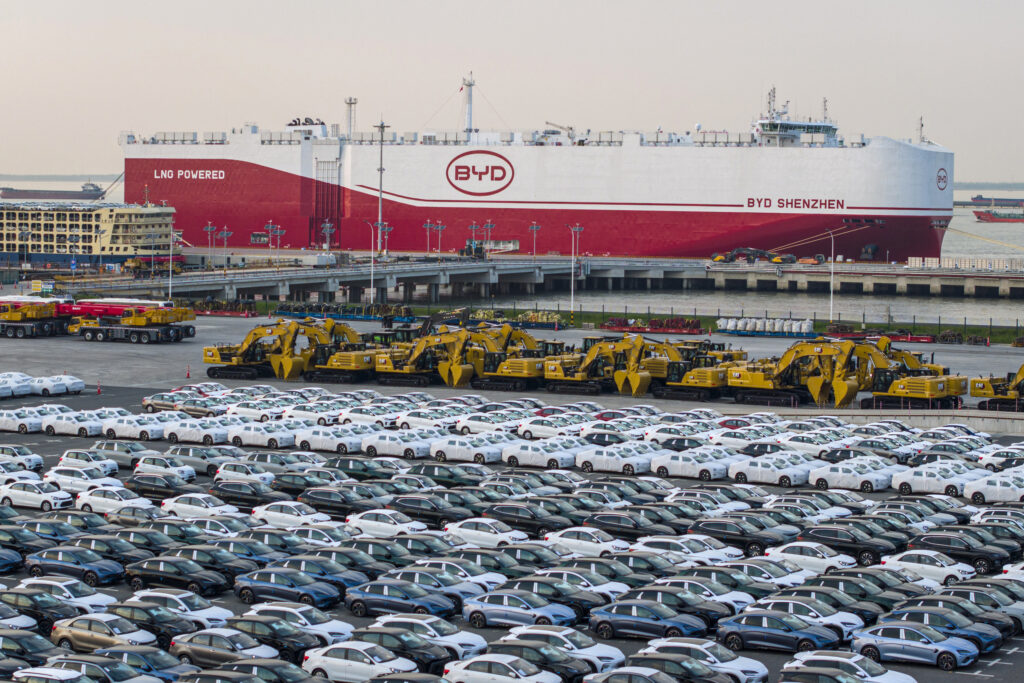
In a revealing 2026 interview with the state media, Wan Gang was referred to as the “seeder” of the new energy vehicle industry, an acknowledgment of his substantial contributions to the field. Analysts and industry experts have highlighted the country’s transformation into the largest producer and consumer of new energy vehicles globally.
Despite the apparent successes, challenges remain for China’s electric vehicle industry, including geopolitical barriers, risks associated with global supply chains, and intense domestic competition exacerbated by profitability pressures.
From the 2007 appointment of Wan Gang as Minister of Science and Technology, there has been a pattern of leadership dominated by individuals associated with the Shanghai faction of the Communist Party, a trend underscored by connections to key figures during Jiang Zemin’s leadership, such as Zhu Lilan and Xu Guanhua.
The developments post the 20th National Congress of the Chinese Communist Party have witnessed a crackdown on former officials linked to the Shanghai faction, indicating a potentially significant shift in the political landscape. The recent fall of several high-profile officials indicates that an era of accountability and scrutiny into previous leadership practices is underway.
In conclusion, while Liu Min’s investigation sheds light on the ongoing anti-corruption efforts within China’s Science and Technology Ministry, it also raises questions about the future of other high-ranking officials associated with Wan Gang and the broader implications for the leadership dynamics within the Communist Party.