
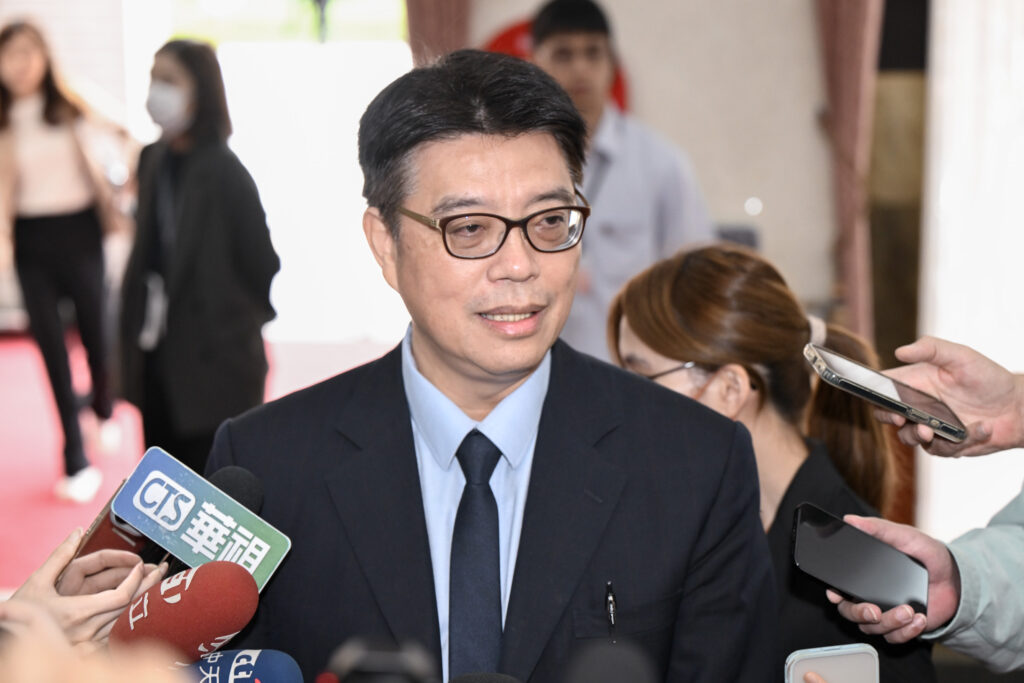
On November 22, during an international seminar, the Chairperson of the Mainland Affairs Council of the Republic of China highlighted serious concerns stemming from the Chinese Communist Party’s (CCP) recently implemented National Unity Promotion Law. This law poses a threat, as it categorizes any failure to comply with the CCP’s push for “unification” as an act that undermines ethnic unity, potentially leading to sanctions against individuals and organizations. The Taiwan government is poised to respond to these harsh actions by the CCP, which employs legal mechanisms to enforce unification and uses transnational repression, through three key strategies: prevention, protection, and countermeasures.
During his address, the Chairperson expressed his gratitude for the invitation to participate in the “Snowy Region Forum” hosted by the Dalai Lama’s Tibetan Religious Foundation. The forum’s theme was “Finding Common Ground in Response to the Detrimental Effects of the CCP’s National Unity Promotion Law and Corresponding Strategies.” It gathered scholars and experts from Taiwan and around the world to discuss how to navigate the multifaceted pressures applied by the CCP and its legal warfare through the National Unity Promotion Law. This legislation, which began enforcement on July 1, is not merely a legal framework; it is a crucial component of the CCP’s ongoing strategy to extend its “long-arm jurisdiction” beyond its borders.
The Mainland Affairs Council has identified three significant adverse impacts arising from this law. On the surface, it is couched as a tool for promoting ethnic unity and collective development. However, in practice, it serves to embed the political will of the CCP more deeply into the lives of the people through legal means, enhancing ideological control and political integration. The legislation mandates that education, culture, religion, language, and other social spheres align with the CCP’s political ethos, framing the promotion of a “shared consciousness among the Chinese nation” as a core mission.
A major concern is that this approach systematically erodes the cultural, linguistic, religious, and historical identities of diverse ethnic groups. The multifaceted nature of ethnic identities should not be a target for political re-engineering, nor should the freedoms to preserve one’s culture and beliefs be stripped away under the guise of national unity or ethnic cohesion.
The implications of this law are particularly worrisome in regions such as Tibet and Xinjiang, where it may further bolster existing CCP policies aimed at homogenization. Communities that are already under substantial political control regarding their ethnic, religious, and cultural practices are likely to face intensified pressure. The Chairperson urged the international community to recognize that genuine ethnic unity must be built on the foundations of respecting differences, safeguarding rights, and ensuring the freedom to choose—rather than through legal mandates enforcing a singular CCP ideology and identity.
Moreover, this law represents a significant escalation, as it officially integrates Taiwan into the CCP’s ethnic management scope. It explicitly aims to “deepen cross-strait integration across various domains,” enhancing the sense of belonging, identity, and honor among Taiwanese citizens towards the Chinese nation and people.
Previously, the CCP sought to prosecute individuals it considered involved in activities related to “splitting the nation” or espionage primarily through its Anti-Secession Law and criminal laws. However, with the introduction of the National Unity Promotion Law, any lack of compliance with the push for “unification” can now lead to designation as “undermining ethnic unity,” further raising the stakes for individuals in Taiwan engaging in exchanges with the mainland. This shift not only exacerbates the risks associated with travel to mainland China and participation in cultural exchanges but also politicalizes what should be normal, healthy interactions, effectively transforming them into instruments for the CCP’s unification agenda and political dominance.
The National Unity Promotion Law includes extraterritorial provisions, indicating an intention to extend the CCP’s political control and ideological influence beyond its borders. The party aims not only to maintain control over its domestic population but also seeks to intimidate and threaten individuals outside China. By employing tactics such as surveillance, harassment, intimidation, and even violent attacks, the CCP is attempting to silence dissenting voices and stifle free participation in public affairs.
Since last year, a series of incidents have exemplified this crackdown, including two paint-throwing attacks on Tam Wai-hung, a Hong Kong activist based in Taiwan, and the assault on journalist Yamada Akira. More recently, cases such as comedian Huang Yi-hao’s alleged “fake car crash” and systematic bomb threats against distributors and theaters screening the documentary “State-Owned Organs” indicate the rising tide of cross-border repression. The CCP seems intent on instilling fear in Taiwan’s social fabric and sending warnings to international supporters of Taiwan.
Recognizing the severity of these developments, the Chairperson outlined that the government will actively respond to the CCP’s egregious actions of legal repression and transnational coercion through measures focused on prevention, protection, and counteraction. Currently, the Executive Yuan has initiated the establishment of a cross-organizational platform targeting transnational suppression, elevating efforts to safeguard Taiwanese citizens to a ministerial level. Furthermore, the travel advisory for visits to mainland China, Hong Kong, and Macao has been raised to “orange,” urging citizens to avoid non-essential travel. If travel is necessary, citizens are encouraged to register through the Mainland Affairs Council’s dynamic registration system to facilitate timely governmental support if required.
The Chairperson concluded by stating that the nature of the CCP’s authoritarian expansion is unlikely to shift in the short term. Nevertheless, the vision for peace and stability in the Taiwan Strait and the broader region will face numerous challenges. Despite this, the government will steadfastly uphold its commitment to democracy, freedom, human rights, and the rule of law, continuously striving to defend these invaluable universal values and protect democratic Taiwan.