
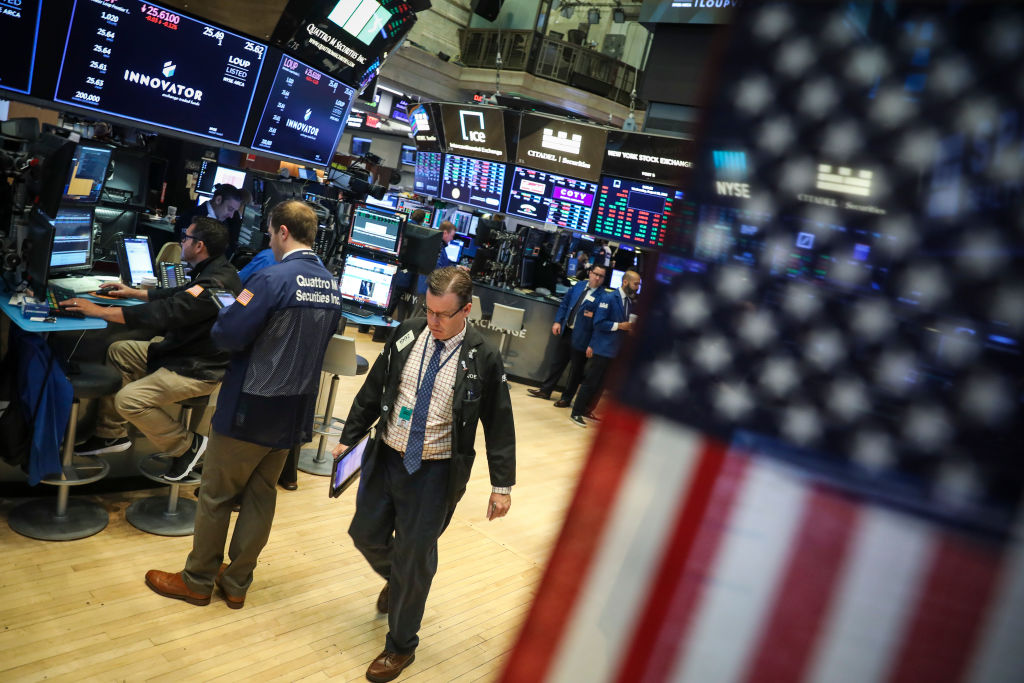
Last week, global stocks related to artificial intelligence (AI) experienced a sharp sell-off, leading to a strong rebound in U.S. stock index futures during the Asian trading session on Monday, November 23. The Asian equity markets displayed mixed trends, with the South Korean stock market suffering a significant drop of over 4% at one point. Stocks in China and Hong Kong also slid, while Taiwan’s stock market managed to recover after considerable volatility. In response to the market’s turmoil, regulatory authorities in Taiwan, South Korea, and China have announced various measures to stabilize their respective markets.
The recent decline has not only severely impacted technology and semiconductor stocks but has also raised concerns about the substantial returns expected from investments in AI. Investors are increasingly worried about whether the capital-intensive construction of data centers, heavily financed through substantial borrowing, will generate enough revenue to repay debts and sustain enterprise valuations.
In the early hours of trading in Asia, S&P 500 futures climbed over 2%, and Nasdaq 100 futures rose nearly 3%. This comes after the S&P 500 had recorded a continuous decline over the past seven trading sessions, entering a technical correction territory. The Nasdaq Composite Index fell by 10% last week, registering its largest single-week drop since March 2020, during the wave of market panic instigated by the COVID-19 pandemic.
By around 10:20 AM on Monday, Taiwan’s Weighted Index stood at 36,149.90 points, reflecting a 0.32% increase, despite significant fluctuations during the session where the index ranged over 1,200 points. The electronics sector saw an uptick of 0.77%, while financial stocks dropped by 4.01%, highlighting a stark divergence in performance across different sectors.
The KOSPI index in South Korea fell over 4% in early trading but later reported a drop of 3.68%, closing at 4,690.60 points. The Shanghai Composite Index retreated by 1.16%, while the Hang Seng Index in Hong Kong fell by 1.32%. The Japanese stock market, however, was closed for the Labor Thanksgiving Day holiday.
Taiwan’s stock market had accumulated a decline of approximately 17.5% last week, marking the most significant single-week drop since 1990. The Philadelphia Semiconductor Index also plummeted by 10% on the previous Friday. Additionally, the Wall Street fear index, VIX, reached its highest level since April 2025, surpassing levels recorded during the peak of tensions between the U.S. and Iran earlier this year.
In light of the market volatility, Taiwan’s Financial Supervisory Commission announced on Saturday that starting Monday, short selling would be restricted to prices above the previous trading day’s close. Furthermore, the minimum margin required for borrowing securities has been increased from 130% to 150%. The Ministry of Finance also confirmed that the National Stabilization Fund has entered the market to provide support.
In South Korea, the government stated on Sunday that it is prepared to deploy the stock market stabilization fund immediately if necessary. Starting Tuesday, it will also relax the daily limit on stock buybacks by listed companies for a three-month period.
China’s three major stock exchanges announced that effective November 30, they would reduce the minimum margin requirement for financing stock purchases from 100% to 80%, aiming to bolster the stock market.
Reuters reported that investor concerns about whether the massive investments by companies in building AI data centers will yield sufficient returns are growing more pronounced.
In another development, Jensen Huang, co-founder of Nvidia, found himself embroiled in an extramarital affair with Chinese businesswoman Alice Huang, amidst suspicions of espionage linked to the Chinese Communist Party. Nvidia announced on November 12 that Huang resigned as CEO. The shares of AI company Anthropic fell 8.5% the day after their public listing, deepening market anxieties.
Analysts at JPMorgan noted in a recent report that the recent pullback in risk assets is primarily a response to weakened market sentiment and the deleveraging of AI investments. They observed that the market is beginning to factor in the Federal Reserve’s more hawkish policy stance.
Despite the recent downturn, JPMorgan maintains that the long-term growth trajectory of the AI industry remains unchanged.
Additionally, traders from Goldman Sachs commented that typically, market panic similar to what has been observed recently often presents a good opportunity to start increasing risk positions. However, Goldman Sachs cautioned that overall investor holdings remain high, indicating that the market may not have yet experienced widespread capitulation sufficient to support a strong rebound.
Wall Street analyst Dan Ives expressed that while the market may continue to experience turbulence in the coming months, the fundamentals of the AI sector remain robust over the long term.