
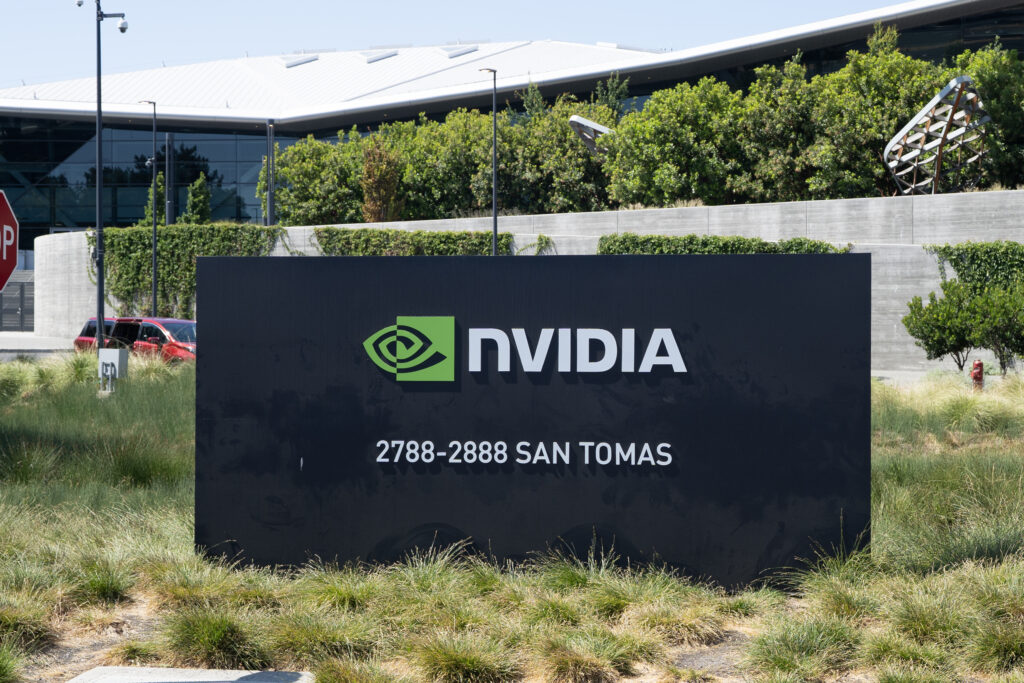
California is currently investigating whether NVIDIA, a leader in artificial intelligence (AI) chip technology, has illegally sold advanced chips to China. This investigation has also raised concerns about the potential violation of California’s criminal laws, further increasing the legal risks faced by the company.
Rob Bonta, the Attorney General of California, indicated on November 20 that if NVIDIA or its former CEO, Jensen Huang, misled the public regarding such sales, they could be in violation of multiple state laws. Bonta announced the investigation a day earlier, stating that it is still in its preliminary stages, and no conclusions have been reached thus far.
In an interview with Bloomberg, Bonta explained, “The fundamental legal framework we are examining involves provisions in California civil and criminal law that prohibit misleading investors and the public. California has various laws specifically prohibiting such conduct in this area.”
On November 19, Bonta issued a subpoena to NVIDIA, requesting pertinent information to clarify whether its advanced chips or confidential information may have reached China. The inquiry specifically examines whether the company has misled investors and the public regarding the associated risks.
This investigation is closely tied to recent allegations concerning Huang’s extramarital affair. Previous media reports disclosed that Huang was involved with a Chinese woman named Huang Le, who has been accused of being a spy for the Chinese Communist Party. At the time, Huang Le was an executive at Megaspeed International, a Singapore-based company that had purchased advanced chips from NVIDIA. This company has also drawn attention from U.S. authorities due to suspicions of assisting in the transfer of NVIDIA’s advanced chips to China.
The unfolding scandal has plunged NVIDIA into an unprecedented crisis, prompting a significant sell-off of its stock and ultimately leading to Huang’s resignation from the CEO position.
Bonta noted that even if the California Attorney General’s office ultimately concludes that NVIDIA illegally sold chips to China and misled the public, the illicit actions may not be linked to Huang’s affair with the suspected spy. He stated, “It’s possible that one of these issues could be involved, or neither might be relevant. That is precisely why we are conducting this investigation. Therefore, it’s also possible that the affair may have nothing to do with the alleged chip sales to China, and that NVIDIA’s actions occurred independently. Alternatively, whether or not there was an extramarital affair, NVIDIA may not have sold any chips to China at all.”
Bonta further explained that if the investigation finds that NVIDIA has indeed broken the law, potential penalties could include a court order prohibiting further illegal activities, as well as the requirement to forfeit all profits from any illegal sales, which could be substantial. If any unlawful actions are discovered, it could lead to criminal charges against NVIDIA and result in significant fines. However, the investigation could also conclude that NVIDIA did not illegally sell chips to China and did not mislead the public.
“The outcome will depend on what actually happened, what factual evidence is available, who knew what and when, as well as the subjective intentions and state of mind involved in the specific actions taken,” he explained.
Following Huang’s resignation, NVIDIA not only faces the pressure of finding a new leader but also scrutiny regarding its adherence to U.S. export regulations. U.S. Treasury Secretary Janet Yellen expressed her concerns on November 15 during an interview on Fox News’ “Sunday Morning Futures,” where she questioned whether NVIDIA intentionally overlooked warning signs related to front companies transporting chips to China, many of which are located in Singapore. Yellen signaled that NVIDIA should clarify compliance issues, indicating a clear message that the company needs to address these concerns thoroughly.