
Warren Buffett, the 96-year-old chairman of Berkshire Hathaway Inc., recently made headlines by announcing his Thanksgiving donation of $5.5 billion in stock, drawing widespread attention. For many, this investment legend represents what could be termed as a “counter-health lifestyle” model.
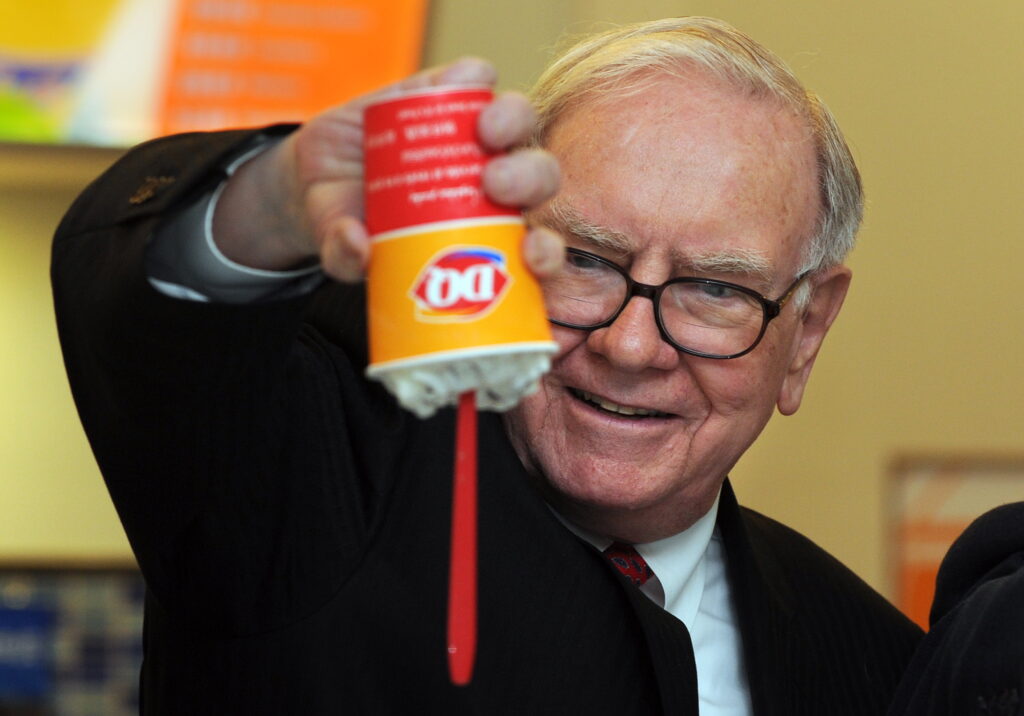
Over the years, Buffett has garnered significant media coverage for his remarkable eating habits, often described as resembling those of a six-year-old child. His breakfast routine typically includes visiting McDonald’s, complemented by a daily intake of at least five cans of Coca-Cola. He has a particular fondness for See’s Candies, Dairy Queen sundaes, and French fries. Despite being in his mid-nineties, he shows little concern for his diet. What could explain this seemingly carefree approach to nutrition?
Various international media and biographies have chronicled Buffett’s eating habits in detail. In a past interview with Fortune, he disclosed that he consumes about 2,700 calories daily, with roughly a quarter coming from Coca-Cola—drinking regular Coke during the day and cherry Coke in the evening. He humorously noted that actuarial tables indicate the lowest mortality rate is among six-year-olds, and thus he decided to eat in a manner reflective of a child’s taste preferences.
Furthermore, the documentary “Becoming Warren Buffett” and various discussions with Bill Gates illuminate Buffett’s quirky strategy of allowing market fluctuations to dictate his breakfast choices at McDonald’s. For decades, he reportedly consumed little to no plain water. In 2019, a reporter from Business Insider even undertook a five-day experiment with what is termed a “Buffett-style diet,” emerging from the experience with a verdict that the sugar and high-calorie content left him feeling lethargic and mentally drained, ultimately cautioning readers against blindly following Buffett’s lead.
Recently, CNBC’s Buffett Archive highlighted a segment from a public Q&A in 2001, where a 70-year-old Buffett was queried about his cholesterol levels and dietary concerns. His response was both humorous and straightforward, encapsulating several key elements of his nonchalant approach to health.
Buffett emphasized a “zero-pressure” mindset, stating that he lives a life devoid of stress. He passionately engages in activities he loves and surrounds himself with talented individuals while abstaining from smoking and drinking. He has consistently expressed in public forums that happiness and a sense of contentment are critical to longevity. He believes that forcing oneself to consume disliked vegetables feels akin to imprisonment.
Speaking on the topic of cholesterol, Buffett joked that if a doctor merely mentions it is “a bit high,” it signals that the situation is not severe. He willingly admitted that he had gone about five years without seeing a doctor until an adverse reaction to medication while traveling prompted a medical visit. This visit resulted in a lecture from the physician and a thorough check-up, which fortuitously allowed for the timely discovery of previously unnoticed benign colon polyps.
Buffett does not deny that dietary changes could marginally adjust lifespan probabilities, although he candidly states that such a transformation is “virtually impossible.” He maintains an enviable vigor and work ethic at his advanced age due to various factors, including personal constitution, access to medical resources, and a low-stress lifestyle. However, it’s essential for the average person not to adopt a high-sugar, high-fat diet as a blanket lifestyle, as this could pose risks to cardiovascular and metabolic health.
As for his daily intake of five cans of Coca-Cola and breakfast from McDonald’s, these details have emerged from interviews, documentaries, and prolonged media coverage. They represent a glimpse into his unique lifestyle and perspective rather than serving as medical advice.