
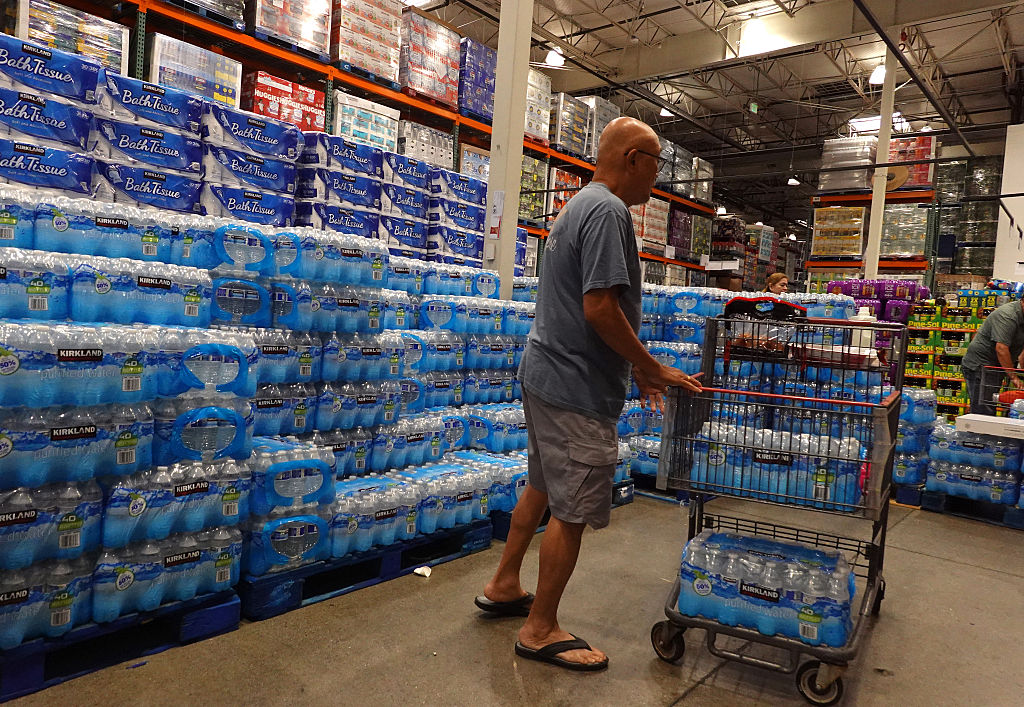
A shopping frenzy is sweeping across the United States as consumers prepare for what they perceive as an impending crisis, likened to an apocalyptic scenario. Recent disruptions in technological systems have heightened concerns about potential AI-driven cyberattacks, leading many to believe that more severe technological failures may be on the horizon. This apprehension is giving rise to a new phenomenon known as the “Doomsday Economy.”
In recent weeks, the U.S. has witnessed a string of significant technical malfunctions that temporarily halted flights, disrupted email services, and slowed the processing speeds of bank transactions. Although Jay Clayton, the U.S. National Intelligence Director, assured CNBC that these incidents were not the result of cyberattacks or coordinated actions by foreign powers, the uncertainty they generated has only intensified public anxiety.
Sabrina Cepeda, a resident of Houston, is one of many individuals feeling the pressure. Recently, she stocked up on propane and lighter fluid to ensure she could still cook and keep warm in case of a power outage. As a mother of three, she also replenished her supplies of non-perishable foods, hygiene products, and allergy medications, preparing for the possibility that her family might be confined to their home for days.
“I need to ensure my family has food, cleanliness, water, heat, and safety,” the 39-year-old Cepeda told CNBC. “It’s better to be prepared for something that might not happen than to be caught unprepared when you really need it.”
Cepeda has previously relied on her emergency food stockpile during extreme weather events like Hurricane Harvey in 2017 and Winter Storm Uri in 2021. However, this marks the first time she has felt compelled to prepare for emergencies resulting from technological disruptions.
“We are too dependent on technology,” Cepeda remarked. “You must learn to handle these situations in more traditional, old-fashioned ways.”
From November 12 to November 17, at least six significant technical failures occurred across the nation. Data from Consumer Edge, a consumer analytics company, indicated a staggering 400% increase in consumer spending on emergency preparedness supplies compared to the same period last year.
Companies like Ready America, which sells emergency survival kits, bottled water, and high-calorie energy bars, have recently reported a fivefold increase in online sales. Many business clients have also placed additional orders for emergency supplies they typically keep on hand for office use.
According to CNBC, Trevyn Reese, the president of Ready America, noted that the company has not experienced such robust demand since the onset of the COVID-19 pandemic over six years ago. The family-owned firm, based in Vista, California, has requested suppliers to ramp up production. Due to a shortage of purification tablets, the company has had to direct consumers toward alternative products like pre-packaged bottled water.
The National Shooting Sports Foundation (NSSF) reported that gun sales in October increased by approximately 8% compared to last year. Retailers and firearm manufacturers have observed that demand remains high as November progresses. The NSSF attributes this surge to uncertainties surrounding the midterm elections and the recent technical system failures.
“If people are willing to spend money on firearms and ammunition, they are telling you quite directly what their top priorities are,” stated Mark Oliva, the NSSF’s public affairs director. “In essence, they are investing in a product that can protect their lives and those of their families.”
Mizuho Bank informed clients on November 16 that concerns surrounding the recent technical failures, compounded by a sense of “panic” prevalent on social media, have driven consumers to stores like Costco to stockpile emergency supplies. Mizuho forecasts that a key indicator of non-fuel sales at Costco will exceed 10% growth in November, marking the first time since 2022.
Richard McWhorter, a private wealth advisor at wealth management firm SRM, reported that his clients have recently flocked to Costco, buying large quantities of goods and even spending lavishly on generators. He has received inquiries from clients asking how to prepare in advance for a potential financial system collapse.
“I have never seen anything like this in my life,” McWhorter remarked. “My work touches both financial and psychological aspects, and over the past two weeks, the psychological issues have overshadowed the financial ones.”
Gold has long been regarded as a safe haven asset during turbulent times. Max Baecker, president of American Hartford Gold, noted an increase in inquiries this week. Some customers have expressed newfound interest in gold and similar products, spurred by a recent system failure at JPMorgan Chase that interfered with customer transactions for hours, causing them to worry about their heavy reliance on digital financial networks.
Data from Consumer Edge indicates a significant uptick in consumer purchases of preparedness supplies since late last month. Meanwhile, the Pentagon is implementing a plan called FORTRESS to ensure that major military bases within the U.S. can continue to operate for at least 90 days in the event that external supplies of water, fuel, communications, and electricity are cut off. While the Pentagon has not specified whom they fear might disrupt these services, a warning was issued in 2024 by U.S. cybersecurity, intelligence, and law enforcement agencies that hackers backed by the Chinese government had infiltrated U.S. networks related to energy, water supply, and communications, with the potential to disable these systems during future conflicts.
Governments in countries such as the UK, Sweden, Germany, Ireland, the Netherlands, and France have recently urged their residents to stockpile essential supplies to prepare for extreme weather events, cyberattacks, or wartime scenarios. Recently, hundreds of supermarkets across Europe have been targeted by cyberattacks, raising alarms about food safety. Hackers have adjusted the temperature of refrigeration and freezing units at some 300 stores to as high as 50 degrees Celsius (122 degrees Fahrenheit), leading to equipment fires and food spoilage. Additionally, a recent cyberattack on France’s blood bank has further heightened public concerns.