
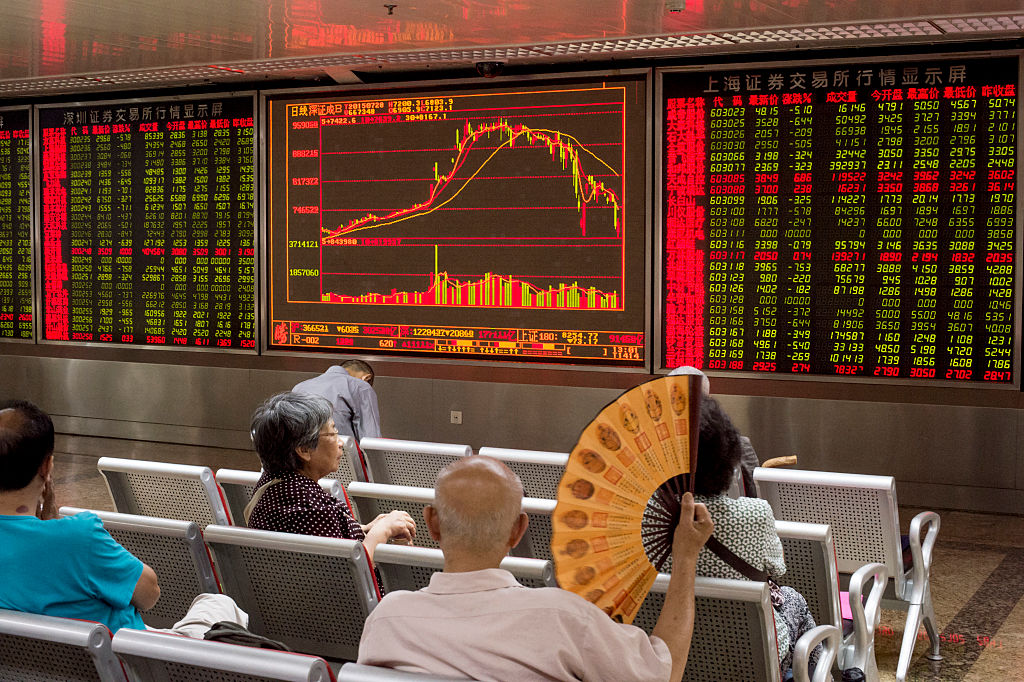
On November 19, the Chinese A-share market saw a significant downturn, with over 4,800 stocks experiencing declines, of which 72 reached the daily limit for losses. The combined trading volume across the Shanghai, Shenzhen, and Beijing stock exchanges plummeted to approximately 1.31 trillion yuan, marking a new low for the year.
According to statistics from media outlet Jiemian, the number of stocks hitting their daily loss limit increased from 45 in the preceding trading day to 72 on November 19. Data from Tonghuashun revealed that the total trading volume in the three markets decreased by about 65.4 billion yuan compared to the previous trading day.
The Shanghai Composite Index fell by 0.28%, concluding the day at 3,577.62 points, which is the lowest closing figure of the year. Meanwhile, the Shenzhen Component Index experienced a decline of 0.71%, and the ChiNext Index, focused on emerging industries, dropped by 0.79%. The Northern Stock Exchange 50 Index faced the steepest drop, tumbling by 3.99%.
In the entertainment sector, film and television stocks suffered considerable losses, leading to Hengdian Film’s, Jinyi Film’s, and Wento Holdings’ stocks hitting their daily loss limit. Stocks related to snow tourism also weakened, with Changbaishan, Bing Mountain Cooling and Heating, and Longjiang Transportation all reaching their lower limits.
AI chip company Suiryan Technology witnessed a significant drop of 20%, closing at 364.33 yuan, representing a 36.16% decline from its closing price on November 13. The company made its debut on the Shanghai Stock Exchange’s STAR Market on September 11. Notably, as reported by Daily Economic News, Suiryan’s market capitalization decreased by about 107 billion yuan from its peak on November 13.
In an after-hours communication, the company confirmed that it currently has ample orders but noted that only approximately 4.16% of its shares are freely tradable in the market, suggesting considerable short-term volatility for its stock price. In its third-quarter report, the company disclosed a net loss attributable to shareholders of listed companies, amounting to 754 million yuan.
Meanwhile, automotive parts manufacturer Tianpu shares rose limit-up for four consecutive trading days from November 10 to 13. After being suspended for regulatory scrutiny starting November 16, it resumed trading on the 19th but hit its limit-down, closing at 66.44 yuan. The company stated it had no plans to engage in any AI-related business and had not signed a framework cooperation agreement with its shareholder, Zhonghao Xinying.
Clean energy equipment and home appliance company Sunrise East saw its shares hit the limit-up for five consecutive trading days from November 6 to 12, accumulating over a 60% increase. However, from November 16 to 19, the stock experienced consecutive limit-downs, ultimately closing at 9.12 yuan. The company announced that two of its directors sold a total of 77,000 shares on November 16 and 17, following a previously disclosed reduction plan.
Ciweng Media, which specializes in film and television production and distribution, experienced a notable rise in mid-October, hitting the limit-up six times in seven trading days. However, on November 19, the stock faced its third consecutive limit-down, closing at 7.38 yuan, a drop of over 30% from the intra-day peak in October. The company indicated its AI content generation platform has not yet generated revenue, with its operating income plunging nearly 90% year-on-year in the first three quarters. Its net loss attributable to shareholders reached approximately 47.42 million yuan, widening by about 73% compared to the same period last year.
Dosheng Culture, which engages in game development, film, and short drama production, observed its stock hit the limit-down for three consecutive trading days, closing on the 19th at 4.45 yuan. The withdrawal risk alert for this stock was lifted on July 1. As of the end of September, the company’s net assets attributable to its parent company’s shareholders had fallen to approximately negative 31.26 million yuan. The company warned that if its full-year audited financials trigger the Shanghai Stock Exchange’s delisting criteria, the stock will once again face delisting risk alerts.
Financial data institution Wind cited reports indicating that by November 17, the number of A-share stocks closing below 2 yuan had surged from 50 on June 1 to 107.
Environmental protection company Tudi Environment, primarily involved in sanitation, waste disposal, and sewage treatment, endured its fourth consecutive limit-down, with its stock closing at 1.17 yuan on November 19. The company noted that it is currently undergoing a pre-restructuring phase and has yet to receive formal notification from the court regarding its restructuring application. Should restructuring fail, it faces bankruptcy and potential delisting.
Dongzhu Ecology, primarily engaged in ecological restoration and urban landscape engineering, saw its market capitalization drop below 500 million yuan for the first time at the close of trading on November 17, further declining to 437 million yuan on the 18th. On the same day, its stock price first fell below 1 yuan, ending at 0.98 yuan. On November 19, the company issued its initial risk warning concerning its stock price sinking below 1 yuan; that day, the stock dropped an additional 9.18%, closing at 0.89 yuan.
According to current regulations from the Shanghai Stock Exchange, if a stock’s closing price remains below 1 yuan for 20 consecutive trading days or its total market capitalization falls below 500 million yuan, the exchange will initiate proceedings to delist the stock.
Wanjia Fund analysts have observed a continuous decline in A-share trading volumes since mid-November, reflecting a weak appetite among new investors to enter the market. Instead, investments appear to be shifting towards high-dividend stocks and technology shares, with recent pullbacks in overseas tech stocks further pressuring the ChiNext market.
On the same day, the Huazheng Fund brand ‘Huazheng ETF’ commented at market close that although certain large-cap stocks recovered slightly, mitigating major index declines, small- and mid-cap stocks continued to face significant pressure.
Additionally, analysis from Financial Network indicated that the rapidly falling prices of previously popular stocks prompted a strong withdrawal of short-term funds from the market.