
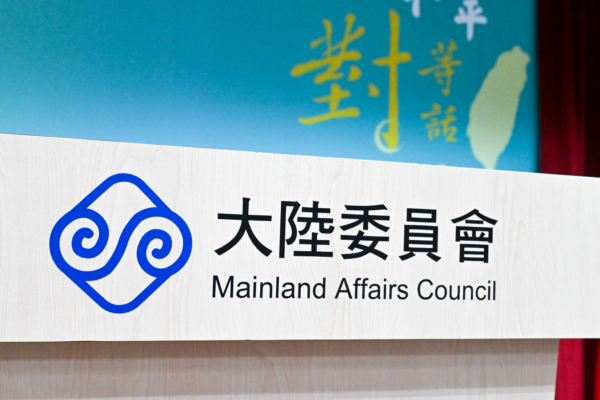
On November 17, the Mainland Affairs Council (MAC) of the Republic of China announced the results of a recent public opinion poll revealing that a significant majority of Taiwanese citizens are opposed to the “One Country, Two Systems” policy advocated by the Chinese Communist Party (CCP), as well as the CCP’s unilateral interpretation of the “One China Principle” grounded in the “1992 Consensus.” The poll indicates strong support for maintaining the current cross-strait status quo, with the future of Taiwan being determined solely by its 23 million residents. Additionally, a substantial majority endorses the notion of participating in the APEC summit with the principle of equality and dignity.
The results of the MAC survey highlight that over 80% of the public opposes the CCP’s stance on “One Country, Two Systems” (specifically, 83.2%). Furthermore, 64.2% of respondents do not accept the “One China Principle” as a basis for official interactions between Taiwan and the mainland, challenging the legitimacy of the “1992 Consensus.”
The poll also shows that 86.4% of the population supports a broad interpretation of maintaining the status quo, and 86.2% believe that Taiwan’s future should be determined by its residents. This trend reflects a long-standing stability in public sentiment. Moreover, more than 71.8% of respondents back the government’s position of ensuring Taiwan’s participation in the APEC summit to be based on principles of equality and dignity, despite the event being held in mainland China this year.
In response to the ongoing military threats and aggressive rhetoric from the CCP, over 76.3% of those surveyed regard the presence and activities of numerous Chinese military vessels in waters outside Taiwan as “malicious.” Additionally, more than 69% of respondents reject the CCP’s accusations against Taiwan’s government, including allegations of “fabricating claims of CCP electoral interference” (69.0%) and “manipulating the judicial system to create a climate of fear” (63.9%).
The MAC underscored that the root of current cross-strait tensions lies in the increasing pressure applied by the CCP, which seeks to compel the Taiwanese people to accept its unilaterally defined political framework. The council called on the CCP to take a practical approach, urging it to recognize mainstream public opinion in Taiwan and to engage in dialogue with Taiwan’s democratically elected government to resolve differences.
Regarding the various gray zone tactics employed by the CCP to disrupt Taiwan’s democratic processes, the MAC affirmed its commitment to implementing the “Four Major Pillars of Peace” action plan, the “17 Strategic Responses to National Security Threats,” and the “Action Plan to Safeguard Democratic Taiwan.” These initiatives are aimed at defending Taiwan’s sovereignty and upholding its democratic freedoms.
This polling data was collected by the Election Study Center of National Chengchi University, which conducted telephone interviews with 1,074 adults aged 20 and above between November 12 and 16, boasting a confidence level of 95% and a sampling error of ±2.99%.
In addition, regarding the “Cross-Strait Peace Initiative” launched by former Kuomintang legislator Ding Shouzhong and 259 other scholars and experts, MAC Minister Qiu Chui-zheng remarked on December 12 that the greatest threat to peace across the Taiwan Strait is the CCP’s intent to eliminate the Republic of China and assimilate Taiwan. He emphasized the importance for all sectors of society to clearly recognize the nature of the CCP regime.
The initiative was announced on the occasion of the 160th anniversary of the birth of Sun Yat-sen, the founding father of the Republic of China, and advocates for peaceful, equal, and mutually respectful negotiations concerning the ultimate political arrangements between Taiwan and the mainland.