
Today’s focus is on the ongoing turmoil within the upper echelons of the Chinese Communist Party (CCP). Recently, rumors have circulated on overseas social media regarding an investigation into Yuan Jiajun, the Secretary of the Chongqing Municipal Committee. This speculation intensified when Yuan was notably absent from an important forum in Chongqing on November 17, raising eyebrows and fueling further conjecture.
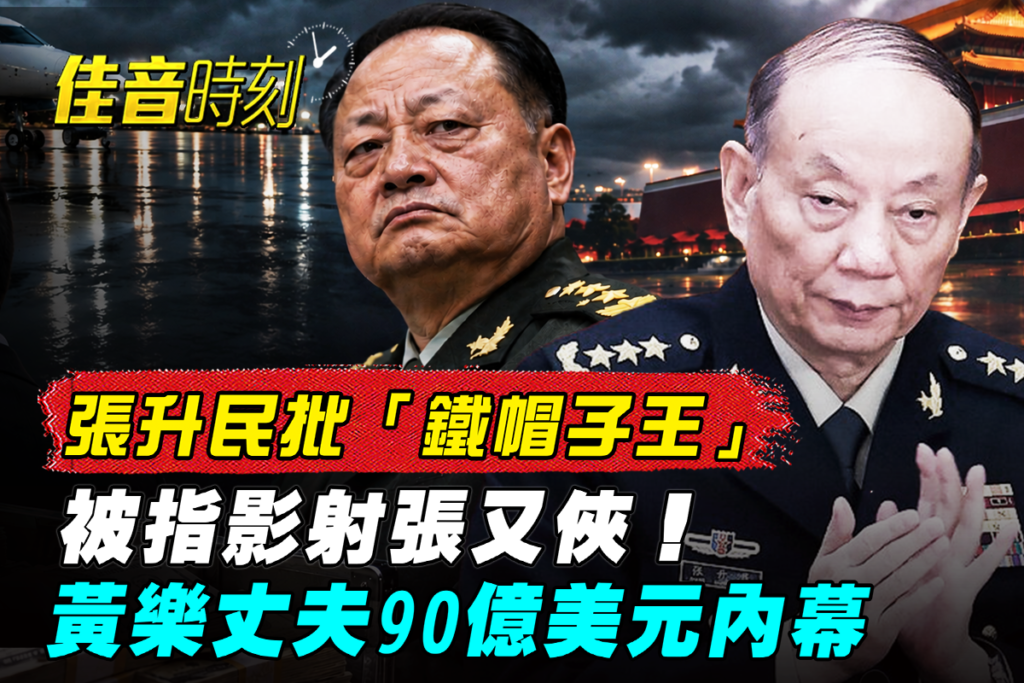
In a related development, Zhang Shengmin, the Vice Chairman of the Central Military Commission, made headlines by publishing an article in the People’s Daily. In this piece, he referenced “iron-capped princes” and “iron contracts,” a move that many analysts interpret as a veiled allusion to Zhang Youxia, another high-ranking official within the military structure. This cryptic communication hints at underlying tensions and power struggles that may be affecting the leadership landscape in China.
On the same day, The Wall Street Journal provided insight into Huang Le, a pivotal figure in the recent Huang Renxun incident, revealing deeper connections within the U.S.-China tech circle. Huang Le and her husband, Kang Wei, are reportedly establishing significant networks in this competitive arena.
According to the report, Kang Wei’s data center business boasts an impressive scale. From 2021 to 2024, the projected total investments associated with his business network are over $9 billion, with various projects receiving backing from the CCP. Furthermore, it has come to light that Huang Le has maintained an extramarital relationship with Huang Renxun, while simultaneously operating NVIDIA’s high-end chips—an entity subject to U.S. export controls—overseas.
In recent weeks, numerous technology, finance, and aviation companies in the United States experienced systemic failures. Major players such as Microsoft, Apple, JPMorgan Chase, United Airlines, and even the National Security Agency have all been impacted to varying degrees by these disruptions. Concurrently, Google issued its latest cybersecurity report, which warns that AI-driven cyberattacks have entered a new phase, posing increasing risks to both private and public sector entities.
These events signify a critical juncture in the intersection of technology, governance, and security, both within China and internationally. As the political landscape in China continues to evolve, the repercussions of these developments could have far-reaching implications for global relations and security dynamics in the coming years.