
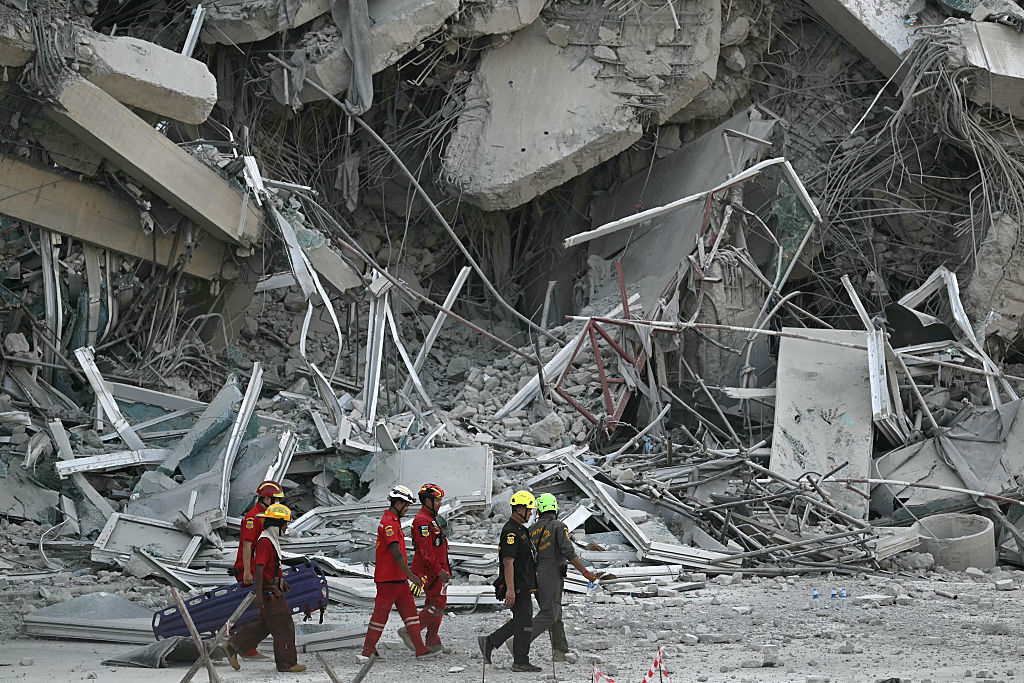
A significant trial has concluded in Bangkok regarding the catastrophic collapse of a building last year, which was linked to a devastating earthquake that struck Myanmar in March 2022. This earthquake had repercussions that reached far beyond its epicenter, causing the under-construction auditing building in Bangkok to collapse, and leading to public outcry over allegations of negligence and substandard construction practices by the Chinese contractor, China Railway 10th Bureau Group Co., Ltd. (Thailand).
On November 18, the Bangkok Criminal Court delivered its verdict, sentencing Zhang Chuanling, the head of the Chinese company, to three years in prison. The court also imposed a hefty fine of 1 million Thai Baht, equivalent to approximately 200,000 Chinese Yuan, on the company, determining that it had been operating unlawfully within Thailand’s construction sector.
According to reports from local media outlets, including The Nation and Bangkok Post, the court found that Zhang had violated regulations pertaining to foreign enterprises by using Thai nationals to hold shares on behalf of the China Railway 10th Bureau Group (Thailand). This maneuver granted the company the ability to engage in restricted construction activities without the necessary permits, an action deemed unlawful by the judiciary.
In addition to the financial penalty, the court ordered the suspension of the company’s operations, marking a significant blow to its business in Thailand.
The earthquake in Myanmar last year had far-reaching consequences, with the Bangkok construction site being the only project that was reported to have collapse due to the seismic activity, tragically resulting in the loss of at least 95 lives.
The China Railway 10th Bureau (Thailand) was part of a joint venture known as the ITD-CREC Consortium, collaborating with Italian-Thai Development Public Company Limited to undertake the auditing building project, which had a contract value of around 2.1 billion Thai Baht, translating to roughly 400 million Chinese Yuan.
The court highlighted that Zhang Chuanling was the sole authorized director of the company and held control over its operations. This included significant responsibilities such as signing construction contracts and overseeing the joint venture agreements and financial statements associated with the project.
It was reported that Zhang had made compensatory payments to the families of victims and injured parties stemming from the building’s collapse. However, the court determined that these amounts were insufficient to mitigate the losses incurred from the tragedy, thus they did not serve as valid grounds for a reduced sentence.
The China Railway 10th Bureau is a subsidiary of the prominent Chinese state-owned enterprise, China Railway, which operates under the supervision of the State-owned Assets Supervision and Administration Commission of the State Council. This company has faced considerable criticism in the past for its involvement in numerous poorly constructed projects.
In the aftermath of the collapse, concerns about the quality of materials used in the construction were raised. Reports indicated that steel supplies from Xin Ke Yuan Steel Co. Ltd., used in the project, were found to be below standard by the Iron and Steel Institute of Thailand, further exacerbating the scrutiny on the construction practices employed.
The broader implications of this case highlight ongoing questions surrounding the Belt and Road Initiative spearheaded by China, which has been riddled with allegations of compromising construction quality.
Economist Li Hengqing has previously expressed concerns about the persistent issues of construction quality across various projects undertaken by Chinese firms, noting that prioritizing profits over safety has been a systemic problem. He explained that due to a blend of design flaws and inadequate regulatory oversight, coupled with rampant corruption aimed at cost-cutting, significant quality deficiencies have emerged. These deficiencies could ultimately lead to catastrophic failures in infrastructure, thereby endangering public safety.
As this case unfolds, it serves as a grim reminder of the importance of upholding strict construction standards and the role of regulatory bodies in safeguarding public trust. The repercussions of this incident will likely resonate throughout the construction industry in Thailand and beyond, calling for enhanced scrutiny and adherence to safety protocols.