
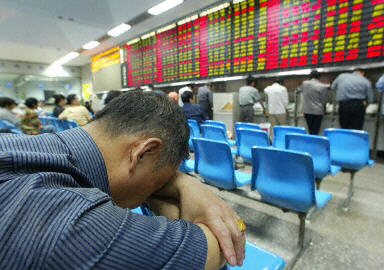
On November 18, 2026, troubling data from the A-share market emerged, indicating a significant downturn in trading activity that has sparked widespread disappointment among investors.
The total trading volume of both the Shanghai and Shenzhen markets for the day amounted to just 1.369563 trillion yuan, a decrease of 88 billion yuan compared to the previous trading day. This figure fell below the annual low recorded on September 29, 2026, which was 1.4092 trillion yuan, and marked the lowest level since July 7, 2025. In stark contrast, the trading volume reached an all-time high of 3.941484 trillion yuan on January 14, 2026, representing a decrease of over 65% since then.
This drastic decline in trading volume not only illustrates a lack of market activity but also reflects waning investor confidence, a shortage of new capital inflow, and sustained pressure on market sentiment. The sluggish economic growth and pessimistic expectations for corporate profits are contributing to a deficiency in future optimism among investors, making it unsurprising that the trading volume in the stock market continues to shrink. This data further underscores that the A-share market’s malaise is not merely a result of market emotions, but is closely tied to the deteriorating economic fundamentals in China.
According to the latest fund manager survey from Bank of America, a major financial institution, the prevailing trading choices among global fund managers reveal a clear preference. The survey indicates that 39% are leaning toward buying global semiconductor stocks, while 14% are opting to short Chinese stocks, ranking second among crowded trades. The term “crowded trade” refers to the consensus among respondents that a large number of investors are taking similar positions, primarily in the bearish direction, although it doesn’t imply that the 14% of funds are actively shorting Chinese equities.
As reported by the South China Morning Post on November 18, 2026, this survey indicates a heightened sense of caution among international fund managers regarding Chinese stocks.
What’s noteworthy is that this pessimism is not unfounded. In October 2026, the CSI 300 Index experienced a substantial month-on-month decline of 8.54%, marking the largest monthly drop in over a decade.
Additionally, sentiment indicators from Morgan Stanley regarding the A-share market showed a stark decrease, plummeting 16 percentage points to just 15% during the trading days between November 5 and November 11, falling below the 22% threshold, which is considered to signal extreme pessimism.
The confidence of overseas institutions in the Chinese stock market is evidently being put to the test, raising flags about the future of investments in this arena.
Shifting from stock charts to a broader view of the Chinese economy clarifies the issues even further. Data released by the National Bureau of Statistics of the Communist Party shows concerning trends for October 2026:
– The year-on-year growth of industrial added value for large-scale industries clocked in at only 4.8%, falling short of market expectations.
– The year-on-year growth for total retail sales of consumer goods was a mere 0.4%, down from 1.1% in September.
– Fixed asset investment from January to October contracted by 8.1% year-on-year.
– Private fixed asset investment exhibited a sharp year-on-year decline of 11.4%.
– Investment in real estate development dropped by 21.6% compared to last year.
These figures reveal a critical truth: while the Chinese economy isn’t stagnating altogether, a shortage in domestic demand coupled with investment contraction and ongoing adjustments in the real estate sector are undermining both the breadth and quality of economic growth.
Exports and high-tech industries may provide some support to economic growth, but they cannot replace consumer spending, nor can they ensure profitability across all enterprises.
The challenges faced by the Communist Party today cannot solely be attributed to the international environment, nor can they be simple explanations for a global economic slowdown.
For years, the highly centralized political and economic decision-making processes of the Communist Party have continued to influence market expectations adversely. The abrupt shifts in real estate policy, uncertainties surrounding the environment for private enterprises, local government debt pressure, and an over-reliance on administrative mandates for resource allocation have all had destructive impacts on economic development and the investment landscape of the stock market.
The Chinese stock market has persistently struggled to break free from a “policy-driven” model. When the market declines, the government often intervenes by directing state-owned capital to stabilize indices and support market sentiment. This state-backed investment, colloquially referred to as the “national team,” predominantly originates from state-affiliated financial institutions and capital investment platforms.
Among these, China Chengtong Holdings Group, a central enterprise supervised by the State-owned Assets Supervision and Administration Commission, is a major platform for managing state-owned capital. It primarily engages in state capital investments and equity operations through its investment companies, funds, and asset management entities.
Recently, two subsidiaries of China Chengtong, Guoxin Hongsheng Investment (Beijing) Co., Ltd. and Guoxin Industrial Capital Management Co., Ltd., have been active in increasing their stakes in various companies. Guoxin Hongsheng has raised its holdings in China National Materials Group, whereas Guoxin Industrial Capital has bolstered its position in Qianyuan Power.
As of November 13, 2026, Guoxin Hongsheng held 24.4608 million shares of China National Materials Group, representing 0.61% of the company’s total shares, which reflects an increase of 2.1341 million shares from the end of the third quarter.
In the case of Qianyuan Power, Guoxin Industrial Capital had increased its stake by 4.275674 million shares from October 29 to November 11, and a further 4.27568 million shares from November 12 to November 17. These two transactions brought the total increase to approximately 8.5514 million shares, surpassing the initially planned threshold of at least 6 million shares. By November 17, their holdings reached 29.929341 million shares, constituting 7% of Qianyuan Power’s total stock.
Based on estimates from the lowest price during the relevant period, the combined investments in China National Materials Group and Qianyuan Power account for at least 134 million yuan. These figures represent a forecast based on the lowest prices and do not reflect the actual transaction costs disclosed by the companies.
These actions indicate that the government is not only a rule-maker of market governance but also a significant player in market operations, often stepping in to stabilize the market when necessary. The political will of the Communist Party can have profound effects on market dynamics, leading investors to question whether stock prices genuinely reflect the intrinsic value of businesses or simply mirror government aspirations for maintaining certain market performances.
The government can compel banks to extend loans, utilize state assets to purchase ETFs, and enact various policies targeting market stabilization through mergers and acquisitions of publicly-listed companies.
However, the government cannot conjure consumer willingness to spend through administrative edicts, nor can it generate corporate profits simply through policy rhetoric. While state interventions can help underwrite stock prices, they do little to address the underlying weaknesses in domestic demand, declining corporate profitability, and investor confidence.
This raises fundamental questions about the ongoing reliance of the Chinese stock market on government interventions for support.
When political power supersedes institutional trust, the A-share market finds it exceedingly challenging to cultivate a truly mature and healthy capital market.
What the market genuinely requires is a stable, transparent, and predictable institutional framework conducive to private enterprise investments, consumer spending, and investor confidence in the protection of their assets and rights.
Without substantial improvements in these areas, mere market rescue measures are unlikely to rebuild long-term confidence.
The financial crises of 2008, the stock market crash of 2015, and the market corrections of 2018 have all inflicted heavy losses on investors. However, the current despair among market participants stems not only from falling indices but also from a diminishing faith in the economy’s future, corporate profits, and the return mechanisms inherent in capital markets.
A healthy stock market should enable investors to share in the gains of economic development rather than forcing them to bear the burdens of insufficient corporate earnings, policy volatility, and eroding market confidence.
The stock market is neither a foe of the economy nor merely a tool for prosperity through rhetorical flair.
The bearish outlook from international institutions regarding Chinese equities does not guarantee a continued downturn in the market; similarly, a contraction in trading volume does not necessarily imply that a bottom has been reached.
If economic conditions do not improve, corporate earnings do not recover, and consumer confidence does not enhance, any so-called short covering or technical rebounds could merely represent transient market movements.
What the Chinese stock market truly demands is not an abundance of optimistic slogans but rather concrete economic reforms.
Historical experience reinforces the notion that liquidity can inflate stock prices, and policy measures can generate short-term market movements. However, only vibrant economic activity, ample corporate earnings, and institutional trust can sustain a long-term bull market.
Investors seek not a perpetually touted stock market but one that genuinely merits investment and can yield reasonable returns.