
In a recent and significant political development, the Mayor of Changchun, the capital of Jilin Province in China, has been replaced. Zhang Enhui, who was relieved of his duties, made headlines earlier this year in July, when he publicly expressed concerns regarding the unprecedented difficulties and challenges facing the economy of Changchun. His comments notably diverged from the optimistic economic narrative promoted by the authorities in Beijing, thereby drawing attention from various quarters.
According to reports from the Jilin Provincial News Broadcast, on November 16, the leadership of Changchun underwent a notable transition with the appointment of Lian Maojun as a member of the Jilin Provincial Standing Committee and the new Secretary of the Changchun Municipal Party Committee. Consequently, Zhang Enhui has been relieved of his position.
Lian Maojun, who was born in November 1970 and hails from Chaoyang in Liaoning Province, has held various significant roles, including serving as a member of the Shenyang Municipal Party Committee and Secretary General, as well as the Deputy Secretary of the Party Working Committee in the Shenyang-Fushun New Area, and a member of the Tianjin Municipal Government Party Leadership Group. He attained the position of Vice Mayor before taking on the role of Secretary of the Binhai New Area Committee in Tianjin in April 2020. He is also recognized as a candidate member of the 20th Central Committee of the Communist Party of China.
In contrast, Zhang Enhui, born in December 1966, is nearing the age of 60. He is originally from Tuohto, Inner Mongolia, and has accumulated experience in various senior positions, including being a member of the Inner Mongolia Autonomous Regional Party Committee and Secretary of the Xing’an League. He served as the Secretary of the Changchun Municipal Party Committee since April 2023.
The position of Changchun Party Secretary is typically regarded as a deputy ministerial level, with a standard retirement age of 60 years, after which individuals often transition to secondary roles, such as positions in provincial People’s Congresses or Political Consultative Conferences. As of now, Zhang Enhui’s future role remains unclear.
It is particularly noteworthy that Zhang Enhui’s prior public remarks clashed with the central government’s optimistic economic outlook. On July 22, as reported by the official website of the Changchun Municipal Government, Zhang convened an expanded meeting of the Municipal Party Committee standing committee, where he addressed the city’s economy in the first half of the year. Official statements from this meeting highlighted the city’s economic challenges, stating, “Currently, the economy of Changchun is facing unprecedented difficulties and challenges.” The communication underscored the need to acknowledge the harsh realities of the macroeconomic situation as well as the immediate and severe impacts on local development.
In recent years, the Chinese economy has been experiencing a downward trend; however, senior officials of the Communist Party have consistently promoted a narrative of economic optimism while suppressing revelations about the economic realities from scholars and economists. Generally, official meetings and statements would initially reference a positive economic forecast, followed by acknowledgment of some challenges.
Commenting on the unusual candidness of Changchun’s authorities, American economist Huang David remarked that this might reflect a local government’s attempt to offload responsibility and convey a sense of desperation regarding the economic situation. Beijing’s political imperatives emphasize the need to maintain an optimistic narrative about China’s economy. The statement from Changchun was likely motivated by the fiscal constraints that are becoming increasingly apparent, as the downturn in the real economy has reached a point where it cannot be concealed any longer. Continuing to perpetuate an illusion of prosperity could diminish the likelihood of increased intergovernmental fiscal transfers and funding; should the economic indicators for the second half of the year deteriorate seriously, local governments would be blamed for inadequate performance.
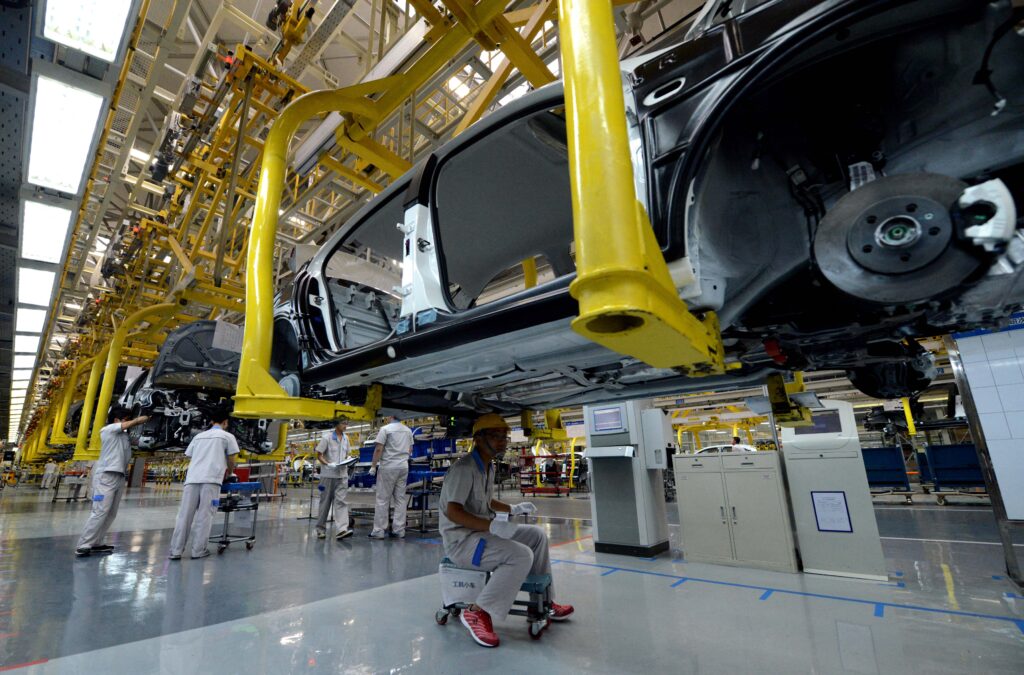
Data from Changchun’s Statistical Bureau reveals that the total profits for industrial enterprises above a designated size in the city fell by 20.1% year-on-year in 2025, amounting to 40.111 billion yuan. In June of this year, the government also issued an unusual statement directly pointing out that FAW Volkswagen, a key pillar of Changchun’s economy, has been experiencing ongoing declines in production and sales, facing potential restructuring pressures.
David emphasized that regardless of the motivations behind the statement, Changchun officials have articulated concerns that even the central leadership in Beijing might hesitate to voice, effectively puncturing the bubble of optimism that has been inflated by the higher echelons of the Communist Party.
On July 25, it was observed that the official Changchun municipal government website had removed references to the economy facing “unprecedented difficulties and challenges.” Additionally, related reports on various Chinese media platforms, such as the Observer Network, were taken down, further illustrating the sensitive nature of the economic discourse.