
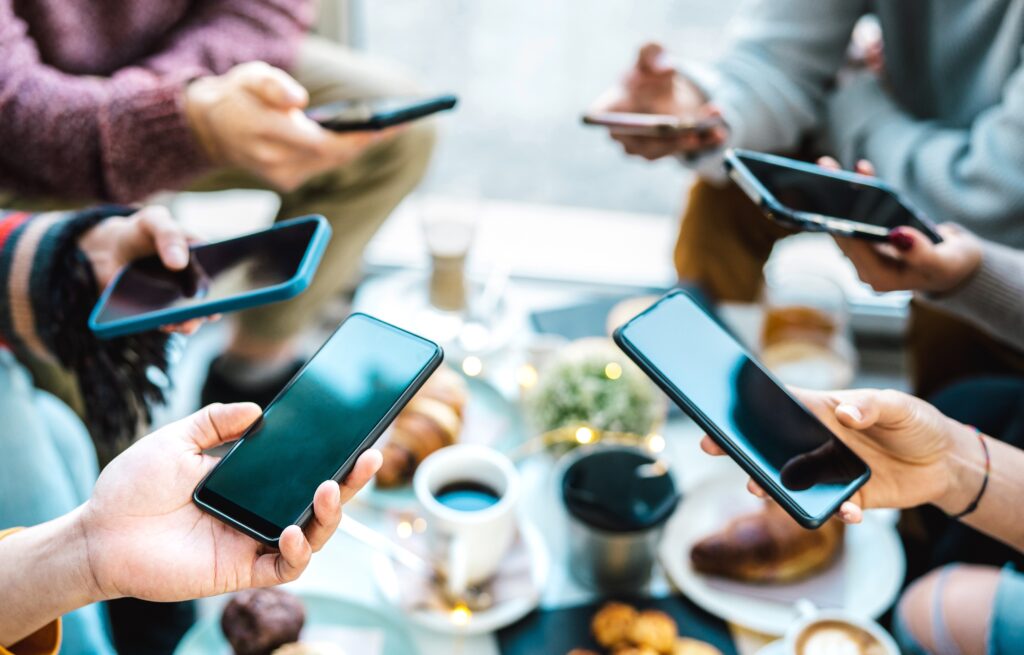
In today’s society, smartphones have become an integral part of daily life, to the point where many individuals find themselves overly reliant on these devices. Imagine a scenario where, all of a sudden, smartphones around the world vanish. How would your life change? Some might recall the tranquil days before smartphones existed, while others may feel a deep sense of dread at even the thought of such a situation. This brings us to the question: is “nomophobia,” or the fear of being without a mobile phone, a widespread phenomenon?
Mark Travers, an American psychologist, recently shared insights on this issue in an article for Psychology Today. He explains that researchers define nomophobia as the fear of being unable to use a smartphone.
While nomophobia is not formally recognized as a psychological disorder in the same vein as fears related to animals, storms, or heights, the concept is built upon definitions found in the Diagnostic and Statistical Manual of Mental Disorders, published by the American Psychiatric Association.
The symptoms of nomophobia bear many similarities to those of other specific phobias. Individuals may experience anxiety, trembling, sweating, restlessness, and difficulty breathing. Interestingly, people with lower self-esteem or those who are more extroverted tend to experience smartphone overuse and are more prone to developing nomophobia.
A study published in 2021 analyzed data from 12,462 participants across 10 countries, focusing on the prevalence of nomophobia. The findings revealed that approximately 21% of adults suffer from severe nomophobia, while around 71% are at a moderate level. Particularly concerning is the impact on university students, where the prevalence rate stands at about 25%.
Dealing with nomophobia is not an easy task as mobile phone usage has become an indispensable part of daily living. Just the thought of being separated from a phone may trigger immediate emotional distress, potentially leading to long-term psychological effects that could damage an individual’s overall mental and physical health.
Travers notes that a study published in 2015 created a self-assessment questionnaire consisting of 20 items. Participants are asked to rate their agreement with each statement on a scale from 1 (strongly disagree) to 7 (strongly agree). The total score derived from these 20 responses indicates the severity of the condition.
Here are the first nine items from the questionnaire:
1. I feel uneasy when I cannot continuously access information via my smartphone.
2. When I want to look up information on my phone and can’t, I feel annoyed.
3. Being unable to read news (current events, weather, etc.) on my phone makes me feel anxious.
4. I get frustrated when I want to use my phone and am unable to do so.
5. A dead phone battery makes me feel scared.
6. When my balance runs out or I reach my monthly data limit, I feel panicky.
7. If I have no data signal or cannot connect to Wi-Fi, I constantly check for signals or available Wi-Fi.
8. I worry about being trapped somewhere without my phone.
9. If I have been unable to check my phone for a while, I feel an impulse to do so.
The next eleven items inquire about how individuals feel when they do not have their phone with them.
10. I feel anxious because I cannot communicate with family and/or friends in real-time.
11. I feel worried because my family and/or friends cannot reach me.
12. I feel nervous because I won’t receive texts or calls.
13. I feel anxious because I can’t stay in touch with my family and/or friends.
14. I feel nervous because I won’t know if anyone is trying to contact me.
15. I feel anxious because my ongoing connection with family and friends will be interrupted.
16. I feel tense about losing my online identity.
17. I feel uncomfortable because I can’t keep up with social media and my online friends.
18. I feel uneasy because I cannot see updates from others in my network and social media.
19. I feel anxious because I cannot check my emails.
20. I feel uncomfortable because I don’t know what to do next.
The total score for this 20-item questionnaire ranges from 20 to 140. A higher score indicates a more severe case of nomophobia. The grading system is as follows:
– 20 points – No symptoms
– 21 to 60 points – Mild
– 61 to 100 points – Moderate
– 101 to 140 points – Severe
Travers mentions that the questionnaire addresses four distinct aspects of the fear involved in nomophobia: inability to communicate, loss of contact, lack of information access, and a loss of convenience.
Recognizing these behavioral patterns and taking proactive measures is essential—not only for personal mental health but also for societal wellbeing.
Mental health professionals and therapists have previously shared strategies for overcoming nomophobia that could serve as practical guidance for those in need. These include:
– Replacing texting with writing letters.
– Spending a few minutes in the morning doing deep breathing or meditation instead of checking social media.
– Setting goals to gradually increase the time spent away from the smartphone.
– Allowing the phone battery to run down intentionally, under reasonable and safe circumstances.
– Avoiding the temptation to immediately consult the phone for every detail upon encountering something new.
– Scheduling more face-to-face time with friends and family.
For those who are excessively reliant on their phones or even addicted to them, psychologists have offered additional advice, which includes keeping a physical distance from the phone, trying to go out without it, and developing hobbies, such as cooking, that require hands-on engagement to break the cycle of phone usage.
Overall, addressing nomophobia is vital for improving both individual quality of life and communal environments, paving the way for healthier relationships with technology.