
Gout: A Growing Global Concern
Gout has emerged as one of the most prevalent inflammatory arthritides worldwide, impacting millions of individuals. According to estimates, by the year 2020, approximately 55.8 million people across the globe were afflicted by this condition.
Historically, gout was often referred to as the “disease of the wealthy,” as it was primarily the affluent who could afford diets rich in meat, seafood, and alcoholic beverages. Renowned individuals such as King Henry VIII of England, scientist Isaac Newton, and American Founding Father Benjamin Franklin were known to have suffered from this painful ailment.
In July 2024, a research team involved in the Global Burden of Disease (GBD) study published an analytical report in *The Lancet Rheumatology*, specifically addressing the prevalence of gout. Their findings indicated that the age-standardized prevalence of gout in 2020 was 659.3 cases per 100,000 individuals, marking a 22.5% increase since 1990. Notably, the prevalence among men was found to be 3.26 times higher than that among women, with the likelihood of developing the disease increasing with age.
Looking ahead, researchers estimate that the number of gout patients could rise to an astonishing 95.8 million by 2050. However, this increase is largely attributable to population growth and aging, with minimal changes in prevalence rates themselves. Moreover, the study identified that 34.3% of disabilities resulting from gout could be linked to high body mass index (BMI), leading the team to call for public health initiatives aimed at weight reduction through dietary and lifestyle changes.
In the United States, data from the National Health and Nutrition Examination Survey (NHANES) from 2017 to 2018 revealed that roughly 12.1 million adults—approximately 5.1% of the population—were diagnosed with gout.
Malinda Whitlow, an associate professor at the University of Virginia’s School of Nursing, discussed the nature of gout in an interview with the university’s news outlet, *UVA Today*. She described it as an inflammatory arthritis that uniquely arises from the immune system’s response to uric acid and the accumulation of sharp uric acid crystals within and around the joints.
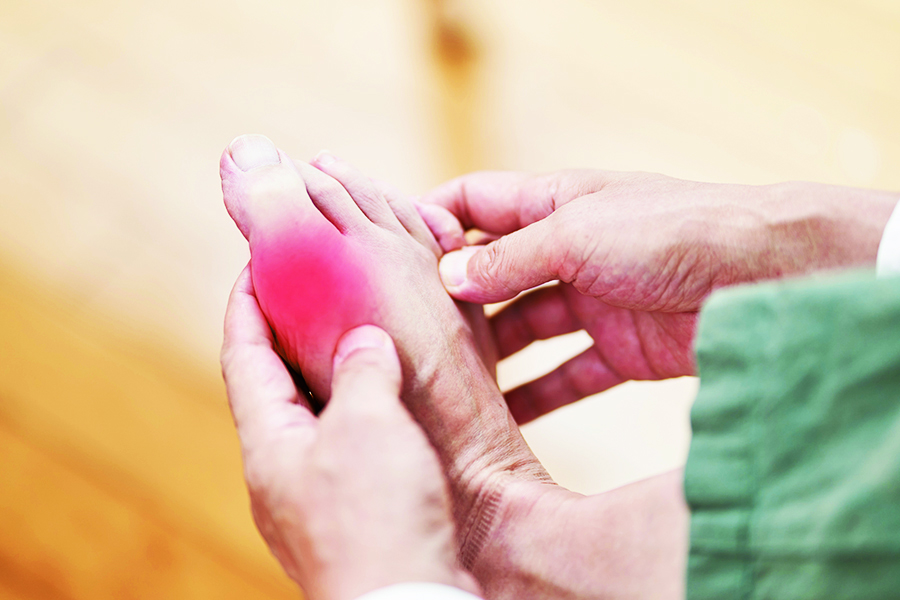
According to the Cleveland Clinic, gout most frequently affects the big toe joint but may also present in the knees, ankles, feet, hands, wrists, and elbows. During an attack, affected areas can experience extreme pain, sensitivity to touch, skin discoloration, stiffness, swelling, and a burning sensation as if the joint were on fire. These episodes typically last from one to two weeks, with women generally experiencing symptoms after menopause.
Whitlow noted the debilitating effects of gout, stating, “Many people with gout in their big toe experience pain severe enough that they cannot even wear shoes.”
The Centers for Disease Control and Prevention (CDC) highlight that foods and beverages high in purines may elevate the risk of developing gout. This includes alcoholic beverages—especially beer and spirits—sugary foods and drinks, red meats, organ meats, and certain seafood such as anchovies, sardines, mussels, scallops, trout, and tuna. Additional risk factors include obesity, the use of diuretics, a family history of the condition, as well as pre-existing health issues such as heart failure, hypertension, insulin resistance, diabetes, and kidney dysfunction.
Dr. Jose Pablo Garcia, a rheumatologist at the University of Miami Health System, discussed the clear dietary triggers for gout in an interview with *UHealth Collective*. He emphasized that red meat, shellfish, and alcohol are significant contributors to the condition. He also recommended that individuals avoid sugary beverages, including soda, juice, and energy drinks.
However, Dr. Garcia acknowledged that certain patients may still develop gout despite maintaining a healthy weight and avoiding high-purine foods. “Even vegetarians who refrain from alcohol and maintain a healthy weight can still be susceptible to gout,” he explained.
Whitlow further pointed out that comorbidities such as diabetes, hypertension, obesity, and chronic kidney disease are contributing factors that can heighten the risk of gout, stating that “there is an increasing trend of younger individuals being diagnosed.”
The Cleveland Clinic warns that untreated gout can lead to permanent joint damage and the formation of tophi, hard lumps created by the deposition of uric acid crystals in joints and soft tissues. Additionally, gout has been linked to an increased risk of kidney stones and cardiovascular diseases.
In terms of treatment, over-the-counter nonsteroidal anti-inflammatory drugs (NSAIDs) such as ibuprofen and naproxen may alleviate the pain and swelling during acute attacks. Physicians may also prescribe medications like allopurinol and febuxostat to lower uric acid levels and prevent future flare-ups.
The CDC recommends that individuals with gout engage in at least 150 minutes of moderate-intensity physical activity each week while limiting high-purine foods and beverages.
Dr. Garcia asserted, “Exercise can promote weight loss, effectively lowering the risk of developing gout and preventing its recurrence.” He stressed that if these risk factors could be managed suitably, “there is a strong possibility that gout may never return.”