
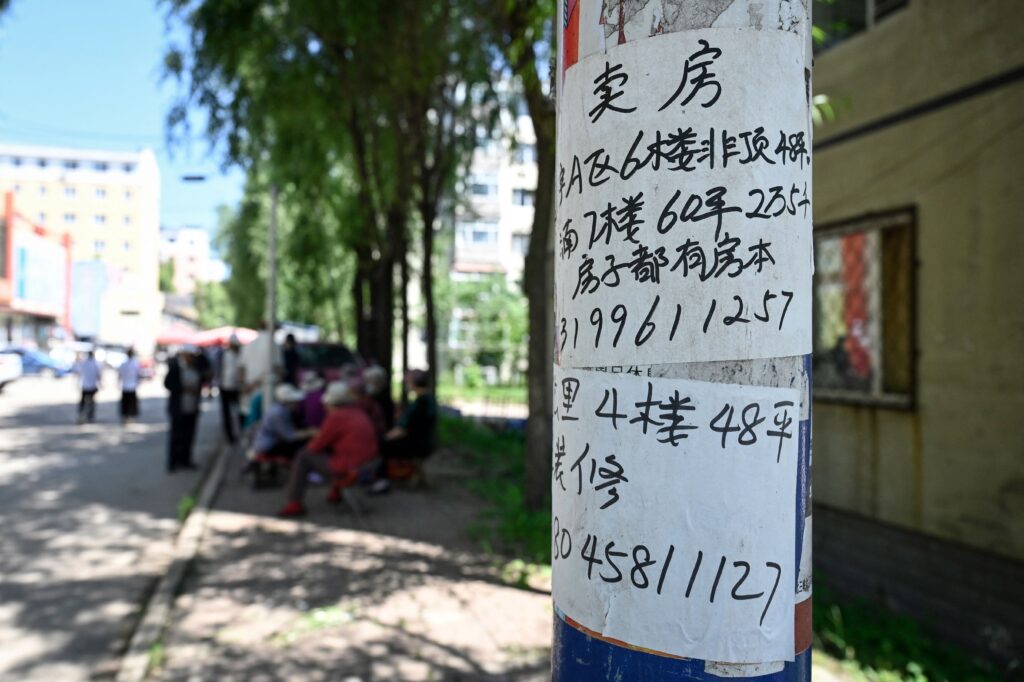
In recent events, a residential property in Hegang, Heilongjiang Province, was remarkably acquired for just 11 yuan. This property, which has a building area of 68.36 square meters, attracted significant attention on the credit asset trading platform, Ali Asset, during a special event coinciding with China’s annual shopping festival, commonly known as “Double Eleven.” The starting bid for the property was a mere 1 yuan, and it was ultimately purchased by a buyer from Zhejiang for the record amount.
This surprising acquisition caught the public’s interest and quickly amassed over 22,000 registrations for a second similar property that was scheduled for auction on November 10. However, just days before the event, the auction was abruptly canceled, with the platform citing a request from the entrusted party as the reason for this unexpected change.
Reports indicate that the first property’s market valuation stood at around 40,000 yuan. While the platform provided substantial subsidies for the purchase, the buyer would still need to cover approximately 2,000 yuan in deed taxes and similar fees during the title transfer process. The rules of the auction favored the first bidder to reach the maximum of 11 yuan, rather than simply awarding it to the highest bidder.
Critics have pointed out that using such a low ceiling price to attract attention risks solidifying the perception of Hegang as a city of “bargain properties,” which could, in turn, alter public perception of the local real estate market. The business marketing strategies should not be at the expense of tarnishing the city’s image as a consumer-friendly destination.
The trend of low-priced housing in Hegang began to gain traction back in May 2019 when a maritime worker from Zhoushan, Li Hai, shared a post on an online forum detailing his experience of purchasing a home in Hegang for only 50,000 yuan, accompanied by photos of the property. His two-bedroom apartment, which spanned approximately 60 square meters, was reported to have visible damages and appeared to be in a state of disrepair.
In his post, Li Hai expressed contentment, stating, “Even if it was only a few tens of thousands of yuan, it was still earned by me. What is there to be dissatisfied about?” His story resonated widely, accumulating over 30 million views and drawing attention to Hegang as a city representative of affordable housing.
Business media outlet “36Kr” labeled Li Hai as a pioneering figure in this low-cost housing movement, noting that his story struck a chord with hundreds of thousands of young individuals who were constrained by rising property prices and heavy mortgage burdens in their original cities.
However, Li Hai himself did not settle in Hegang for the long term. Instead, he continued his maritime profession and opted to rent out his property for about 500 yuan monthly. Citing high heating costs during the winter, he planned to work at sea during that season and return to Hegang in the summer to avoid what he described as a lengthy heating period.
Li Hai’s notoriety as a symbol of Hegang’s low-cost housing phenomenon did not lead to permanent residency, as he eventually returned to Zhejiang for work.
Another notable figure in Hegang’s low-cost housing narrative is Zheng Qian from Zhanjiang, Guangdong Province. Initially engaged in sales in Guangzhou, Zheng became disillusioned with the pressures of corporate life. In November 2019, he purchased a home in Hegang for around 46,000 yuan, hoping to embrace a lower cost of living.
With the rising popularity of low-priced housing in Hegang, Zheng began receiving numerous inquiries about purchasing properties from online users. Eventually, he partnered with a friend to form a real estate agency, shifting from buyer to seller, and over three years sold more than 300 homes.
Zheng disclosed that his clientele often hails from major metropolitan areas such as Beijing, Shanghai, and Guangzhou, with a significant proportion being female buyers. Their motivations for purchasing properties vary; some seek vacation homes, while others are looking for alternatives, and some aim to provide accommodations for their parents.
Ironically, Zheng originally moved to Hegang to escape the sales pressures, but he ultimately found a new livelihood through selling properties.
According to a report by Phoenix Network in October, Zheng has sold about 400 homes over the past five to six years. He estimates that only a handful of the initial out-of-town buyers remain in Hegang today. Various news outlets have echoed that the first wave of buyers is beginning to withdraw from the market.
Despite the low prices in Hegang, the local industry structure remains limited, and job opportunities are scarce, resulting in salary levels that fail to compete with larger cities. For many immigrants who originally relied on specialized skills or external jobs, purchasing a home does not guarantee securing a sustainable livelihood in the area.
The experiences of Xu Kang from Honghu, Hubei Province, further illustrate this predicament. After six years of working in Lhasa and saving up to 1,000 yuan monthly, he bought a 47-square-meter home in Hegang for 30,000 yuan in November 2019, hoping to finally settle down. However, upon arrival, Xu discovered a stark lack of job opportunities and salaries that significantly undercut what he earned in Lhasa. As his savings dwindled and the pandemic disrupted his income, he was forced to sell his home for just 22,000 yuan, incurring a loss of 8,000 yuan shortly after the purchase.
Living in Hegang also poses challenges due to its lengthy winter, which lasts from October through late April, roughly encompassing 200 days of the year. For buyers who only plan to inhabit their homes during the summer or leave properties vacant, heating costs become a continuous financial burden. According to the Hegang municipal government’s heating price disclosures, the charge for residential heating is set at 27.5 yuan per square meter, calculated based on 87% of the building’s area. For the property sold in the recent auction, the heating cost for a single season would amount to approximately 1,636 yuan.
Even homes that remain vacant do not escape heating fees entirely. Regulations issued by Hegang in 2025 state that eligible residential heating users who apply for a heating pause must still pay 20% of the total heating fee for maintenance costs. For homes located on lower or higher floors, which could affect neighboring residences, requests for heating interruption might not be approved.
Job classifications in Hegang often yield monthly salaries ranging from 1,800 to 2,500 yuan. A former salesperson from Guangzhou, after relocating to Hegang, found himself working as a supermarket shelf stocker for only 2,000 yuan a month, resulting in a significant drop in income.
Another buyer from Beijing noted that with the winter heating period stretching over approximately 200 days, a 60-square-meter apartment would incur heating costs of around 1,320 yuan for the season, making it difficult to salvage enough income to cover daily expenses afterward.
Some older buildings also have poor insulation, requiring residents to use electric heaters due to insufficient heating, further increasing winter electricity costs.
In addition to the heating expenses, some of the low-cost homes are situated in older districts on the outskirts of the city, where shopping amenities are limited, and food delivery services may reject orders for being too far away. For buyers unfamiliar with the local environment, the harsh winter conditions complicate daily living significantly.
Moreover, reselling these properties presents its own challenges. Reports indicate owners who bought a home for 40,000 yuan struggled to find buyers even after listing the property for just 20,000 yuan for nearly six months. For those who initially intended to keep a home as a fallback, finding a way out becomes increasingly difficult.
There are also concerns about social interaction and the challenges of prolonged solitude that some immigrants must contend with while adjusting to their new lives.
A reporter, during an immersive project to document individuals seeking low-cost living arrangements, conducted research in Hegang and engaged with young individuals drawn to its affordable lifestyle. Her observations highlighted the experiences of those facing setbacks in their earlier circumstances who viewed relocating to a distant city as an opportunity for a fresh start.
Initially contemplating purchasing property in Hegang herself, the reporter ultimately chose to leave after a few months, feeling nostalgic for the vibrant social scene, cultural activities, and friendships she left behind in Beijing. She recounted that the empty streets of Hegang during winter, along with the frigid temperatures, underscored the isolation she increasingly felt.
As Hegang continues to gain attention for its inexpensive real estate, it has emerged as a viable option for some, particularly young people looking for a lower-cost lifestyle. Nevertheless, those considering long-term residency must grapple with the realities of securing employment, adapting to an extended winter season, and managing ongoing winter expenses—a trifecta of challenges that marks life in this burgeoning but complex locale.