
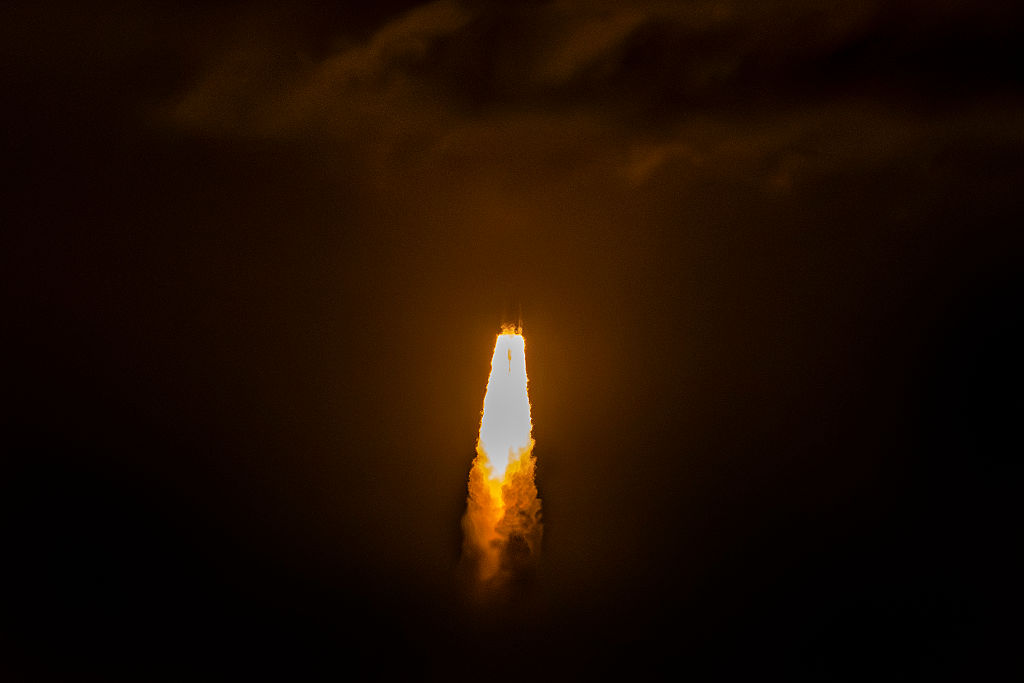
On November 15, a significant setback occurred for the United Launch Alliance (ULA) when one of its “Vulcan” rockets experienced a malfunction shortly after liftoff, resulting in the destruction of all 40 broadband communication satellites it was carrying. This marks the first failure in a launch mission since the company’s inception in 2006.
The Vulcan rocket was launched from Cape Canaveral Space Force Station in Florida, but approximately ten minutes into the flight, it encountered an anomaly that prevented the deployment of the 40 “Amazon Leo” satellites into their intended orbit.
While the exact cause of the launch failure remains unclear, it represents a major blow for ULA’s new flagship rocket. Created through a partnership between Boeing and Lockheed Martin, ULA was looking to conduct regular launches to support Amazon’s low Earth orbit satellite network, known as “Amazon Leo”—formerly referred to as Project Kuiper. This initiative aims to deploy thousands of satellites to enhance Amazon’s internet satellite constellation.
In a statement, ULA confirmed, “Based on the data received by our launch director, we have verified that the Vulcan rocket, launched from Space Launch Complex 41, experienced an anomaly around ten minutes into flight and failed to deliver Amazon’s payload into orbit.”
The statement also added, “We will work closely with our customer and other relevant agencies to determine the cause, identify appropriate corrective measures, and restore launches as soon as possible.”
This incident marks the first launch failure for ULA in its 20-year history.
This mission was the fifth for the Vulcan rocket since its debut in 2024 and was the first launch in nine months. Previous interruptions had occurred due to two technical investigations conducted on the rocket.
Moreover, this launch failure is another setback for Amazon, which has been diligently seeking to deploy satellites through third-party launch providers as it competes with SpaceX’s extensive Starlink internet network.
In May of this year, the New Glenn rocket experienced an explosion during testing, just days before it was scheduled to launch satellites for Amazon’s Leo project. Developed by Blue Origin, a company founded by Amazon founder Jeff Bezos, the New Glenn rocket was also intended to play a key role in establishing the internet satellite constellation.
As ULA navigates this challenge, the implications of the recent failure will undoubtedly resonate throughout the aerospace industry, prompting questions about future launches and the reliability of emerging technologies in satellite deployment.
The commitment of ULA and its partners to address and rectify this incident will be crucial for restoring confidence in their launch capabilities and ensuring the continued progression of satellite network initiatives in the coming months.