
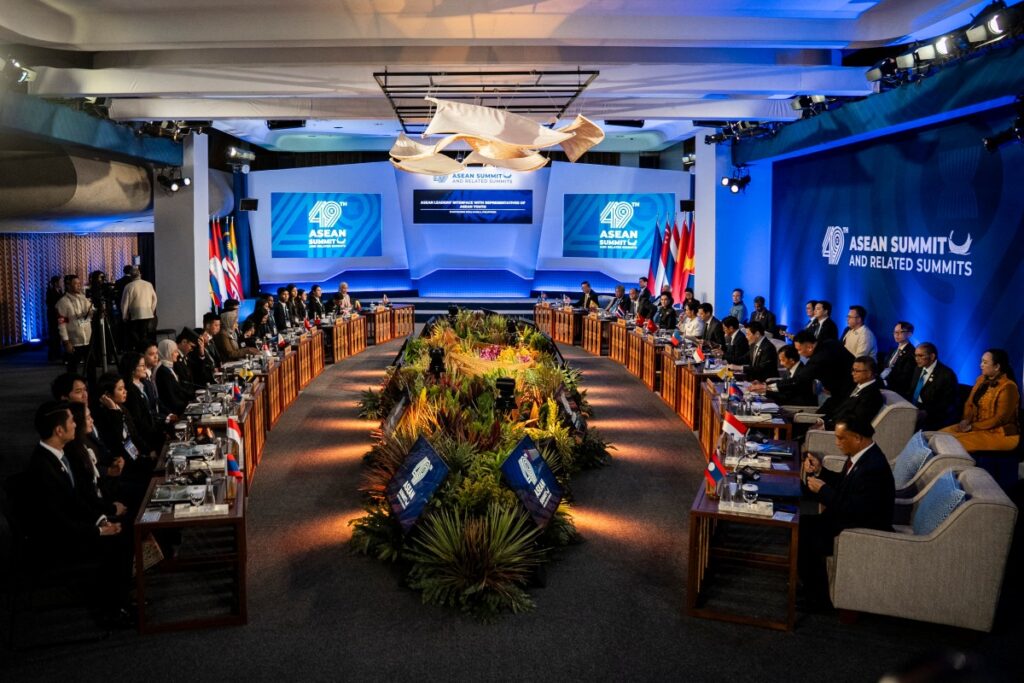
The ASEAN Leaders’ Summit took place on Sunday in Manila, the capital of the Philippines. The country, which currently holds the rotating presidency of ASEAN, announced that it would be unable to finalize an agreement with China regarding the South China Sea Code of Conduct during its term. So far, both parties have reached a preliminary consensus on approximately 80% of the contents of the draft code, yet significant differences remain unresolved.
Philippine Foreign Secretary Maria Theresa Lazaro stated at a press conference during the ASEAN Summit that a final agreement has not yet been reached. There are still several key issues that need to be addressed, one of which is whether the code would be legally binding.
Lazaro explained that the perspectives of ASEAN countries and China on the current situation also differ. However, all parties have agreed to continue their efforts to reach an “effective and substantive” code of conduct as soon as possible.
Negotiations between ASEAN and China regarding the South China Sea Code of Conduct have been ongoing for over two decades. As the current rotating presidency of ASEAN, the Philippines had pledged to expedite the negotiation process, aiming to finalize the code this year.
Nevertheless, Lazaro acknowledged on Sunday that despite intensified negotiations this year, including nine rounds of discussions and two senior officials’ meetings, the Philippines would still be unable to complete the negotiations for the South China Sea Code of Conduct during its presidency. She estimated that it might take an additional five to six months to finalize the agreement, as disputes over sensitive clauses still exist between ASEAN member states and China. Consequently, there is insufficient time this year to achieve an agreement. She expressed hope that when Singapore assumes the ASEAN rotating presidency in 2027, it will be able to complete the remaining negotiations.
Currently, conflicts over territorial claims in the South China Sea continue to exacerbate tensions among nations. Southeast Asian countries hope that the code will be based on international law. These nations have repeatedly accused Beijing of disregarding international legal standards. Some areas claimed by China overlap with the exclusive economic zones of the Philippines, Vietnam, Malaysia, Brunei, and Indonesia, leading to disputes.
On July 12, 2016, the Permanent Court of Arbitration in The Hague ruled that China’s sovereignty claims over the “Nine-Dash Line” in the South China Sea have no legal basis. China, however, has declared that it does not recognize this ruling and has intensified the deployment of coast guard vessels and maritime forces in the South China Sea. In recent years, maritime clashes between the Philippines and China have become increasingly frequent. Given the heightened tensions in the South China Sea, establishing a practical and effective code of conduct is crucial for preventing the escalation of conflicts and managing maritime incidents.
This report reflects ongoing developments and sentiments regarding the complex issues at play in the South China Sea, emphasizing the need for continued diplomatic efforts to seek resolution and cooperation among the involved parties.