
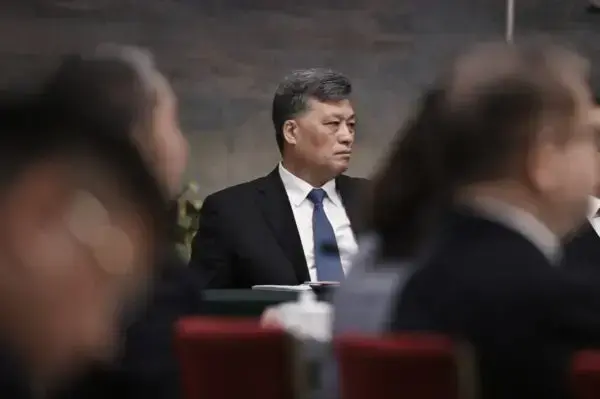
A significant uproar in the global AI industry and political circles has erupted over the alleged espionage activities involving NVIDIA’s co-founder Jensen Huang, with surprising connections emerging to the tech giant Huawei. Reports indicate that Huawei has not only found itself tangled in the security concerns surrounding Huang but is also embroiled in deeper troubles domestically. Ren Zhengfei, the founder of Huawei, along with his daughter, Meng Wanzhou, has been summoned to Beijing to cooperate with investigations led by the Chinese Communist Party’s Central Commission for Discipline Inspection.
An insider close to high-ranking officials in Beijing, using the pseudonym Liang Wenjiang, provided exclusive insights to sources about the current state of affairs at Huawei. The ongoing purge initiated by Xi Jinping has reportedly reached Huawei, compelling Ren Zhengfei and Meng Wanzhou to assist in investigations related to Ma Xingshui and his family’s financial dealings.
Recently, on November 5, the Central Committee publicly indicted Ma Xingshui, charging him with corruption. However, sources suggest that his downfall may be closely tied to certain political taboos violated under Xi Jinping’s leadership.
In light of the scandal surrounding Huang’s involvement in national security issues and alleged extramarital affairs, Liang disclosed contrasting information about a woman named Huang Le, who previously lacked influential connections but has seemingly developed substantial ties in recent years. Liang stated, “She used to be well-connected in military industrial circles, and her relationships include influential figures close to Xi Jinping and alliances with the family of the late leader Deng Xiaoping.”
On November 12, American financial news outlet CNBC cited a recent investigation by the private intelligence research agency Tesari, which revealed that Huang Le (also known as Alice Huang) facilitated Huawei’s access to computational power services through complex layers of cross-shareholding entities. The U.S. government already identifies Huawei as a national security threat and has enacted sweeping sanctions, including bans on vital components such as chips for AI compute.
Publicly available information only confirms that Huang Le has engaged in private equity investments within mainland China along with her husband, Kang Wei, across various sectors, including semiconductors, gaming, cloud computing, and data centers. However, while Huang Le’s claims about her media experience and her networks with affluent families have surfaced, independent evidence to corroborate such associations remains absent.
Discussions about Huawei highlight its substantial historical ties that extend beyond merely Ma Xingshui’s case, necessitating a deeper exploration of the political relationships cultivated throughout various leaderships within the Communist Party.
Compelling rumors from September 2026 suggested that Ren Zhengfei’s family had either gone missing or fled, but Liang Wenjiang presented a different narrative. He characterized the situation as not a systematic crackdown on Huawei but rather a means of exerting pressure.
He clarified that neither Ren nor his daughter are currently in custody: “They were called to Beijing but are not being detained. Using common terms, you can comply with the authorities and stay in a designated hotel in Beijing; the matter is still ongoing.”
Liang emphasized that Huawei’s troubles stem primarily from its association with the Ma Xingshui case as well as financial transactions linked to Ma’s wife, Rong Li, alongside other financial issues.
He observes that the regime’s current approach towards Huawei serves as an extension of the investigative scrutiny on Ma Xingshui and not an isolated campaign against Huawei itself. “Ultimately, it circles back to Ma Xingshui’s issues; everything else is supplementary,” Liang added.
Following the formal arrest of Ma Xingshui on November 5 and subsequent public prosecution, the list of companies involved in the case has not been fully disclosed, and Huawei has not been named in official announcements.
Liang contended that Huawei represents a crucial lead in investigations concerning Ma Xingshui, particularly regarding the financial transactions involving his wife and related enterprises. Additionally, some matters concerning Ma Xingshui during the investigation extend beyond Huawei to implicate other political families.
While Rong Li was not mentioned in the official accusations against Ma, a release detailing his disciplinary actions on July 14 noted that he had been “permitting and overlooking relatives exploiting their positions for financial gain, leading to extensive family corruption.”
According to Liang, transactions between Huawei and the Ma Xingshui family encompass equipment components, supply chain procurements, land, factory developments, and ventures in both the mobile and automotive industries, with some dealings involving Ma’s brother and wife purportedly exceeding 320 million yuan.
Liang also suggested that Huawei might face a substantial recovery of funds, business restructuring, and adjustments in actual control. Whether Ren Zhengfei’s family can retain control of the company will ultimately rely on the higher echelons of Beijing managing the related cases.
Beyond the financial entanglements with Ma Xingshui’s family, Liang hinted at potential national security dilemmas concerning Huawei’s military-related projects along with the communication equipment it produces.
He articulated a critical point of contention: “Huawei provides a lot of equipment for military use, leading to interactions with figures such as Ma Xingshui and Zhang Youxia, which certainly intersects many issues.”
Liang further noted that Ma Xingshui’s long tenure in aerospace has exposed him to sensitive national defense technologies, while Huawei’s communication products have been employed by some military enterprises.
“Especially given that Ma controlled so much information regarding aerospace, which is state confidential. Many individuals have collaborated with Huawei in those areas,” he remarked.
Liang also referenced the organizational dynamics of military procurement at the Ministry of Defense under the leadership of figures like Li Shangfu and Zhang Youxia, suggesting their roles might be revisited as part of this scandal.
The implications of the military-industrial relationships are seen as vital factors affecting Huawei’s circumstances regarding the Ma Xingshui case.
The concerns arise when a figure like Ma encounters issues; it leads to significant alterations within Huawei, suggesting that the internal structure has already been affected.
Both Li Shangfu, a former defense minister, and Zhang Youxia, a former vice-chairman of the Central Military Commission, hold responsibilities in China’s military procurement system, yet allegations against them have not publicly included “leaking state secrets.”
Moreover, Liang indicated that Huawei’s communication technology has also been tied to confidentiality breaches, noting that research and development data for military communication equipment was reportedly accessed by foreign entities.
However, he refrained from providing detailed information about any leaking incidents.
The pressing question remains: can Ren Zhengfei navigate through such highly sensitive political cases safely? Liang believes that since Huawei operates as more than just an average private enterprise, the Communist Party is unlikely to target it aggressively.
Huawei is not merely a private communication giant but also a symbol of Chinese self-sufficient technology, despite facing accusations from the West about espionage and surveillance practices. Following the Meng Wanzhou incident from 2018 to 2021, Huawei stands as a prominent symbol in the ongoing technology and political tensions between the U.S. and China.
Decisions about how Beijing will handle Ren Zhengfei and his daughter are expected to reflect their unique standing and relationships within the Communist Party. “The Party desires money yet not to eliminate their resources. They will not take actions against him as they are relatively close to him,” Liang stated.
He asserted the likelihood of substantial financial restitution being negotiated, estimating it to be in the range of hundreds of billions.
Liang elaborated that the ongoing investigations and consequences faced by large private enterprises in China have become a recurring occurrence. “Zhang Yiming from ByteDance has faced contributions, and Tencent hasn’t been exempt either; look at other companies like Pinduoduo that have similar responsibilities.”
He conveyed that while the investigations concerning Ren Zhengfei and his daughter are yet to reach a conclusion, Beijing does not seem inclined to impose the harshest consequences, signaling that “they likely will not eliminate Ren Zhengfei.”
Liang further revealed the current restrictions placed on Ren Zhengfei’s family, including travel bans. “A few days ago, his daughter, Yao Anna, attempted to exit; however, they are all subjected to limitations on leaving the country, so there’s no point in thinking they could travel.”
“Not only are they under travel restrictions, but even plans to leave Shenzhen or Beijing now require approval from national security,” Liang explained.
He highlighted that despite Huawei being officially labeled as a private enterprise, it has maintained high-level connections with the Central Committee and national security systems over many years.
“It registers as a personal company yet functions akin to a state enterprise, interfacing consistently at vice-ministerial levels, and now even departing from Beijing proves to be particularly challenging,” Liang stated.
He also reflected on the political backdrop surrounding Meng Wanzhou’s return to China post-release.
“At that time, Xi Jinping had signed off on several directives to protect Meng Wanzhou as Huawei was largely involved, colliding with military and sensitive national matters.”
Liang believes that the heightened emphasis placed on Meng Wanzhou’s situation by top leadership was not merely due to personal ties with Huawei but also reflected broader political climates.
“Back then, it was a means to deflect national sentiment issues, right? Meng had been away from China for nearly three years; thus, the stakes were high for Xi Jinping. Consequently, securing Meng Wanzhou became a significant priority for him.”
In December 2018, Canadian authorities detained Meng Wanzhou in Vancouver at the behest of the U.S. for extradition purposes. After nearly three years of legal and diplomatic negotiations, she reached a deferred prosecution agreement with the U.S. Department of Justice in September 2021, subsequently returning to China. In December 2022, the U.S. court officially dismissed charges against her.
Looking ahead, the future of Huawei appears uncertain, with Liang predicting that control may shift away from Ren Zhengfei’s family, potentially involving direct participation from national security authorities or state-owned enterprises.
He explained that the approach being contemplated does not necessarily entail a complete state takeover of Huawei but rather letting state enterprises or other designated entities engage in various operations, thereby redistributing actual control.
“Specific influential families or state-owned enterprises may take over Huawei’s operations, leading to a dismantling of its business,” he observed.
Even if Huawei retains its existing management team, Liang posits that it might no longer be under the ultimate decision-making authority of the Ren family.
“In effect, the status of the Ren family will change; they may merely function as operators of the company without being the ultimate decision-makers. Essentially, that is the prevailing state of affairs right now.”
Huawei’s 2025 annual report noted that the company was implementing an employee stock ownership program through the union, and as of the end of 2025, Ren Zhengfei’s holdings represented approximately 0.59% of the total share capital.
The report indicated that the direct shareholders were the union committee and Ren Zhengfei, without evidencing direct stakes held by state-owned enterprises in Huawei Investment Holdings.
Liang further suggested that the national security agencies might take a more hands-on role in Huawei’s management structure in the future.
“Currently, Huawei collaborates closely with national security, marking an ongoing relationship that may prompt structural changes,” he noted.
In Liang’s view, even a sprawling, strategically significant enterprise like Huawei cannot hope to maintain complete independence when navigating the complex political landscape of the Communist Party, even if it associates closely with influential power brokers.
“When money flows within interest exchanges, you can be sacrificed at any given moment.”
“To the Party, everything is dispensable; you, Huawei, are insignificant in that broader context. They can claim what they want whenever.”
Though these judgments from insiders are difficult to independently verify, they raise a poignant question worthy of further investigation: is the intertwining of political and business relations in China an umbrella of protection during times of crisis, or the potential catalyst for the next round of purges?