
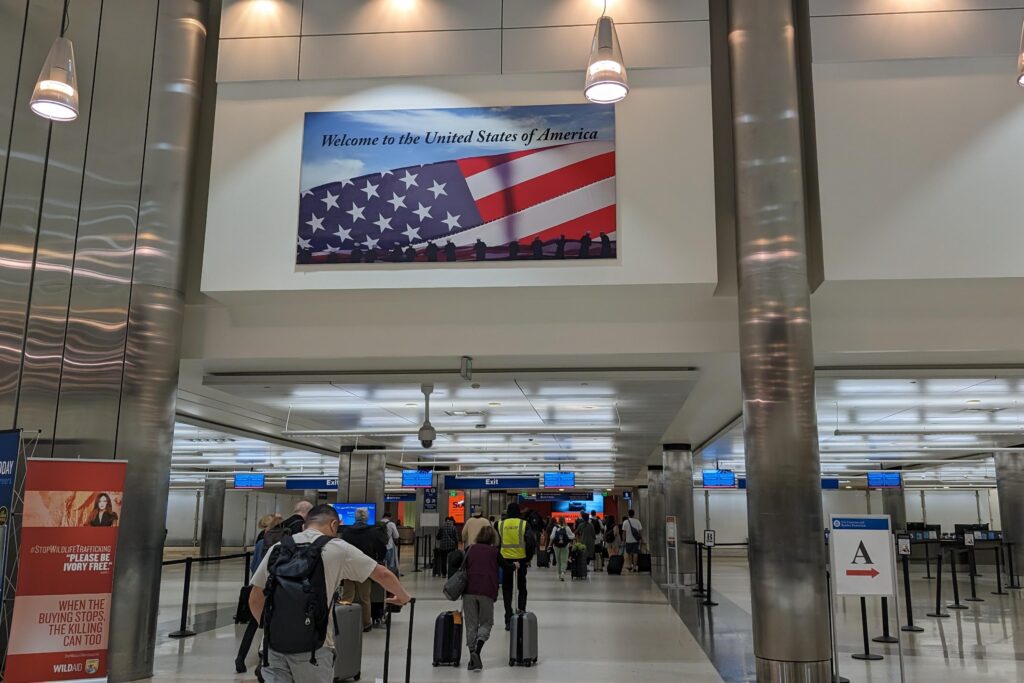
Traveling to the world’s wealthiest countries has become a significant endeavor, attracting millions of tourists each year. These nations are popular destinations for high-end travel, business trips, and international vacations. In response to the growing number of visitors, many governments have invested heavily in digital border systems aimed at streamlining entry processes and enhancing security. However, the question remains: does this technology truly make travel easier, or does it merely shift the complexity of procedures online?
A recent report highlights the potential difficulties travelers face when encountering errors in their travel documents while trying to enter affluent countries. Among those evaluated, the United States, the United Kingdom, and Canada ranked at the top in terms of challenges.
This report, produced by the visa processing platform VisaSyst, emphasizes that while electronic authorizations, carrier checks, and digital entry forms can simplify the travel experience, they may also introduce new obstacles. Missing an approved document, overlooking transit regulations, or linking credentials to the wrong passport can abruptly end a traveler’s journey before it even begins.
To delve into how these systems impact travelers in practice, the “VisaSyst 2026 Travel Hurdles Index” compares the digital entry requirements of the ten wealthiest countries worldwide. It evaluates the necessary preparations each traveler must complete—ensuring accuracy is crucial before being granted entry.
VisaSyst notes that this report does not measure the hospitality of a country or assess the likelihood of being allowed entry. Instead, it focuses on the factors most likely to cause delays, interruptions, or even total cancellations of travel plans due to document errors.
The analysis by VisaSyst examined the entry requirements of these ten countries, assessing visa and travel authorization stipulations, transit rules, eligibility restrictions, and the likelihood that document discrepancies would obstruct travel.
According to the report, countries that rely on “digital pre-travel authorizations” tend to create issues for travelers before their departure. These authorizations must be obtained in advance and are tied to specific passports—meaning any mistakes could prevent boarding, lead to trip interruptions, or complicate application processes right before departure.
Among all the nations assessed, the United States stands out as the only country given a perfect score of five (out of a possible five) in terms of “travel obstruction levels.”
What accounts for this rating? The primary factor is the “Electronic System for Travel Authorization” (ESTA) that many travelers must acquire before departing, accompanied by eligibility restrictions that can catch travelers off guard. VisaSyst indicates that anyone who visited Cuba on or after January 12, 2021, may lose the right to enter the U.S., with only a few exceptions available.
While Canadian citizens do not need to apply for an ESTA when entering the U.S. as visitors, citizens from other wealthy nations, including Australia, New Zealand, Japan, and South Korea, are required to do so.
However, entering Canada is not without its hurdles either. The country has received a score of four out of five in the “Electronic Travel Authorization” (eTA) category, ranking third. The eTA is a digital entry requirement for visa-exempt foreign nationals flying to Canada. Much like how Canadians do not require authorization when entering the U.S., American citizens typically do not need an eTA.
VisaSyst points out that while Canada’s eTA application process is relatively straightforward, one key detail has become one of the most common “traps” for international travelers: many visa-exempt travelers who are simply transiting through Canadian airports, without leaving the terminal, also need to apply for an eTA.
The United Kingdom ranks second with a score of four out of five, followed closely by Australia and Japan, which join the list of top five countries in terms of travel hurdles.
Entering Australia demands various documents, such as an eVisitor, ETA, or visitor visa, depending on the passport held. An incorrect choice at the application stage can lead to significant delays.
Travelers to Japan must secure a Japanese electronic visa (eVisa) along with necessary customs declarations. It is advisable to handle eVisa matters before boarding and customs declarations upon arrival. For customs, this applies to all individuals entering the country. For the eVisa, travelers are required to present an online “Visa Issuance Notice,” with screenshots or printouts not being accepted.
VisaSyst reports that Germany, France, and the Netherlands currently hold a low score of one out of five. However, these countries are planning to implement similar digital systems, suggesting a possibility for improvement in future years.
According to the company, accuracy in completion of digital documents before departure, as opposed to filling out paper forms upon arrival, increases the difficulty of correcting any errors that may arise.
The VisaSyst report outlines common travel issues associated with electronic border management regulations and related documents, including:
– The necessity to fill out new electronic forms, irrespective of whether you are visa-exempt or merely in transit.
– Approval status is linked to your passport; hence, if you switch passports or use a different one for travel, prior electronic documents may become invalid.
– Various forms serve different purposes; an electronic visa, travel authorization, and entry card are not interchangeable.
– Some verifications occur before boarding, necessitating that travelers obtain the required approval documents before departure.
– Timely submission is crucial; certain applications must be completed ahead of time or within specific windows to be effective.
VisaSyst has highlighted that the most common corrections involve discrepancies in passport information, failure to obtain transit authorization, and confusion arising from similarly named documents (e.g., confusing the eTA with an entry card).
To avoid being denied entry, it is essential to meticulously check all information. This includes ensuring the traveler’s passport details are accurate, especially if there have been recent updates, and confirming that all necessary entry documents are prepared and understood adequately.