
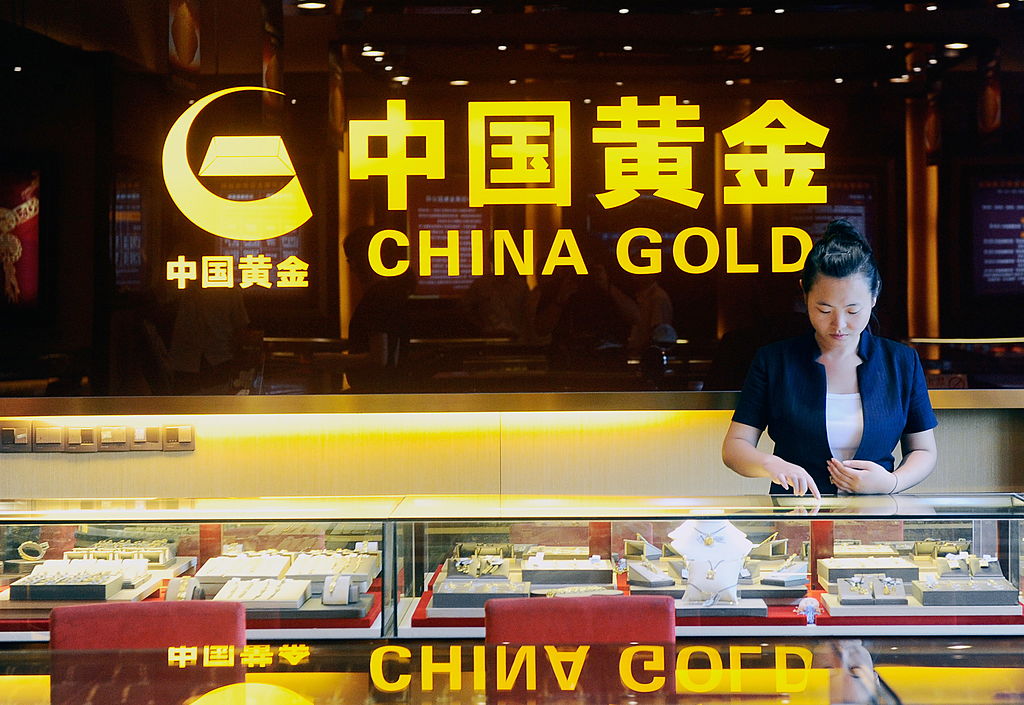
Recently, the domestic prices of gold jewelry from local Chinese brands have seen a significant decline, largely influenced by a steep drop in international gold prices. As of November 14, several mainstream brands, including Chowsang Sang Sang, Lao Feng Xiang, and Lao Miao Gold, have reported a successive price reduction for four consecutive days, with most items falling below 1,200 yuan per gram. In comparison to their peak earlier in the year, this translates to a price drop of over 500 yuan per gram.
Based on these figures, a typical 20-gram gold bracelet could see its total price decrease by over 10,000 yuan, provoking widespread discussions among consumers and investors alike.
According to reports from Zhongxin Jingwei and the Securities Times on November 14, the recent downtrend in international gold prices has led to a corresponding decrease in the prices of gold jewelry from domestic brands.
On November 14, several Chinese brands reported the following prices for their gold jewelry, marking the fourth day of consistent reductions:
– Chowsang Sang Sang: Priced at 1,166 yuan per gram, a cumulative drop of 77 yuan over four days.
– Lao Feng Xiang: Priced at 1,168 yuan per gram, with a total decrease of 68 yuan over the same period.
– Lao Miao Gold: Priced at 1,165 yuan per gram, also showing a 68 yuan decline over four days.
Notably, Chowsang Sang Sang’s prices peaked at 1,243 yuan per gram earlier this week, witnessing a decrease of 77 yuan as of November 14. Both Lao Feng Xiang and Lao Miao Gold experienced a reduction of 68 yuan each over the same four-day frame.
If we consider the prices from January 29 this year, when gold jewelry exceeded 1,700 yuan per gram, the current figures indicate a drop of more than 500 yuan per gram. Taking the example of a 20-gram gold bracelet, this price difference roughly translates to a loss of around 10,000 yuan.
In light of the persistent decline in gold prices, some online commenters have expressed a desire for prices to drop even further, indicating plans to purchase gold jewelry. Conversely, others have opted to remain cautious, believing there may be potential for further price drops and preferring to wait for even lower price points.
Additionally, certain consumers maintain that gold is a suitable asset for long-term investment, as enduring price fluctuations could yield future benefits.
The international price of gold has recently fallen sharply. As of November 13, Eastern Time in the United States, the price of spot gold dipped below 3,900 USD per ounce, reflecting a 4.9% decrease for the week, marking the largest single-week decline since March. During the same timeframe, COMEX gold futures recorded a 4.60% decrease.
Reuters reported that spot gold prices on November 13 were quoted at 3,879.71 USD per ounce, showing a slight increase of 0.1%. Meanwhile, the settlement price for December gold futures stood at 3,886.30 USD per ounce, remaining relatively stable that day. Nevertheless, gold prices still showed an approximate overall decline of 4.5% for the week. Different media outlets may report various price points and statistics, so the weekly decline should be clarified according to each individual report’s methodology.
The domestic futures market in China has also felt the impact of these changes. On November 13, the Shanghai Futures Exchange’s gold main contract briefly dipped to 829.6 yuan per gram, reaching an annual low for that contract and reflecting a 35% decrease from the highs seen at the end of January this year. It closed that day at 839 yuan per gram, representing a 2.49% drop, with a total decline of about 5% over the past three trading days.
The current drop in gold prices is closely linked to U.S. inflation data, fluctuations in the dollar, and changing expectations regarding the Federal Reserve’s monetary policy.
Analyst Huang Jiaqi from Zhuochuang Information noted that the international gold price has undergone a significant correction after a prior surge, with increased pressure from profit-taking. Stronger U.S. inflation data has influenced market expectations, suggesting a potential 50 basis point rate hike by the Federal Reserve in December, coupled with a strengthening dollar, creating downward pressure on gold prices.
As domestic gold jewelry prices retreat from early-year highs, some consumers who had previously been watchful are beginning to consider the right timing to purchase gold.
Reports from the Securities Times on November 14 indicated that gold jewelry prices from multiple domestic brands have decreased from over 1,700 yuan per gram to around 1,165 to 1,168 yuan per gram. In recent days, several brands have collectively lowered their prices by approximately 35 to 40 yuan per gram, reflecting a decrease of about 3%. Additionally, with the promotional activities surrounding Double Eleven, some previously cautious consumers are starting to enter the market.
However, analysts caution that a decline in gold prices does not necessarily indicate a bottom has been reached. Huang Jiaqi stated that short-term fluctuations in gold prices could continue to intensify, necessitating careful monitoring of the Federal Reserve’s monetary policies, trends in the dollar, changes in real interest rates, and the movements of central bank gold purchases and investment funds.