
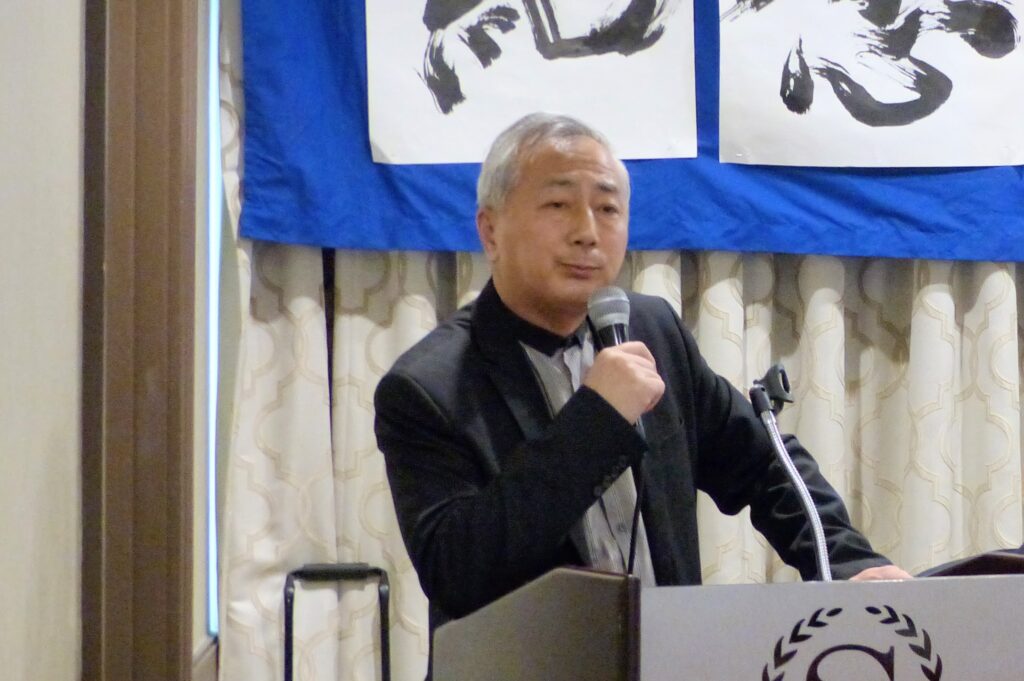
In a significant development for the Chinese democratic movement in the United States, prominent activist Tang Yuanjun was sentenced today to three years of supervised release without a monetary fine in a federal court located in New York’s Southern District. Tang, 69, pleaded guilty in September 2025 to charges of acting as an agent for the Chinese Communist Party (CCP) without providing prior notification to the U.S. Attorney General.
Tang Yuanjun, once a dissenter in China, has a history marked by significant political activism. He was sentenced to 20 years in prison for his involvement in the Tiananmen Square protests in 1989 but was later released in 1997 following international pressure that led to a reduction in his sentence. After fleeing to Taiwan in 2002, he ultimately sought political asylum in the United States, where he settled in New York. He also held the position of Vice Chairman and Eastern U.S. Chairman of the Chinese Democracy Party’s National Headquarters.
According to the allegations presented by the U.S. Attorney’s Office for the Southern District of New York, Tang acted on directives from the Chinese Ministry of State Security (MSS) between 2018 and 2023. He clandestinely gathered personal information, activity records, and communication details of Chinese dissidents residing within the U.S., which he then forwarded to authorities in China. Prosecutors argued that Tang capitalized on the trust within the pro-democracy community to facilitate CCP infiltration, jeopardizing the safety of individuals and undermining mutual trust among overseas activists.
As sentencing occurred, federal prosecutors pushed for a five-year imprisonment, the maximum penalty under the charge of acting as a foreign agent. The defense countered by emphasizing Tang’s irreparable reputation damage and estrangement from the community, asserting that the likelihood of reoffending was extremely low and urging the judge to consider alternatives to incarceration.
The judge ultimately imposed a sentence of three years’ probation, citing insufficient evidence to establish a direct causal link between Tang’s actions and the alleged harm against victims. The judge also acknowledged the defense’s argument regarding the majority of information Tang engaged with being related to public activities, along with his apparent remorse following the events.
The prosecutor’s sentencing memorandum revealed that from April 2018 to June 2023, Tang received instructions from MSS officer Liu Fei and provided information about at least 23 dissidents. The documented actions included collecting personal details of activists, assisting the MSS by offering information about immigration lawyers who help activists acquire asylum, photographing democracy events, and even recording online meetings. Additionally, he had allowed MSS to install software on his mobile phone for direct photo and audio transmission.
The prosecution highlighted the breach of trust Tang exhibited, placing fellow activists and their families in precarious situations regarding surveillance, harassment, and threats, thereby cultivating fear and distrust within the overseas democracy community.
In defense, it was argued that Tang’s motivation was to visit his elderly parents, with the assertion that he was not coerced into collaboration with the MSS. However, the prosecution contended that he continued to maintain contact with MSS operatives even after being questioned by the FBI in June 2023, and that he had plans to apply for a visa to China prior to his arrest in August 2024.
While the defense focused on Tang’s past political persecution, they claimed his actions were driven by an earnest desire to reconnect with his parents, which led him to forsake his long-held principles. They emphasized his deep regret over betraying fellow activists and stated that the social repercussions he faced made further imprisonment unnecessary.
Despite the defense’s arguments, six victims submitted statements to the court, detailing significant personal harm caused by Tang’s actions. One victim, who had served as a vice mayor in a Chinese city, accused Tang of relaying their personal information and connections to the MSS, leading to their exposure to state surveillance. This victim described how, upon arriving in Los Angeles in 2020, they had been approached by Tang, who inquired about political asylum and their participation in activist groups.
In his sentencing statement, Tang acknowledged that the United States had once been a safe haven for him, where he had earned the respect of anti-communist organizations. However, he reflected upon his decision, spurred by a desire to visit his parents, which led him down a path of collaboration with the CCP and confessing to the offenses he committed.
On the day of the sentencing, Tang’s ex-wife and friends attended to offer support, with several other activists also present as victims in the proceedings.
Afterward, one activist remarked that the ruling represented a serious blow to both U.S. national security and the safety of overseas dissidents. He noted that Tang’s lack of actual imprisonment might embolden CCP agents to underestimate the legal repercussions of transnational repression in the U.S. He emphasized that the safety and well-being of the victims and their families were still at risk, pledging to continue gathering evidence and pressuring law enforcement to hold the CCP accountable for such repressive activities. The overall sentiment regarding the final ruling was one of disappointment and concern for future implications.