
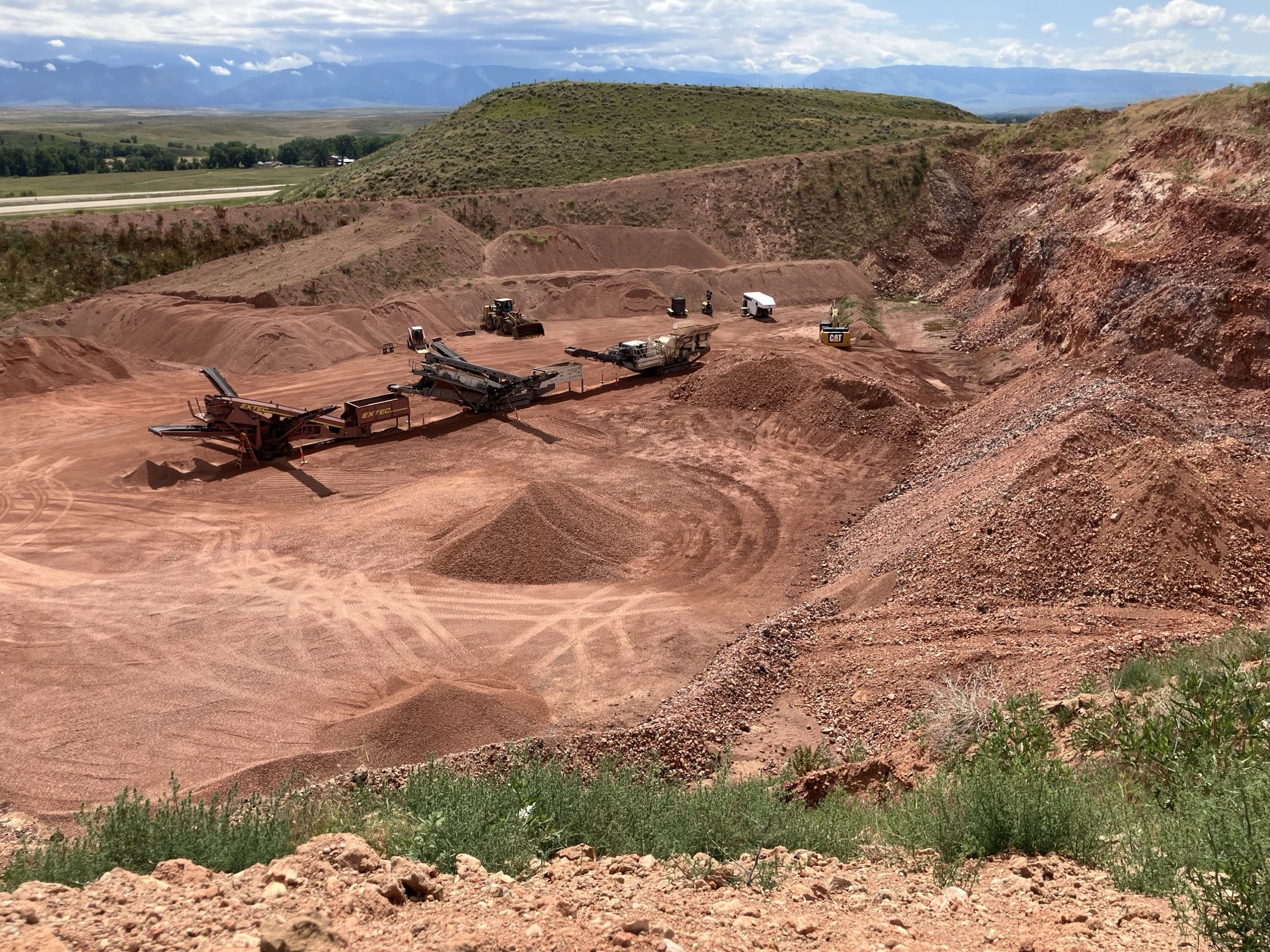
Pasqal collaborates with USA Rare Earth and Riven Systems to research how to improve the separation and processing of rare earth elements through the integration of quantum computing, artificial intelligence, and rapid chemical testing technologies. This move is expected to break China’s monopoly on the global critical rare earth supply chain for many years.
Pasqal, a global leader in quantum computing technology, based in Paris, France, partners with USA Rare Earth, which provides rare earth resources and processing expertise, and Riven Systems, specializing in rapid chemical experiments and testing.
The Chief Executive Officer of Pasqal, Wasiq Bokhari, told FOX Business that the core goal of the collaboration is to extract as many usable rare earth materials as possible from existing resources outside of China.
Bokhari stated that this collaboration highlights the desire of the United States and its allies to reduce reliance on key supply chains controlled by foreign entities through cooperation in advanced technologies. As rare earths are widely used in defense systems, advanced electronics, and other critical technologies, their impact could extend far beyond mines and processing facilities.
Rare earth elements are typically not found in isolation but mixed with other minerals, making the chemical separation process highly complex.
Bokhari emphasized that Western countries have relatively lower reserves of rare earths and need to improve detection efficiency. Quantum computing can simulate molecules and compounds containing rare earth elements at a deeper level, enhancing the efficiency of rare earth identification, detection, and separation.
Currently, the United States can only import many rare earth materials from China, and any sensitive changes in the situation could lead China to restrict rare earth supplies, thus compromising U.S. defense and other cutting-edge technological fields.
Bokhari also pointed out that the global supply chain disruptions during the COVID-19 pandemic have shown the severe consequences of supply interruptions. Rare earth supply chain affects the production of high-value end products, and if restricted, the consequences will be even more severe.
Even improving a single aspect of the rare earth separation process could significantly increase final output, according to Bokhari. If efficiency can be doubled, tripled, or even increased tenfold, the impact would be substantial.
Bokhari mentioned that quantum computing has significant advantages in material, chemical substance, and molecular modeling, as well as in finding solutions from a vast array of possibilities.
He considers quantum computing today comparable to artificial intelligence before the proliferation of generative AI like ChatGPT. The development of quantum computing is only a few years behind that of AI, and its future impact could be comparable to the current generative AI.
Bokhari believes that quantum computing is not a distant future technology. For Pasqal, quantum computing technology already exists and is being used to address real-world business problems.