
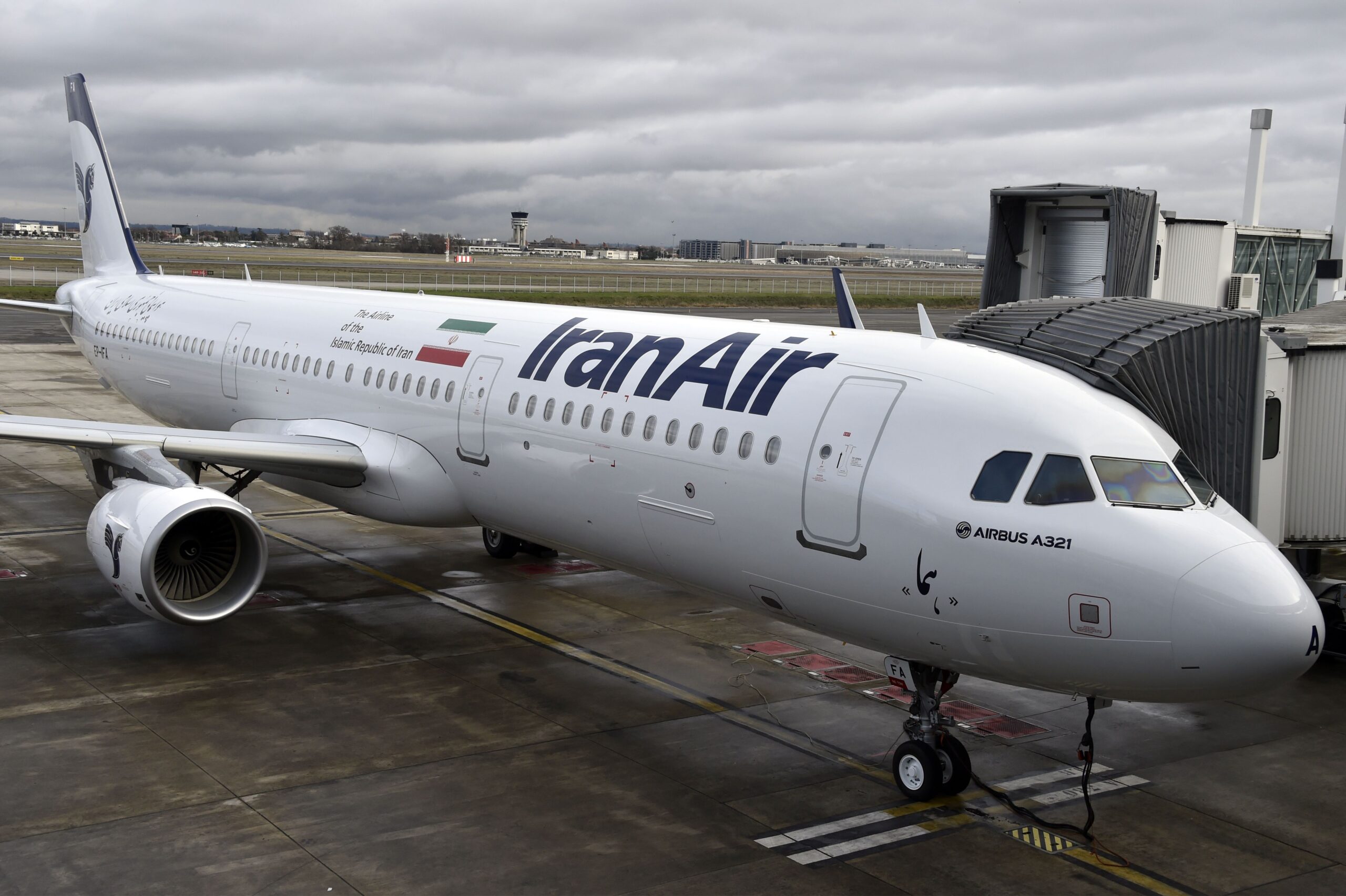
The United States’ new round of sanctions against Iran’s aviation industry took effect on Wednesday, September 23. Iraq has suspended flights from Iran to Baghdad, and flights from Tehran to Muscat, the capital of Oman, have also been canceled.
Iran is seeking to redirect some of the flights originally bound for Baghdad to Najaf Airport, located about 160 kilometers south of Baghdad. Najaf is an important Shia religious center in Iraq.
These flight changes indicate that the US sanctions on Iran’s aviation industry are beginning to have a tangible impact on air travel in the Middle East.
In addition to targeting Iranian airlines, the US has warned airports, fuel suppliers, ground operators, and ticket sellers that continuing to provide services to the sanctioned Iranian airlines could lead to secondary sanctions or even exclusion from the US dollar system, thus restricting Iran’s international aviation operations.
Two sources within the Iraqi civil aviation authority informed Reuters that the Iraqi government has ordered the suspension of flights from Iran to Baghdad starting at midnight on Wednesday, September 23. Two other sources mentioned that discussions are ongoing about possibly redirecting Iran Air flights to Najaf.
Iran’s semi-official Tasnim News Agency cited Iran’s Civil Aviation Organization as saying that flights from Tehran to Muscat were canceled as of midnight on September 23.
Majid Akhavan, a spokesperson for Iran’s Civil Aviation Organization, stated that Muscat Airport is currently not accepting Iranian passengers, and Tehran is in discussions with Omani authorities regarding these restrictions.
A representative from Turkish Airlines confirmed to Iran International, a British media outlet, on Monday, September 21, that the airline has suspended all flights to Iran until at least March 2027.
Mahan Air had previously suspended flights between Tehran and Muscat, as well as flights to Istanbul and Ankara.
However, Iran insists that other flights departing for Istanbul, Turkey are still operating according to schedule.
Furthermore, both Georgia and Azerbaijan have recently started limiting flights operated by Iranian airlines.
Georgia began restricting the operations of sanctioned Iranian airlines in the country on September 21; Azerbaijan halted Iranian airline flights to the country starting on September 22.
US Treasury Secretary Scott Bessent stated on Monday that through secondary sanctions, the US will make it difficult for Iranian airlines to sustain international operations starting from September 23.
In an interview with CNBC, Bessent mentioned that when Iranian aircraft land at airports, “you can’t provide them with fuel, landing services, or sell them tickets, otherwise you will be excluded from the US dollar system.”
The US cannot directly prohibit Iranian airlines from using other countries’ airspace, but aviation analysts point out that if fueling, ground handling, and other necessary services are halted due to sanctions risks, it could still make it challenging for Iranian airlines to maintain their international routes.
On September 8, the US included all 27 Iranian airlines in its sanctions list. The US Treasury Department stated that the Iranian regime uses the aviation industry to transport weapons, personnel, and illegal goods.
Prior to the implementation of the latest measures, Iran’s international aviation network had already significantly reduced. Data from Iran’s Civil Aviation Organization showed that in 2025, a total of 11.2 million passengers traveled on international flights in and out of Iran, with nearly 7.2 million using Iranian airlines.
Cirium, an aviation data company, noted that in August this year, Iran’s international aviation capacity decreased by 49% compared to 2025, with the overall international network greatly reduced.
Analysts suggest that if more foreign airports and aviation service providers stop serving Iranian airlines due to sanctions risks, Iranian passengers may need to increasingly rely on foreign airlines, hub connections, or land transportation, potentially leading to longer travel times and increased costs.
The next focus of observation will be whether US sanctions further affect Iran routes in other countries. Currently, Iranian airlines still operate routes to China, the UAE, Pakistan, India, Thailand, and Turkey. In China, major cities such as Beijing, Shanghai, Guangzhou, and Shenzhen are included; Dubai, New Delhi, Lahore, and Phuket are also key destinations.
If airports, fuel suppliers, or ground handlers in these regions halt services due to sanctions risks, Iran’s international aviation network may shrink further.