
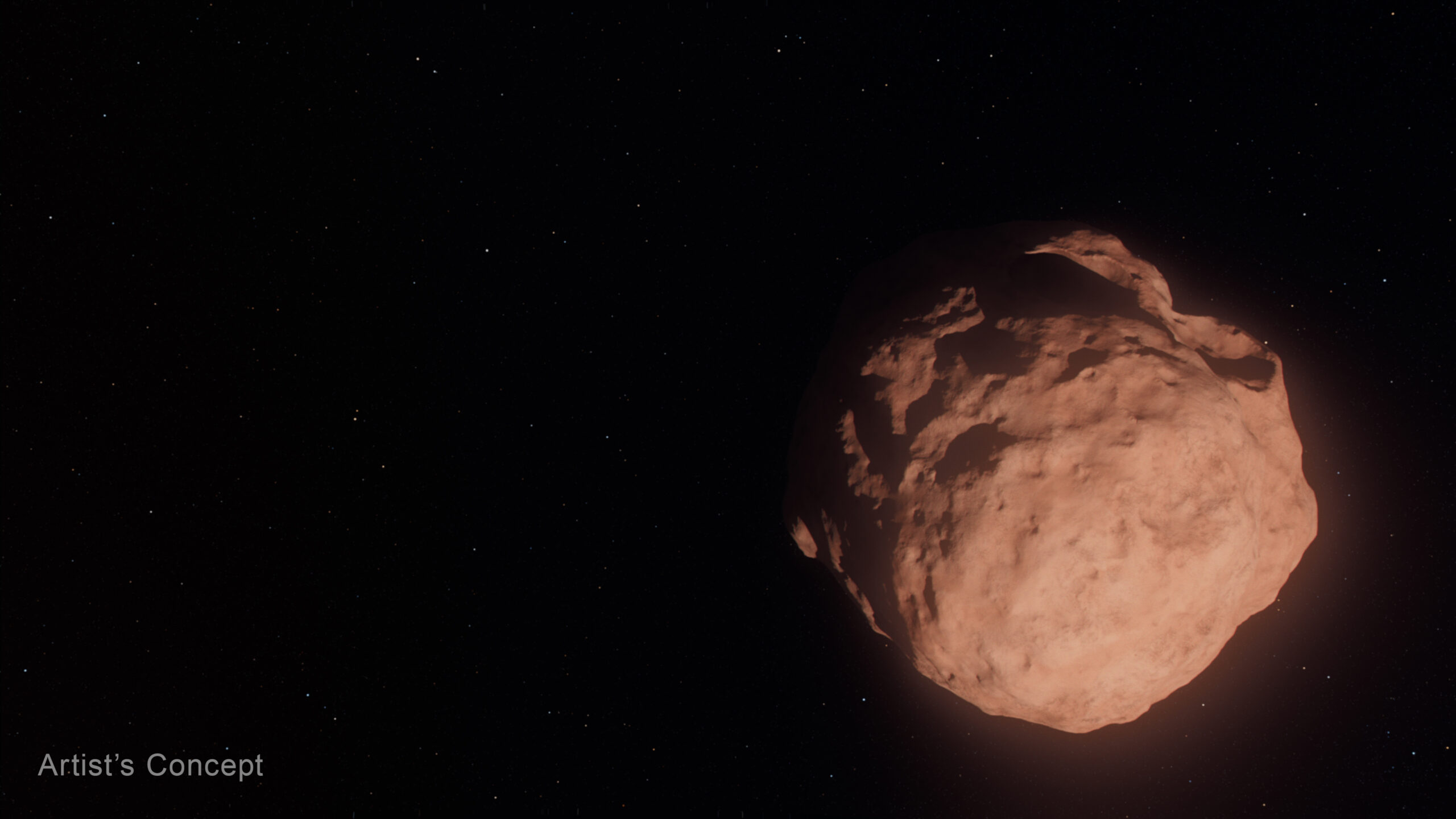
Astronomers have, for the first time, combined the use of the Hubble Space Telescope and the James Webb Space Telescope from the National Aeronautics and Space Administration (NASA) to observe a group of extremely faint Trans-Neptunian Objects (TNOs) beyond Neptune. These dim small celestial bodies in the outer solar system, akin to “living fossils,” preserve information from the early formation of the solar system, aiding in our understanding of the history of our solar system.
In a press release issued by NASA on September 8, astronomers utilized NASA’s Hubble Space Telescope and the James Webb Space Telescope to conduct joint research on TNOs located at the outer edges of our solar system. Some of these objects are the smallest and faintest directly observed by humans to date.
TNOs are typically small, icy bodies orbiting beyond the orbit of Neptune around the sun. Most of them are dimmer by over 100 million times compared to celestial bodies visible to the naked eye.
Researchers made an unexpected discovery that the number of small TNOs is lower than expected, and the color characteristics of these objects follow similar patterns to larger TNOs.
In total, researchers observed 27 newly discovered, extremely faint TNOs. The brightness of one of these objects is equivalent to a small group of fireflies observed on the surface of the moon from Earth. The smallest of these objects has a diameter of about 3 miles (5 kilometers), which is one-fifth of the smallest limit detectable by the most sensitive ground-based telescopes.
These small celestial bodies offer an excellent perspective on observing the early stages of planet formation. During this phase, dust and rocky debris orbiting the sun merged into city-sized planetesimals, the solid building blocks that accumulate to form planets but have not yet coalesced into complete planets.
Beyond the orbit of Neptune, it appears that this subsequent evolutionary stage has not fully taken place, leaving a group of icy planetesimals in a frozen state.
In this study, researchers mainly analyzed two types of small TNOs: the more stable “cold” TNOs, which orbit the sun along relatively circular original orbits within the plane of the solar system, and the less stable “hot” TNOs, which initially formed in the region between Uranus and Neptune’s current positions but were pushed to their current outer locations due to the migration of outer giant gas planets during the early formation of the solar system. Today, they orbit in high eccentricity elliptical orbits, occasionally moving in and out of the plane of the solar system.
Prior to the observations, researchers expected that both “cold” and “hot” TNOs should have experienced multiple collisions over billions of years, resulting in surface features differing from larger TNOs.
However, the actual observational results revealed that the colors, shapes, and compositions of small TNOs were almost identical to those of larger TNOs, indicating that they have experienced few collisions in the past or have somehow preserved their original components after collisions.
Anastasia Morgan, a doctoral candidate at Northern Arizona University involved in the study of TNO colors and compositions, expressed, “Seeing these smallest objects ‘remember’ and preserve the history of their formation process in some way is truly fascinating.”
The above research findings were published in the Astronomical Journal on September 8.