
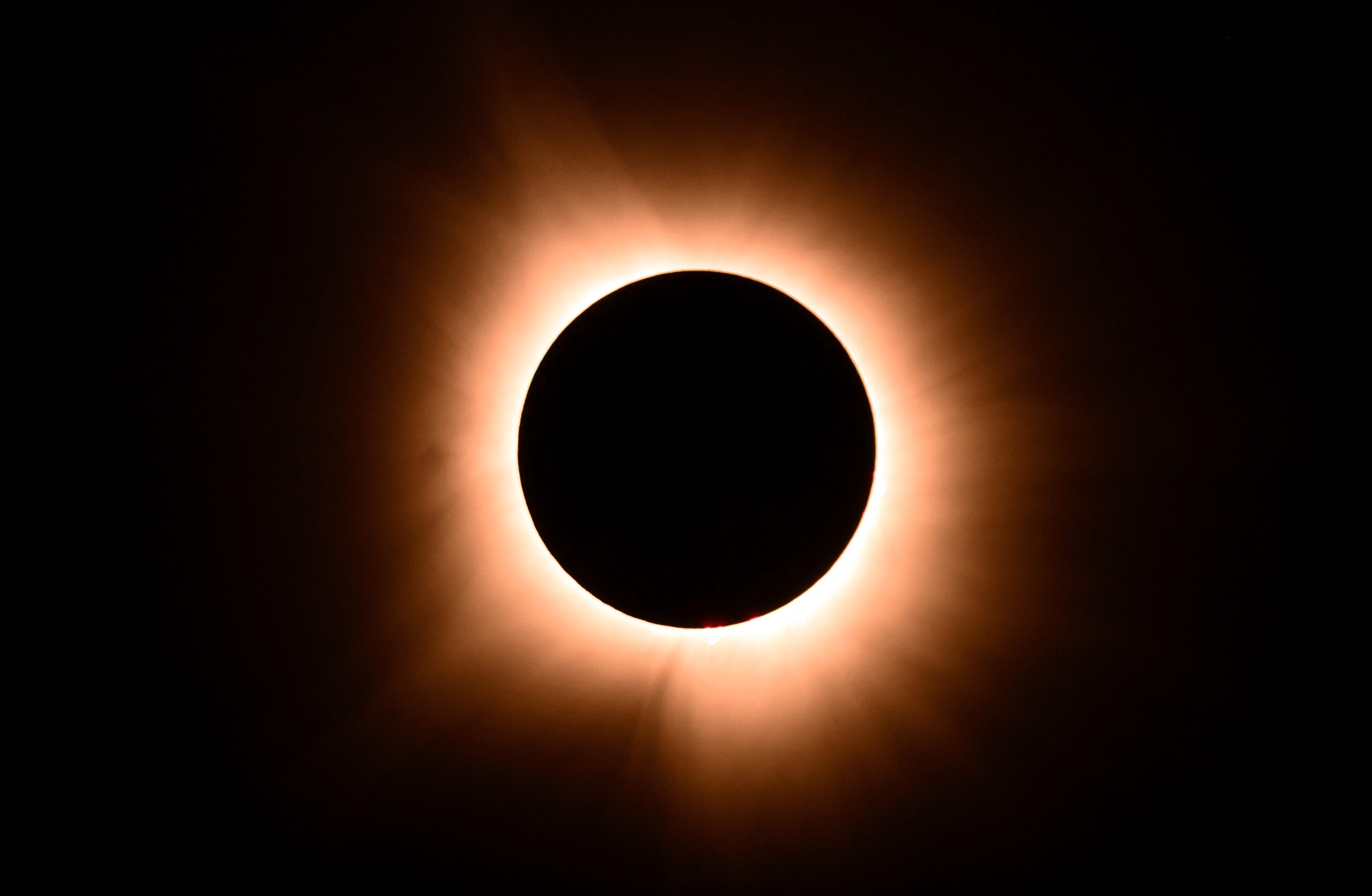
On Wednesday, August 12, the world witnessed a rare astronomical phenomenon known as the “astronomical wonder of overlapping events”. From the morning’s alignment of six planets, to the afternoon solar eclipse, and to the peak of the Perseid meteor shower under the new moon at night, four major celestial events unfolded on the same day, offering a celestial feast that is a once-in-a-lifetime experience for stargazers around the globe.
During the local sunset time on August 12, the sun, moon, and Earth aligned perfectly, bringing darkness during daytime to Europe. This marked the first total solar eclipse to land on the mainland of Spain in over a century (since 1905), attracting millions of global tourists to witness this rare event.
The total eclipse phase lasted approximately 1 to 2.5 minutes and its path crossed Greenland, Iceland, mainland Spain, and parts of Portugal, ultimately concluding in the Mediterranean.
Hotel prices surged in northern Spanish cities (such as Bilbao, Santiago de Compostela) and the capital of Iceland, Reykjavik. Iceland even experienced a visible total solar eclipse for the first time in its capital since 1433.
Coinciding with the scorching European summer (with temperatures exceeding 35°C), Spanish authorities deployed over 33,000 law enforcement officers to oversee observation points in sparsely populated rural areas, known as “Empty Spain”, to prevent potential wildfires due to crowds, littering, or the use of open flames.
While the total solar eclipse took center stage in Europe, residents in North America and many other parts of the world also experienced the spectacular “quartet of celestial phenomena” on the same day:
Time:
A few hours before sunrise.
Phenomenon:
The “planet parade” phenomenon, consisting of six planets, visible in the eastern sky.
Time:
From 11:34 am to 1:46 pm Eastern Time.
Phenomenon:
Partial solar eclipse visible in North America (from Alaska to North Carolina in the US, most parts of Canada), most parts of Europe, and northwest Africa.
According to NASA, the sun in North America appeared like a “bitten cookie” (requires special solar eclipse glasses for viewing).
Time:
From the evening of August 12 to early morning of August 13.
Phenomenon:
Dubbed by NASA as the “best meteor shower of the year,” with peak activity producing 50 to 100 meteors per hour.
Phenomenon:
The peak of the meteor shower coincided with the new moon, reducing moonlight interference and providing the perfect dark sky background for observing the meteor shower.
The solar eclipse is not only a spectacular astronomical event to behold but also a prime opportunity for cutting-edge scientific research. During the eclipse, NASA conducted multiple high-altitude and atmospheric science experiments:
Shadow Chasing with WB-57 High-Altitude Research Aircraft:
NASA deployed the WB-57 high-altitude research aircraft to chase the shadow of the moon, aiming to deepen the understanding of the dynamic changes in the Sun’s corona.
High-Altitude Balloon Atmospheric Investigations:
The NASA-funded “Nationwide Eclipse Ballooning Project” sent students from various American universities to Iceland and Spain to launch scientific balloons before, during, and after the eclipse to study the impact of sudden sunlight reduction on the Earth’s atmosphere.
1:15 pm:
NASA’s official live broadcast commenced (nasa.gov/live).
1:45 pm:
Total solar eclipse began in Iceland.
2:28 pm:
Total solar eclipse began in Spain.
NASA simultaneously allowed global citizens to ask experts questions in real-time on social media platforms and updated high-quality images on Flickr.