
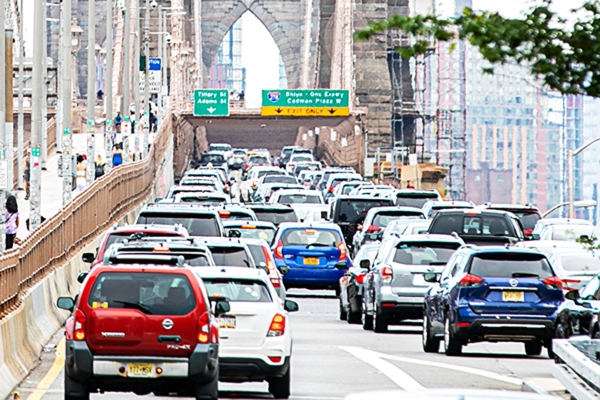
New York City’s “Congestion Pricing” system has officially been in place for a year since January 5, 2025, and its effects on reducing traffic flow, improving air quality, and boosting public transportation funding have begun to show, according to various official data and studies. However, the impact on businesses and driver costs continues to spark controversy.
Implemented in vehicles entering Manhattan below 60th Street, the congestion pricing system can charge up to $9. The concept was first proposed in 2007, undergoing years of legal battles, policy halts, post-election restarts, and temporary judicial rulings before finally being implemented.
New York Governor Hochul, Mayor Mamdani, and MTA Chairman Janno Lieber attended a press conference in Manhattan endorsing the results of the congestion pricing system’s first year.
Mayor Mamdani stated that the congestion pricing system generated nearly $550 million in revenue in its first year, exceeding the original estimate of about $500 million. Both city and state officials emphasized that this revenue will be specifically used for MTA’s capital projects to improve long-delayed transportation infrastructure.
Regarding potential future price adjustments, Governor Hochul noted that under existing regulations, there are adjustment points set for 2028 and 2031, but there will be no changes in the short term. She mentioned that the state will continue to monitor traffic and revenue situations to assess next steps.
According to data from the Metropolitan Transportation Authority (MTA), daily vehicle entries into the pricing zone have decreased by 11.1% since congestion pricing was implemented. As of November, there were approximately 70,000 fewer vehicles entering the area on average per day; by December 14, the cumulative vehicles entering the zone were 24.6 million less compared to the same period last year.
MTA highlighted that all segments within the pricing zone experienced shortened travel times during morning rush hours, indicating a relief in traffic congestion.
In terms of traffic safety, the city saw a 19.8% decrease in traffic-related fatalities annually, with a simultaneous drop in total traffic accidents and injuries within the pricing zone. Data from the city’s 311 system showed a 23% decrease in vehicle-related noise complaints (such as honking) compared to the previous year.
Air quality also notably improved, with a study published in the journal “Nature” by a research team from Cornell University indicating a 22% decrease in PM2.5 fine particulate matter concentrations within the pricing zone during the first six months of congestion pricing implementation. Overall air quality in the region also improved concurrently.
With the rising costs of driving, some commuters have shifted towards public transportation. MTA’s data showed that by early December 2025, the average daily subway ridership increased by approximately 5.3% to 3.885 million trips compared to the same period in 2024.
Financially, as of November, total revenue reached $638.77 million, surpassing initial forecasts. From January to September 2025, related execution and management costs amounted to $96.2 million.
Governor Hochul mentioned in December last year that congestion pricing revenue enabled the initiation of transportation projects worth $1.75 billion, including the modernization of subway lines in Brooklyn and Queens, as well as upgrades to accessibility facilities at five subway stations, including 42nd Street-Bryant Park.
According to the latest MTA plan, 18 public transportation projects have been officially launched thanks to congestion pricing revenue.
Data from the New York City Economic Development Corporation revealed that congestion pricing did not significantly impact business activities. Broadway saw its best performance in recent years, with sales increasing by $900 million.
However, congestion pricing continues to elicit mixed reactions. Some businesses reported a decline in customer numbers and increased delivery costs, expressing concerns that these costs may eventually be passed on to consumers. Opponents continue to question whether the policy further burdens the public amidst high inflation pressures.