
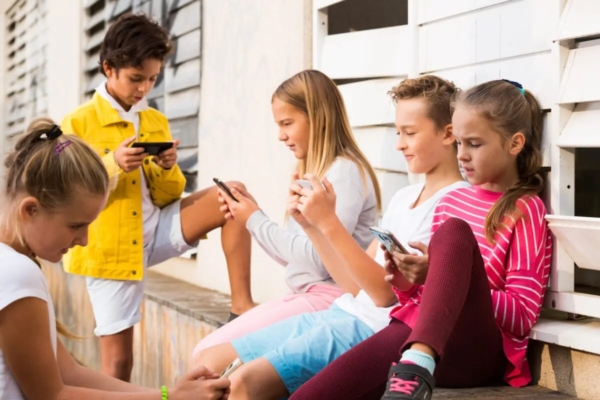
Young people today are often immersed in their smartphones or social media platforms, with many enjoying short videos on platforms like YouTube or TikTok, almost inseparable from their devices. However, experts warn that excessive viewing of short videos by teenagers or children can have negative effects on their physical and mental well-being.
Katherine Easton, a psychology lecturer at the University of Sheffield in the UK, wrote in The Conversation that online short videos have evolved from a leisurely pastime to an indispensable part of many children’s lives. Various video platforms attract billions of users under 18 by offering highly personalized content streams.
Easton points out that these platforms’ apps have vibrant interfaces designed to encourage users, particularly young ones, to scroll rapidly for extended periods, making it challenging to control. While these designs were not initially aimed at children, many kids now use them daily, often unsupervised.
For some teenagers, these platforms help to build self-identity, spark interests, and maintain friendships. However, for others, the sheer volume of content can disrupt sleep, blur boundaries, or take up time for reflection and meaningful interactions.
The issue lies not in the duration of usage but in the compulsive or hard-to-stop phone-scrolling patterns. These patterns can impact sleep, emotions, focus, academic performance, and relationships.
Short videos, typically ranging from 15 to 90 seconds, are designed to cater to the brain’s craving for novelty. Each screen swipe may bring a different content, be it a joke, prank, or shocking scene – triggering the brain’s reward system instantly.
With these non-stop video streams, the natural breaks needed to restore attention vanish. Over time, this can weaken impulse control and sustained focus.
An analysis of nearly 100,000 participants across 71 studies published in 2023 found a moderate correlation between excessive short video viewing, decreased self-discipline, and shorter attention spans.
According to Easton, sleep is one of the most affected areas by short videos. Many children now watch screens during resting periods. The bright screen light delays the secretion of melatonin, a hormone that aids sleep, making it harder for them to fall asleep.
Moreover, the emotional fluctuations brought by the rapidly changing video content make it difficult for the brain to calm down. Recent studies suggest that excessive short video viewing is linked to declining sleep quality and worsening social anxiety for some teenagers.
These sleep disturbances can affect emotions, resilience, and memory and may create a vicious cycle, especially challenging to break for children facing high stress or social pressures.
Apart from sleep, the constant peer images and carefully crafted lifestyles in short videos can exacerbate comparison tendencies. Pre-adolescent children may internalize unrealistic popularity, appearance, or success standards, leading to lowered self-esteem and anxiety – effects common across all forms of social media.
While most studies focus on teenagers, younger children with weaker self-control and identity are more susceptible to the lure of short video content.
When children encounter content they never imagined they would see, their risks of harm increase, especially with the instantaneous appearance and autoplay features of short video apps.
Unlike longer videos or traditional social media posts, short video content often lacks background information or warnings, leaving no emotional preparation time. With just a light swipe, the content tone can swiftly shift from light-hearted to unsettling, significantly impacting the developing brains of children.
The inappropriate content in short videos, with immediate appearance, lack of context, high emotional intensity, and rapid reinforcement, poses a particularly severe threat to young users.
While not every child is equally affected, those with anxiety, attention deficits, or emotional instability seem more prone to smartphone addiction and subsequent emotional fluctuations. Children facing bullying, pressure, unstable home environments, or inadequate sleep may cope with negative emotions by late-night phone scrolling.
This is crucial as childhood is a critical period for learning how to build relationships, cope with boredom, and handle emotions improperly. If every quiet moment is quickly filled with entertainment, children will miss the chance to daydream, create games, chat with family, or let their thoughts roam freely.
Unrestricted time is vital for children to learn self-soothing and cultivate focus. Without such time, these abilities gradually weaken.
Easton advocates for government, schools, and families to address the issues brought by short videos, such as limiting smartphone usage.
Previously reported by 大紀元, Australia has already banned the use of social media by individuals under 16, becoming the first globally.
On a family level, Easton suggests parents establish simple daily rules like keeping electronic devices out of bedrooms or setting a common screen usage cut-off time to reduce children’s late-night phone scrolling. Encouraging offline activities, cultivating interests, engaging in sports, or socializing with friends also helps maintain a healthy balance in their physical and mental well-being.