
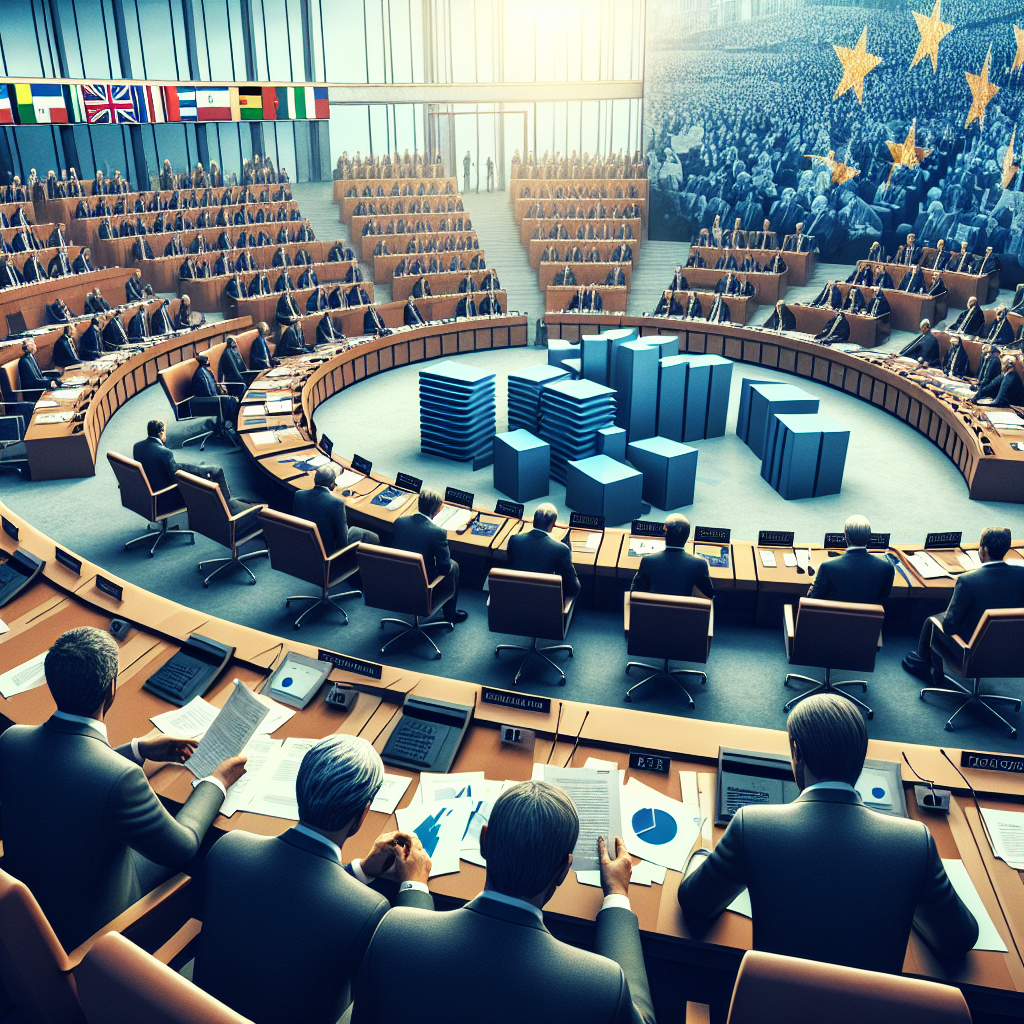
Leaders of European Union (EU) countries convened a crucial summit in Brussels on Thursday (December 18) to address the looming financial crisis in Ukraine. Faced with the dire situation of Ukraine’s dwindling finances, the countries engaged in a final showdown over using frozen Russian assets worth 2.1 trillion euros as a loan. Inside and outside the meeting venue, leaders from both Russia and Ukraine engaged in sharp exchanges, showing no signs of compromise.
According to Reuters, Polish Prime Minister Donald Tusk announced during the summit break that EU leaders had reached a consensus leaning towards utilizing Russian assets through a “Reparations Loan” rather than increasing shared EU debt.
Upon arriving at the venue, Tusk issued a stern warning to the hesitant countries, stating, “We are facing a simple choice: either pay today or bleed tomorrow.” He emphasized, “I am not just talking about Ukraine here but the whole of Europe. All European leaders must ultimately step up to address this situation.”
Tusk acknowledged that the difficulty in negotiations lies in sharing interests. “Of course, we want to achieve a breakthrough, which means everyone agrees it’s worth a try…But some countries will fight until the last moment to safeguard their interests to the maximum,” he said. “The statement on using Russian resources to help Ukraine has been made, and I don’t think anyone will backtrack.”
Currently, Belgium, where 185 billion euros in assets are held, remains the biggest obstacle. Belgian Prime Minister Bart De Wever maintained his stance in parliament on Thursday, stating, “I have not seen any document that could convince me to change Belgium’s position. We must ensure risks are shared fairly rather than a single country facing retaliation.”
Ukrainian President Volodymyr Zelenskyy, who personally attended the summit in Brussels, emphasized to reporters on the way there that the money in question is not compensation but rather “life-saving money.” “What we are discussing today about compensation is not just for post-war reconstruction. If the war is still ongoing, we need this money now,” he stressed. “We need a decision supporting our armed forces and defense production.”
He expressed concern and hope regarding the summit outcome, saying, “Without this money, Ukraine will not be able to stand on its feet. I don’t see any vague alternatives or ambiguous commitments that could fill this fiscal gap.”
In response to the establishment of the Ukraine International Claims Commission this week, the Russian Foreign Ministry hit back on Thursday, labeling it as “legal waste paper” aimed at “spreading propaganda against Russia.”
In the face of the EU’s actions, Russian President Vladimir Putin gave a public speech on Wednesday, accusing Ukraine’s European allies of “eagerly anticipating profiting from Russia’s collapse. It’s pure fantasy.”
The Russian officials reiterated that the use of their assets constitutes “illegal actions,” and Moscow “reserves the right to take all available measures to protect its interests.” At the same time, they emphasized that no foreign troops could enter Ukraine for monitoring missions, stating, “This is not just a sovereignty issue but also a red line for security.”
While the EU has made progress on financial arrangements, the end of the war still depends on the upcoming diplomatic maneuvers.
According to White House officials speaking to Agence France-Presse, this weekend (December 20-21), Trump envoy Steve Witkoff and Trump’s son-in-law Jared Kushner will meet with Russian envoy Kirill Dmitriev in Miami.
An unnamed US official stated, “We are at a turning point. The current goal is to translate the technical consensus reached in the Berlin talks into a political reality that Russia can accept.”