
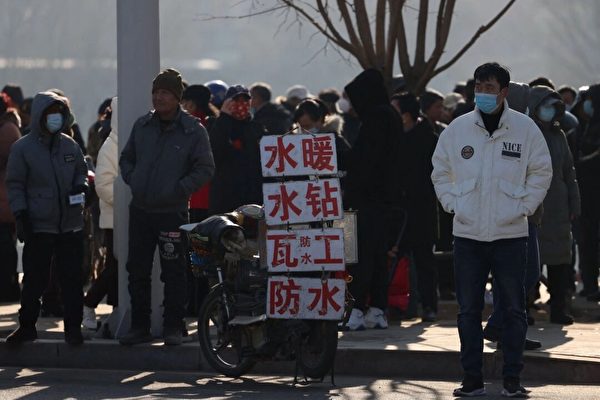
2025 is coming to an end. This year, in China, incidents of civil unrest have been continuously emerging. Experts believe that this year’s civilian resistance has shown new characteristics, accumulating energy for a large-scale outbreak of civil unrest.
In July, the Jiangyou incident occurred in Sichuan Province, China. A 14-year-old girl was taken by peers to an unfinished building, forced to undress, insulted, and physically assaulted. The perpetrators even posted a video online. The lack of action by the Chinese Communist Party (CCP) officials sparked large-scale protests among the public. Authorities sent a large number of special police to suppress the protests, leading to clashes and the violent beating and arrests of numerous protesters.
In late October, conflicts erupted between police and civilians due to a state-owned enterprise in Hainan province illegally cutting down areca trees belonging to farmers.
In November, a car rammed into the government gate in Beihai, Guangxi, but the news was suppressed.
In November, a forced grave-robbing cremation policy implemented in Guizhou province sparked intense protests among local residents. Villagers angrily shouted, “If the CCP wants to dig up ancestral graves, they should start with Xi Jinping’s family’s graves!”
In December, workers at Yi Li Sheng Technology in Shenzhen went on a large-scale strike, leading to clashes with the police.
The “House of Freedom” previously reported that protest events in China increased by nearly 50% in the third quarter of this year. Various human rights incidents of different scales have been ongoing, with incomplete comprehensive statistics available.
Around the time of the September 3rd military parade in Beijing and the Fourth Plenum, anti-CCP slogans demanding Xi Jinping and the CCP to step down appeared on the streets of China. There were also numerous netizens on online platforms subtly or openly mocking the CCP, challenging the party’s digital censorship. The impact of the death of artist Yu Menglong on the political situation was subtle, sparking a wave of withdrawals from the CCP.
Yuan Hongbing, a scholar in Australia who has been following Chinese politics, stated that there are three major characteristics of civil resistance in China this year. Firstly, the trend of expansion in terms of both quantity and scope is apparent. From urban to rural areas, from the internet to real life, and from economic to social issues, the situation can be described as a storm brewing, which is a fundamental feature of the CCP’s imminent autocracy demise.
Secondly, civilian resistance in 2025 has unleashed a greater sense of despair among the public. Yuan stated, “Chinese people are not afraid of suffering, but they fear losing hope. Xi Jinping’s retrograde measures have pushed the whole society to a level of despair. Not only unemployed migrant workers, but also graduates facing unemployment upon graduation, demobilized veterans turning into unemployed individuals, intellectuals seeking freedom, and private entrepreneurs are all in a state of despair.”
“The third characteristic is that civilian resistance is showing an increasingly strong political tendency, especially focusing on hatred and anger towards Xi Jinping personally,” Yuan added. Xi Jinping aims to be the communist emperor and wants to return society to the era of Mao Zedong while engaging in aggressive wolf warrior diplomacy that pushes China to the brink of war internationally. Now, Xi’s political and economic policies have led to a near irreversible economic decline in China, making him a common enemy of the people.
Lai Rongwei, the Executive Director of the Taiwan Inspiration Association (TIA), believes that contemporary social resistance events are not necessarily related to the economy but encompass various aspects of social life. The threshold for triggering events has become lower – for example, the Jiangyou incident stemmed from a student bullying incident. Furthermore, these events are not confined to major cities and have started to occur in rural areas and small towns, indicating that unrest is gradually spreading.
He pointed out that such events are becoming more frequent, creating immense pressure on authorities at all levels, from top to bottom. Amid economic downturn and financial constraints at the local level, the government’s stability maintenance pressure has multiplied.
In November, the CCP unusually issued a public demand for strict prevention of mass return of migrant workers to their hometowns.
Yuan Hongbing believes that under Xi Jinping’s rule, China is experiencing a major economic downturn that impacts two primary groups the most: the approximately 300 million migrant workers and the university graduates who face unemployment immediately after graduation. In the backdrop of a wave of layoffs, discontent among the public is increasing.
He disclosed that in November, an internal report from the CCP’s Ministry of Public Security mentioned a document circulating nationwide under the title “Special Party Office of the Fallen Territory ‘Beijing-Tianjin Region’ during Chinese New Year 2026: Initiate the seizure of unjust wealth corruption by CCP officials to support livelihoods and gather people’s uprising energy.” The document urges “300 million migrant workers returning home and unemployed university graduates to actively respond during the Chinese New Year.” Allegedly, this Ministry of Public Security report is seen as a warning to officials nationwide: be vigilant against such incidents during the New Year.
Yuan stated that the CCP’s prevention of migrant workers’ remaining in the countryside during the New Year stems from the fact that the regime is particularly focused on maintaining control in large and medium cities. In vast rural areas, the CCP has a severe shortage of governance capacity. Under the backdrop of economic recession, local governments are on the verge of bankruptcy, with grass-root party organs at the county and below levels widely failing to pay government employees’ salaries and reducing various bonuses. Even grass-root policemen, among others, are unable to secure their incomes. This situation paints a grim picture of an impending crisis.
“They are generally passive and inactive, thus China’s vast rural areas have become a void where the CCP’s rule is weakened,” he said.
Towards the end of 2025, public officials in various parts of China reported adjustments in the payment method of the “Five Insurances and One Fund,” with some regions demanding back-payment of outstanding amounts from previous years. Similar practices have emerged in other provinces. Yuan Hongbing further stated that in the past twenty years, most migrant workers have been working in cities, and returning to the countryside now, only to find that their original land no longer exists, leaving them with no last resort in rural life to sustain themselves. “If migrant workers stay in the countryside, it will inevitably lead to a large population of displaced persons, posing a significant threat to the stability of the CCP’s regime.”
Lai Rongwei also remarked that Chinese migrant workers return to their hometowns in large numbers every year. The current unique situation lies in the continuous decline of China’s economy, leading to unemployment or insufficient income for the workers in cities, which could foster resentment towards the CCP due to the insecurity they face in their lives. While the CCP may still have the capacity to control major cities, the fear is, if the migrant workers return to rural areas, the situation might get out of control. “With numerous administrative indicators imposed from the central government to grass-root levels, lower-level officials are overworked and understaffed. The CCP is afraid that these people, once back in rural areas, might disrupt the order,” he explained.
In recent years, the Chinese Communist Party’s Great Firewall has been reinforced, with reports indicating the establishment of regional internet censorship systems that are stricter than the national-level Great Firewall, often referred to as the “wall within the wall.”
The CCP’s “National Network Identity Verification” system officially went online on July 15, linking users’ real identities to their online activities, intensifying surveillance. Subsequently, anonymous leaflets opposing the system appeared on the streets of Qingdao.
Before the end of the year, Xi Jinping personally demanded enhanced network control. Throughout the year, authorities carried out multiple rounds of internet crackdowns in an attempt to silence the public. The recent wave of discussions about “anti-Qing and restoration of Ming” has put the authorities on high alert, creating a highly pressurized environment across China.
Lai Rongwei mentioned that faced with tightened network control by the authorities, the general public has found ways to subtly express dissatisfaction. Under the CCP’s high-pressure governance, which remains unstable, economic decline and increasing unemployment may create conditions for civil unrest to erupt.
Yuan Hongbing believes that the CCP’s autocracy relies primarily on two elements for governance: state terrorism through violence and state lies. The tightening control over the internet underscores the regime’s fear of changing public sentiments and the spread of information online. However, strict internet restrictions alone cannot prevent the inevitable downfall of the CCP. “The crisis the CCP is facing now is not just about weak internet control. It is confronting a complete collapse of the entire governance system,” he stated.
He cited examples of many officials now adopting a passive and indifferent stance, with insiders revealing that even the most sensitive political police officers often turn a blind eye during their monitoring activities to avoid personal hatred from those they monitor. They are reluctant to let their monitoring activities against anti-CCP individuals turn into resentment against themselves. “The political police, in particular, are now feeling the CCP’s imminent end and are seeking a way out for themselves. This phenomenon has never been seen before.”
Yuan stated, “Now, regardless of a military coup, political coup, or civil uprising, momentum is rapidly building. When the explosion occurs in the future, it is likely to be a major event where military, political, and civil unrest collide, overturning the CCP’s autocracy.”
Regarding the possibility of a coup, military coup, or civil unrest under the extreme authoritarian rule of the CCP, this has always been a hot topic for discussion.
Lai Rongwei indicated that currently, civil unrest seems more likely to occur than a military or political coup. However, for large-scale civil unrest to materialize, it is crucial to see if protests can connect across regions amid deepened network control by the CCP. Additionally, the emergence of national civic leaders and adequate resources for uprisings are necessary.
“If there is a leader with appeal, the CCP is very wary,” he remarked.
Yuan Hongbing expressed that a military coup falls under the category of a political coup and requires specific conditions. Recently, Xi Jinping has conducted a significant purge in the military, nurturing a “two-faced” army of Xi supporters. If he dares to risk initiating a war in the Taiwan Strait, the likelihood of a military coup will increase.
Furthermore, due to the upheaval caused by Xi Jinping’s extensive purges, officials are generally discontent with him. When official grievances reach a critical threshold, the possibility of a political coup surges.
“Currently, whether it’s a military coup, political coup, or civil unrest, momentum is rapidly building. When it erupts, it could likely be a scenario in which military, political, and civil unrest mutually fuel each other, leading to a significant event overthrowing the CCP’s autocracy.”