
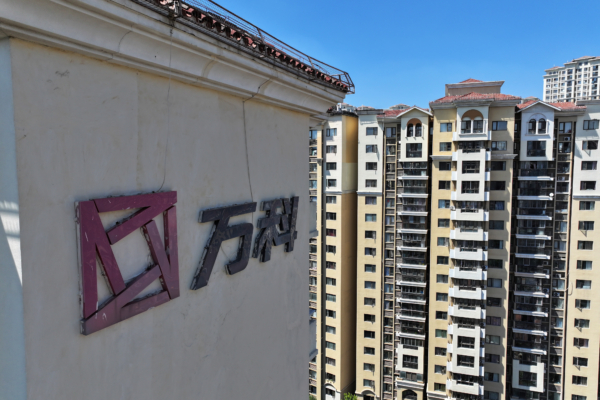
In the context of the continuous downturn in the Chinese real estate market and the escalating dissatisfaction among the public, the authorities have significantly strengthened their control over public opinion regarding the real estate sector. Recently, the Beijing Municipal Commission of Housing and Urban-Rural Development, in conjunction with multiple departments, conducted joint talks with several major internet platforms, accusing some content of “spreading pessimism about the housing market and creating market panic,” and emphasizing a “zero-tolerance high-pressure stance towards the network chaos that disrupts the order of the real estate market.” This move quickly sparked public attention.
According to a report by the Beijing Municipal Commission of Housing and Urban-Rural Development on December 17th, on December 5th, the commission, along with the Municipal Internet Information Office and the Public Security Bureau, held joint talks with platforms such as Douyin, Xiaohongshu, Shell, 58.com, Xianyu, Lianjia, Wo Ai Wo Jia, and Maitian.
Officials stated that some self-media accounts were found to be posting and spreading pessimistic views about the Beijing real estate market, creating market panic, spreading false information, and promoting fake property listings, which severely disrupted market order. They demanded the platforms to conduct comprehensive self-inspections, promptly remove illegal information, deal with violators, and accelerate the establishment of a normalized industry content review mechanism.
As of December 12th, under the “supervision” of relevant departments, platforms such as 58.com, Douyin, Xiaohongshu, Xianyu, and Shell have collectively reviewed and cleared more than 17,000 pieces of “illegal and harmful information.”
Simultaneously, over 2,300 illegal real estate-related accounts and live-streaming rooms that “amplified market fluctuations, sold anxiety, speculated on policies, spread false content to attract traffic, and misled expectations,” have been cleaned up and disposed of, with over 100 illegal notes deleted.
Regarding property listings, Lianjia, Wo Ai Wo Jia, and Maitian, three intermediary platforms, have screened more than 1.3 million online property listings, and rectified over 480 non-compliant property information.
The news of multiple platforms being jointly talked to quickly became a hot search topic, sparking controversy on social media.
Some netizens sarcastically commented, “Just a bit of pessimism and the Chinese Communist Party is so fragile.”
Others questioned, if “spreading pessimism about the housing market” itself is considered a violation, how should the prolonged downward trend in the market be explained?
Financial blogger “Tom” pointed out that the standards of “illegal and harmful” set by the authorities are not clearly defined. He questioned, “If spreading pessimism about the housing market is considered a violation, should those who have continuously promoted rising house prices and encouraged property purchases in the past few years also be held accountable? This selective law enforcement is hardly convincing.”
In fact, Beijing is not the first city to crack down on real estate-related online public opinion. In recent years, the Chinese real estate market has entered a deep downturn. The policy guidance of the Chinese Communist Party to “strictly prohibit spreading pessimism about the real estate market” continues to strengthen.
In October 2024, four departments in Kunming took the lead in jointly issuing a notice on conducting regulation of the online environment in the real estate sector, which explicitly included “spreading pessimism about the real estate market” as one of the 12 key regulatory areas.
In November 2025, the Shanghai Internet Information Office, in collaboration with housing management and public security departments, launched a special operation to impose bans on 98 accounts that spread “housing price collapse” rumors, clearing more than 900 pieces of “illegal” information. This regulatory model has now been widely promoted nationwide.
Regarding this, “Tom” noted that when the real estate data is poor, Shanghai simply “censors,” and now Beijing is replicating this approach. The question arises whether Guangzhou and Shenzhen will follow suit in the next step.
According to analysts, the current pressures in the real estate market are not created by public opinion. According to official statistics, in November, second-hand house prices in Beijing fell by 1.3% compared to the previous month, leading the decline among the four first-tier cities. It is widely believed in the industry that Beijing and Shanghai have shown significant “correction” characteristics with a widening downturn since the second half of this year, which has persisted for several months.
“Tom” stated that the data from the Beijing real estate market indicates that there is no need to “spread pessimism” – it is already in poor condition.
“Tom” predicted that due to the ongoing low transaction volume and increasing inventory pressure, the four first-tier cities are likely to be forced to fully lift purchase restrictions next year, not because of proactive policy shifts, but because the situation has reached this point.
Some analysts believe that the authorities’ high-pressure control of information during a deep adjustment period in the property market may help maintain surface stability in the short term but could amplify systemic risks in the long run.
“Tom” pointed out that historical experiences repeatedly demonstrate that the more attempts to silence the market, the greater the impact on market and societal confidence when the real situation is ultimately exposed. He emphasized that “apparent calm on the surface, coupled with underlying accumulated issues, will lead to higher costs once things spiral out of control.”
He concluded that the current policy logic remains focused on “suppressing expectations and controlling public opinion” and has failed to address the structural adjustment issues arising from the deceleration of real estate as an engine of economic growth. He likened the regulatory efforts to continuous gambling bets and highlighted the reluctance to acknowledge that the old model has reached its limits.
He summarized by stating that economic laws do not cease to exist simply because the Chinese authorities refuse to accept them, and they do not vanish due to differences in the system.