
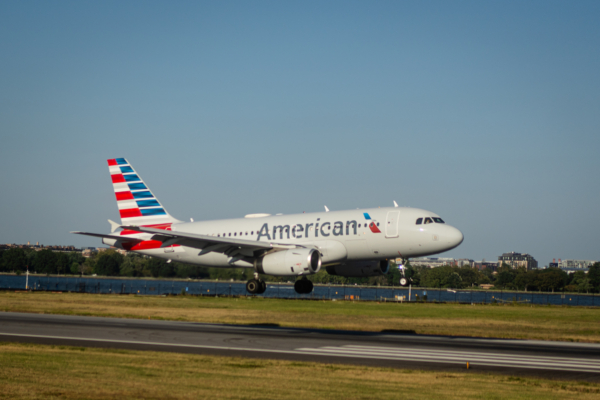
American Airlines is rolling out its “customer reimagination” plan to provide passengers with lie-flat seats, Bollinger champagne, Lavazza coffee, ultra high-speed Wi-Fi, and a range of high-end services and luxury experiences in a bid to gain an edge over competitors Delta Air Lines and United Airlines and revive its glory.
The initiative will focus on offering premium service products and rewards for loyal customers, including private suites on long-haul flights, upgraded regional cabins, and enhanced credit card benefits.
Simultaneously, the company is abandoning its long-standing cost-cutting and heavily sales-driven strategies.
American Airlines’ stock price has dropped about 6% this year, while Delta Air Lines has seen a 20% increase and United Airlines an 18% uptick.
The third quarter is typically the most profitable period for the aviation industry, but American Airlines posted a loss, while Delta Air Lines and United Airlines recorded strong profits.
In the first nine months, American Airlines only made a profit of $12 million, while Delta Air Lines raked in $3.8 billion and United Airlines $2.3 billion.
Given that premium passengers are a key driver of industry profit growth, upgrading cabins and services is not just an option but a strategic imperative.
American Airlines’ newly appointed Chief Business Officer Nat Piper told Reuters, “We believe that investing in customer experience will help increase our revenue.”
American Airlines plans to rely on Boeing 787-9 new aircraft and Airbus A321XLR aircraft, opening a new Chicago-London route to generate higher revenue.
The 787-9 aircraft features 51 lie-flat seats and private cabin doors, currently being the most profitable wide-body aircraft for American Airlines. It operates on competitive transatlantic routes, competing with United Airlines on the same routes.
This Thursday, American Airlines will launch its first Airbus A321XLR flight from New York to Los Angeles. This route is one of the most fiercely competitive for American and a lucrative market dominated by Delta Air Lines.
The narrow-body aircraft made its debut last week at New York’s John F. Kennedy International Airport with lie-flat suites for passengers, making it American Airlines’ first internationally configured single-aisle aircraft. It will also operate on secondary transatlantic routes like Edinburgh, profiting in smaller market segments due to its fuel efficiency advantage.
The company’s Chief Strategy Officer Steve Johnson called this reform the most thorough in decades, predicting a substantial increase in profits starting in 2026. He told Reuters, “As these changes we are implementing gradually take effect and harmonize, you will see the value they bring to us.”
Some analysts caution that American Airlines’ path to recovery will be slow and costly.
Supply chain bottlenecks have led to delays in aircraft deliveries, including the A321XLR originally scheduled for 2023. Additionally, plans to upgrade premium cabins on older Boeing 777 aircraft have fallen behind due to shortages of seats and interior parts.
The company’s Senior Vice President of Network Planning Brian Znotins told Reuters that the first 777-300 aircraft has just begun retrofitting in Hong Kong, speeding up the process by utilizing certified seat designs instead of entirely new ones.
Moreover, operational reliability remains a weak point for American Airlines. Its on-time performance still lags behind Delta Air Lines and United Airlines and ranks at the bottom in the latest JD Power satisfaction survey.
Analysts project that the company’s EBITDA profit margin (earnings before interest, taxes, depreciation, and amortization) will increase from this year’s 7.3% to about 9% in 2026. However, according to data from the London Stock Exchange Group, this is still far below Delta Air Lines’ projected 15% and United Airlines’ 14%.
Henry Harteveldt, founder of travel consultancy Atmosphere Research Group, stated, “American Airlines cannot turn the situation around overnight.”
(This article references reports from Reuters)