
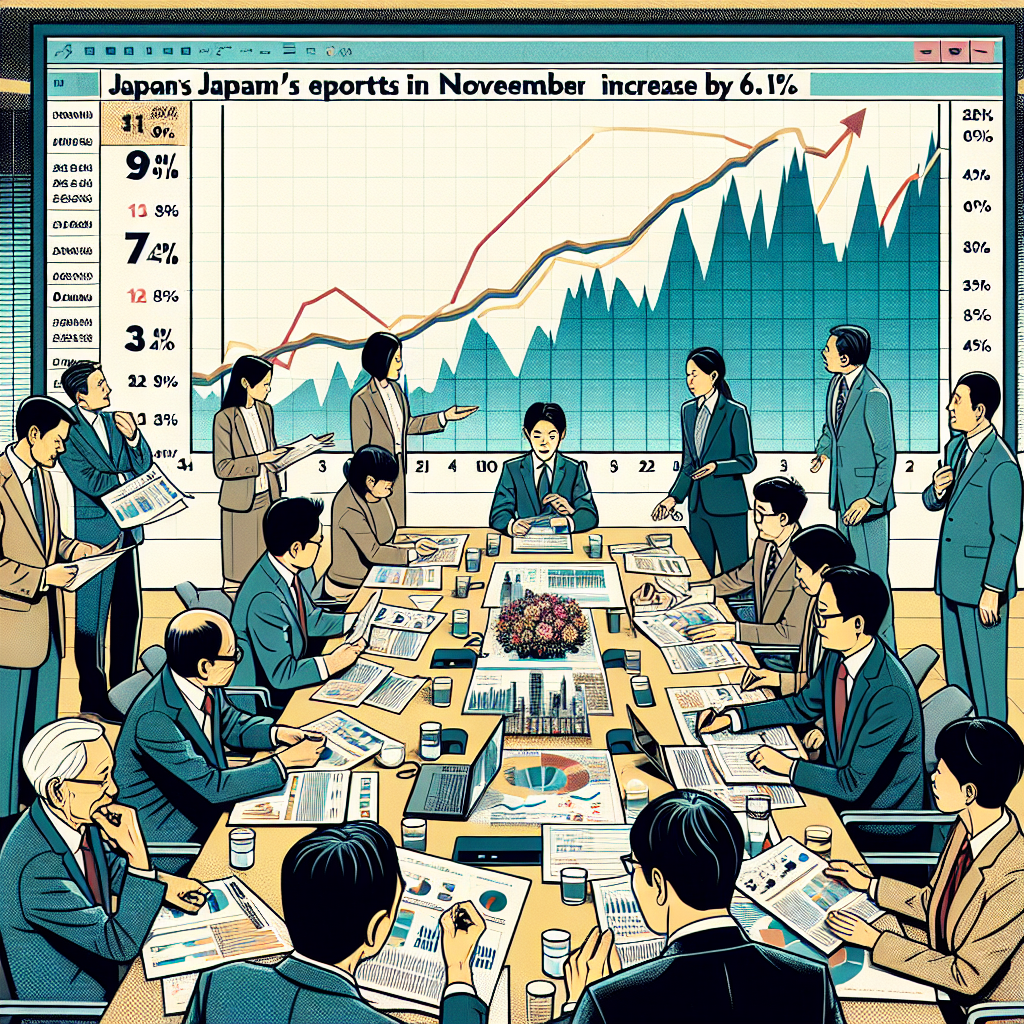
On Wednesday (December 17), the Japanese government announced that Japan’s exports in November continued to grow for the third consecutive month, with a year-on-year increase of 6.1%, marking the fastest growth in nine months and significantly surpassing market expectations of 4.8%. Among them, shipments to the United States rebounded for the first time after months of decline, leading to a significant increase in Japan’s trade surplus in November.
According to data from the Japanese Ministry of Finance, Japan’s exports in November increased by 6.1% in value compared to the same period last year, higher than the 3.6% growth in October. Imports, on the other hand, only saw a 1.3% year-on-year increase, below the market’s estimate of 2.5%. As a result, Japan’s trade surplus in November reached 322.3 billion yen (approximately 2.08 billion USD), far exceeding the market’s prediction of 71.2 billion yen.
In terms of regional analysis, Japan’s exports to the United States grew by 8.8% in November, marking the first rebound in nearly eight months. Exports to Western Europe also saw a significant increase of 23.6%, becoming a key driver supporting overall export growth. In contrast, exports to China decreased by 2.4%, while exports to Hong Kong increased by 11.4%.
Prior to the release of these data, revised figures for Japan’s Gross Domestic Product (GDP) for the third quarter showed a larger contraction than initially estimated, with a 0.6% decrease quarter-on-quarter and a 2.3% decrease year-on-year. Analysts anticipate a rebound in the Japanese economy for this quarter as exports show signs of recovery.
Reuters noted that while previous U.S. tariffs had put pressure on Japanese exports, the actual impact was milder than initially feared. This was partly because Japanese exporters absorbed some of the tariff costs to maintain competitiveness, and the weakening yen also provided support.
Following the formalization of a trade agreement between the U.S. and Japan in September, a 15% baseline tariff was imposed on almost all goods imported from Japan, lower than the higher rates previously applied to automobiles and other goods.
Additionally, the latest Tankan survey from the Bank of Japan revealed an overall improvement in business sentiment for Japanese enterprises in the fourth quarter, with confidence in the large manufacturing sector reaching a four-year high.
With concerns over tariffs easing, the market generally expects the Bank of Japan to potentially raise its short-term policy interest rate from 0.5% to 0.75% later this week. However, there remains uncertainty about the pace of future interest rate hikes.
On the other hand, relations between Japan and China became tense in November. Previously, Japanese Prime Minister Takaichi Sou said that if China attempted to use force to seize Taiwan, it could trigger Japanese military intervention. In response, Beijing restricted the import of Japanese seafood, adding to the uncertainties surrounding the trade prospects between China and Japan.