
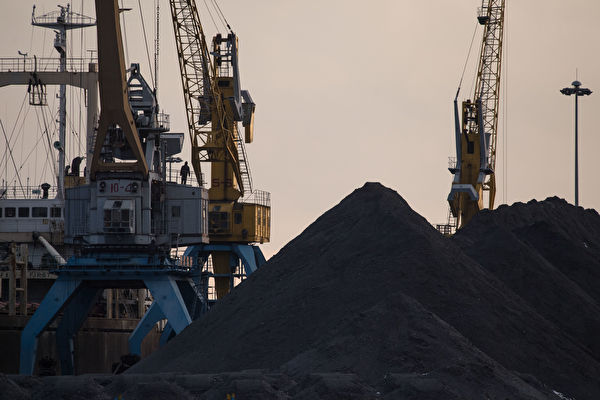
With the arrival of winter, the price of thermal coal in China has been falling instead of rising. Some organizations believe that this is mainly due to weak market demand, and the price of thermal coal may continue to decline in the future.
According to a report by The Paper on December 15th, the price of thermal coal in China fell below 800 yuan per ton in early December and continued to decline. As of December 12th, the spot closing price of 5500 kcal thermal coal at Qinhuangdao Port was reported at 745 yuan per ton, a decrease of about 90 yuan per ton compared to the previous period, and a decrease of about 50 yuan per ton year-on-year. The average price for the year was 697.03 yuan per ton, which is more than 150 yuan lower than the annual average price in 2024.
On the same day, the CCTD (China Coal Trading Center) reported the spot reference prices for thermal coal around the Bohai Sea at 5500 kcal, 5000 kcal, and 4500 kcal were 761 yuan per ton, 659 yuan per ton, and 564 yuan per ton, respectively, all falling by around 70 yuan per ton from the November highs.
While coal prices continue to decline, coal inventories remain high. According to monitoring data from the CCTD China Coal Market, as of now, inventories at nine major northern ports have reached around 29 million tons, an increase of nearly 6 million tons from the low point in early November, representing a 25% increase.
The main reason for this phenomenon is the weak demand. According to data from the National Bureau of Statistics of the Communist Party of China, electricity generation from large-scale industrial thermal power plants in November decreased by 4.2% year-on-year.
In response to this, the China Electricity Council stated that high inventories and lower daily consumption levels compared to previous years are key factors suppressing the coal market, with the core contradiction still being “high inventories, weak demand.” The market is unlikely to see improvement until there is a substantial improvement in demand.
The CCTD China Coal Market believes that in the short term, the likelihood of a significant release of purchasing demand from end users is low, and coal prices are expected to continue seeking a bottom.