
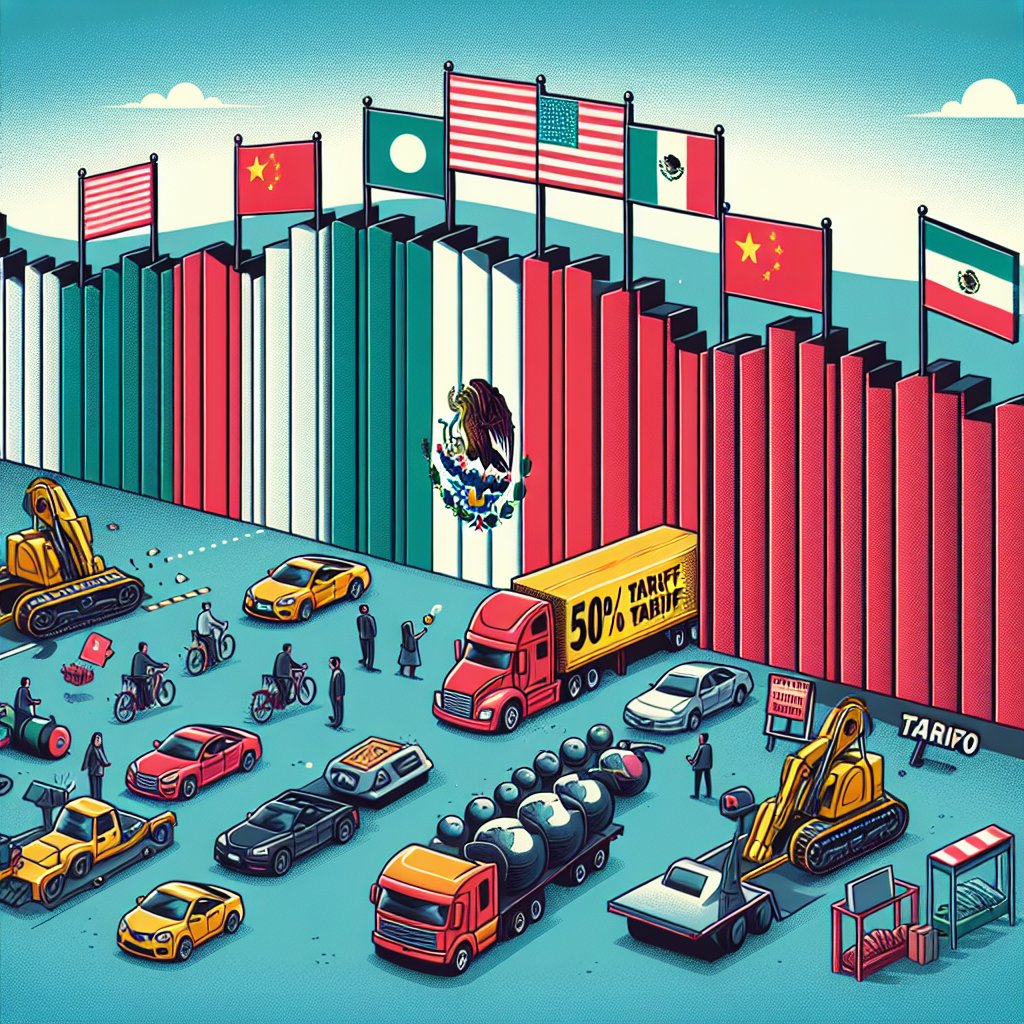
Mexico’s Congress finally approved a bill on Wednesday (December 10) that will impose new tariffs of up to 50% on imported goods from several Asian countries, including China, starting next year. Chinese products will be most affected, with Chinese cars facing a 50% tariff.
The bill passed the House with 281 votes in favor, 24 against, and 149 abstentions, and later in the Senate with 76 votes in favor, 5 against, and 35 abstentions.
The legislation will impose tariffs ranging from 5% to 50% on over 1,400 products from Asian countries without a trade agreement with Mexico. These countries include China, India, South Korea, Thailand, and Indonesia. The affected goods range from cars and auto parts to textiles, clothing, plastics, and steel, with Chinese products bearing the brunt. The new tariffs will take effect on January 1, 2026.
Under this tariff law in Mexico, Chinese cars will face the highest level of tariff at 50%. Currently, the Chinese automotive industry holds a 20% share of the Mexican market, a significant increase from almost negligible six years ago.
China maintains a massive trade surplus with Mexico. According to Chinese customs data, China’s exports to Mexico exceeded imports by $71 billion last year. If China decides to retaliate, copper ore and refined copper could be potential targets, but given the strong demand for these crucial metals in the renewable energy sector, Mexico may find other customers.
Mexico’s decision to raise tariffs has irked China. During a routine press conference on Thursday (December 11), Chinese Foreign Ministry spokesperson Guo Jiakun criticized Mexico’s actions as going against the tide of economic globalization and urged Mexico to rectify its actions promptly.
Mexican President Claudia Sheinbaum explained during a press conference on Thursday that these measures aim to promote domestic production and protect industries such as automotive and textiles. “We have no intention of getting into conflicts with any country in the world,” she said.
On Thursday, the Chinese Ministry of Commerce responded by stating that it would closely monitor Mexico’s new tariff policy and evaluate its impact. The Ministry also mentioned that the measures, once implemented, would substantially harm “the interests of related trading partners, including China.”
According to Reuters, analysts and the private sector believe that Mexico’s move is aimed at appeasing the United States ahead of the next review of the United States-Mexico-Canada Agreement (USMCA). The measure is also seen as a way for Mexico to reduce its fiscal deficit by generating an additional $3.76 billion in revenue next year.
The Trump administration has been urging Mexico to increase tariffs on Chinese imports to curb the influx of cheap Chinese products into the United States. Mexican officials subsequently proposed the “Fortress North America” concept, aiming to restrict Chinese imports while strengthening trade and manufacturing cooperation among the United States, Mexico, and Canada.
“On one hand, it protects certain local industries that are at a disadvantage competing with Chinese products. It also protects employment,” said Mario Vazquez, a senator from the opposition National Action Party (PAN).
Emmanuel Reyes, a senator from the ruling National Regeneration Movement (Morena) and chairman of the Senate Economic Committee, defended the measure, saying, “These adjustments will elevate Mexico’s products in the global supply chain and protect employment in key industries.”
On December 4, United States Trade Representative Jamieson Greer emphasized the need to strengthen the enforcement of the USMCA. He highlighted the importance of ensuring that Mexico and Canada do not become hubs for Chinese, Vietnamese, or Indonesian products to bypass US trade restrictions.
(Partial reference from Bloomberg News)