
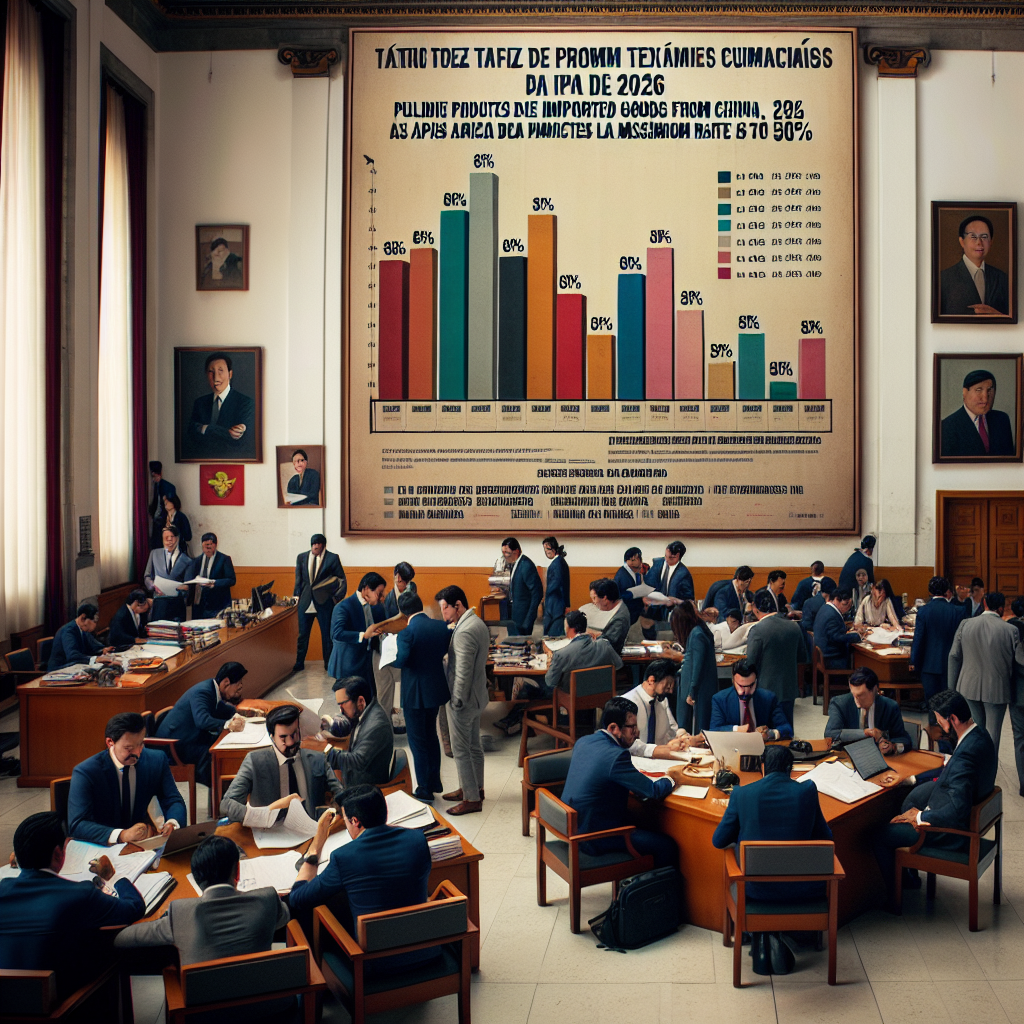
Mexico’s Chamber of Deputies approved a bill on Wednesday (December 10) that will impose a maximum 50% tariff on imported goods from China and several other Asian countries in 2026. This move aims to promote domestic production in Mexico and address trade imbalances.
According to reports from Reuters, the bill passed in the Chamber of Deputies with 281 votes in favor, 24 against, and 149 abstentions.
As reported by Bloomberg, the bill imposes a maximum 50% tariff on imported goods, especially from China and other Asian countries. The bill was approved by the Economic Committee of the Mexican Chamber of Deputies on Monday (December 8). The new tariffs will take effect on January 1, 2026.
During the full Chamber of Deputies vote on Wednesday, the bill passed and has been sent to the Senate for voting. If ultimately approved, Mexico will impose tariffs or increase tariffs on goods including cars, auto parts, textiles, clothing, plastics, and steel from China and other Asian countries like India, South Korea, Thailand, and Indonesia that do not have trade agreements with Mexico.
The tariff proposal on China, presented by Mexican President Claudia Sheinbaum, is part of a broader plan to protect domestic Mexican producers and ease trade tensions with the United States. It is expected that after Mexico passes this bill, the US may soon lower tariffs on Mexican steel and aluminum products.
The Trump administration has been urging Mexico to increase tariffs on Chinese imports to curb the flow of cheap Chinese goods into the US through Mexico. Mexican officials subsequently proposed the “Fortress North America” concept to limit Chinese imports and strengthen trade and manufacturing cooperation among the US, Mexico, and Canada.
Last week, US Trade Representative Jamieson Greer emphasized the US opposition to Canada and Mexico becoming export hubs for major manufacturing countries like China, Vietnam, and Indonesia.
The Mexican government claims that imposing tariffs on Chinese goods aims to boost domestic production and address trade imbalances with China.
According to Reuters, analysts and the private sector believe that Mexico’s move is aimed at appeasing the US before the next review of the US-Mexico-Canada Agreement (USMCA). They also suggest that this measure is intended to generate an additional $3.76 billion in revenue next year to help Mexico reduce its fiscal deficit.
Claudia Selene Avila, a deputy from the National Regeneration Movement (Morena), stated during an overnight session in the Chamber of Deputies that this tariff reform will not affect inflation.
The bill has faced opposition from the Chinese Communist Party and local business groups. The Mexican automotive industry warned that tariffs could restrict their access to crucial imported components.