
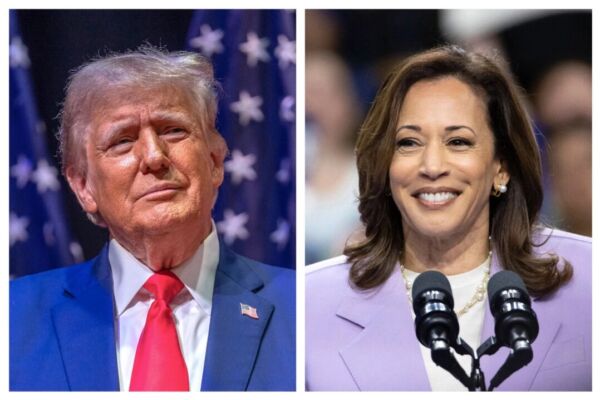
The 2024 US election has entered its final sprint, with the showdown evolving from a battle of the elderly to a classic “men vs. women” matchup reminiscent of 2016. On Tuesday, September 10th, Vice President Harris will face off against former President Trump in their first presidential debate. This marks Harris’s first meeting with Trump as the Democratic nominee following President Biden’s term.
In the noisy political season, attacks often grab the headlines while policy proposals sometimes take a back seat. However, regardless of the political spectrum, voters are eager to see the two candidates engage in discussions on policy matters.
Here is a summary and outlook on the policy positions of the two candidates by “The Wall Street Journal” economic affairs reporter.
Domestic issues, especially economic themes, have always been a focal point of voter interest. The question of whether people are better off than four years ago has always been a delicate yet incisive topic. Under Trump’s tenure, most of the tax cuts passed in 2017 are set to expire by the end of 2025. He aims to extend these measures indefinitely, maintaining the lower tax rates, larger standard deductions, and increased child tax credits implemented by the Republicans seven years ago.
These tax reduction measures also include an increase in estate tax exemptions and tax breaks for family businesses. Extending all these measures could save taxpayers approximately $4 trillion over the next decade, but it will inevitably reduce government tax revenue. Trump has not clearly outlined how he plans to prevent an increase in the government deficit.
Beyond the 2017 tax cuts, Trump has proposed a series of new tax reduction measures, with scant details, including tax-free tips, eliminating income tax on social security benefits, and new deductions for newborn-related expenses. He has also criticized Biden’s efforts to expand the IRS enforcement powers and may roll back these actions if elected.
Harris, on the other hand, is committed to Biden’s promise to prevent tax increases on households earning less than $400,000, which comprise 97% of all households. She may continue to extend Trump’s 2017 tax policies set to expire soon. Additionally, she supports the idea of tax-free tips and expanding refundable child tax credits to provide most parents with a $3,000 subsidy per child and up to $6,000 for newborn parents.
Harris also backs Biden’s latest budget proposal to raise an additional $5 trillion in taxes. The plan would increase the top marginal income tax rate to 44.6%, but she would set the maximum capital gains tax rate at 33%, lower than Biden’s proposed level.
Under this approach, unrealized gains over $5 million (with some exceptions) would be subject to tax upon death instead of being untaxed; capital gains over $1 million would be taxed at ordinary income rates rather than today’s lower rates. Families with assets of at least $100 million would face a minimum tax rate of 25%, including annual taxes on unrealized gains.
Like Biden, Harris plans to raise the corporate tax rate from 21% to 28%, generating over $1.3 trillion in additional corporate taxes over a decade, the largest revenue item in her plan.
She also intends to increase taxes on U.S. corporations’ foreign income. Harris is considering raising the new corporate alternative minimum tax from 15% to 21% and quadrupling the new 1% stock buyback tax while imposing new constraints on companies deducting executive compensation.
The GOP’s corporate tax cut measures have already lowered the rate from 35% to 21%, with no expiration after 2025. Trump has expressed his desire to further reduce corporate taxes, mentioning a 20% rate and sometimes setting 15% as a target. Like his individual tax plan, he has not provided specific details on how to prevent an increase in the budget deficit.
Comprehensively extending tax cut measures could bring other corporate tax provisions, including immediate write-offs for capital investments and research expenses and loosening interest deduction limits.
During his first term, Trump broke decades of bipartisan support for trade liberalization by imposing high tariffs on Chinese products and more targeted tariffs on steel, aluminum, and products from other countries, including allies. Trump has stated that in a second term, he will take further steps by imposing at least 60% tariffs on Chinese products and 10% to 20% tariffs on products from the rest of the world.
He said, “Smart tariffs do not cause inflation; they restrain inflation.” However, it remains unclear how high the tariffs will rise. Trump also calls for reciprocity, setting tariffs at the same levels that other countries impose on the U.S., mostly below 10%.
The enforceability of some stricter provisions also depends on Congress. Trump aims to end the “permanent normal trade relations” with (Communist) China, which allows China to enjoy the benefits of World Trade Organization membership. However, this requires congressional approval, and permanently changing tariff rates also needs congressional assent. While Trump can unilaterally raise tariffs using several legally granted executive powers, he may face opposition in court.
Harris is expected to largely follow President Biden’s trade policies. Biden has maintained most of the tariffs imposed by Trump on China while increasing some, such as on electric vehicles, and negotiated with major allies on steel and commercial aircraft disputes. He has upheld Trump’s policy of blocking the appointment of new members to the WTO dispute resolution body, somewhat weakening the organization’s enforcement role but increasing negotiation leverage for the U.S. on the operation of the entity.
Harris was among the few senators in 2020 who voted against approving the United States-Mexico-Canada Agreement negotiated by the Trump administration to replace the North American Free Trade Agreement. She indicated that the agreement had not done enough to address climate change. This indicates that she is less fond of traditional trade agreements compared to Biden, who prioritizes workers over consumers on trade matters.
A spokesperson stated that Harris would “adopt targeted tariffs to support American workers.”